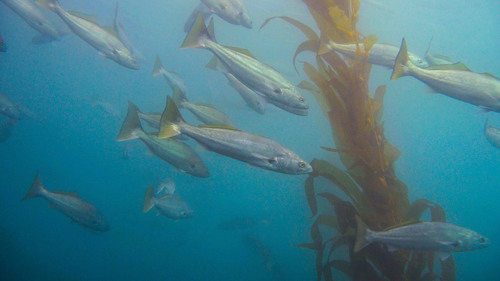
White Seabass
Atractoscion nobilis
The 'Ghost of the Kelp,' the White Seabass is a majestic, iridescent predator that haunts the underwater forests of the Pacific. Known for its powerful croaking call and elusive nature, it is a true prize for any coastal observer.
Quick Identification
Size
Typically 60–120 cm (2–4 feet) long and 7–23 kg (15–50 lbs), though they can reach 1.5 meters (5 feet) and 41 kg (90 lbs).
Colors
Metallic blue-gray to copper on the back, transitioning to iridescent silver sides and a white belly; juveniles feature 3–6 dark vertical bars.
Key Features
- Elongated, sleek body with a silvery-copper sheen
- Distinctive raised ridge or 'keel' along the length of the belly
- Square-cut or slightly lunate tail fin
- Two dorsal fins with a small notch between them
When You’ll See Them
Geographic range
Where Does the White Seabass Live?
The White Seabass is native to the Eastern Pacific Ocean along the coast of North America. Its core range spans from Point Conception in California down to Magdalena Bay in Baja California Sur, Mexico. During years with warmer ocean currents, such as El Niño events, individuals are frequently spotted as far north as Juneau, Alaska, and as far south as the Gulf of California, though they remain most abundant in the Southern California Bight.
Basemap © OpenStreetMap contributors
Behavior
White Seabass are powerful, schooling predators that belong to the croaker family (Sciaenidae). They are famous for the deep drumming or 'croaking' sound they produce by vibrating muscles against their gas-filled swim bladder, a sound most frequently heard during their spring and summer spawning seasons. While juveniles are often found in the protective waters of shallow bays and estuaries, adults are nomadic hunters that favor the edges of dense giant kelp forests.
These fish are known for being exceptionally wary and easily spooked by sudden movements or loud noises, earning them a reputation as 'ghosts' of the kelp. They are highly mobile, following schools of baitfish and responding to changes in water temperature. They are most active during changing tides and low-light conditions, using their keen senses to ambush prey in the murky shadows of the underwater forest.
EverydayEarth exclusive
Camera Tips
To successfully capture White Seabass on an AI-powered camera, you must move your setup underwater. If you have access to a private dock or a waterfront pier, mount your camera in a waterproof housing approximately 2 to 5 meters below the surface. These fish are most frequently found patrolling the 'transition zone'—the area where rocky reef or kelp meets the open sand. Position your camera to face parallel to the kelp line to catch them as they cruise the perimeter looking for prey.
Visibility is the biggest challenge for AI detection underwater. Use a camera with a high-quality sensor that performs well in low-light conditions, as White Seabass are most active during the crepuscular hours of dawn and dusk. Avoid high-intensity white lights, which reflect off the scales and cause a 'white-out' effect that hides identifying features; instead, try to use natural light or diffused, low-intensity infrared if the depth allows. A stable mounting system is essential, as camera shake from tide or current can prevent the AI from locking onto the fish's sleek profile.
To encourage these 'ghosts' to appear in front of your lens, consider using a scent lure. A small, mesh bag filled with frozen squid or sardine chunks (chum) can be suspended just out of the camera's frame. This creates a scent trail that draws the fish in without cluttering the visual field. Time your recording sessions for the two hours surrounding a high tide, as the influx of clean ocean water often improves clarity and brings larger predators closer to shore-based structures.
Similar Species
Species that look similar or are commonly confused with White Seabass.
Frequently Asked Questions
Record White Seabass at your habitat
Connect a camera to start building your own species record — AI identifies every visitor automatically.