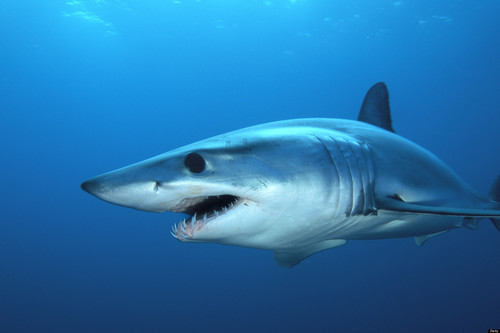
Shortfin Mako
Isurus oxyrinchus
Meet the ocean's fastest shark, a metallic-blue torpedo capable of reaching speeds that rival a car on the highway. The Shortfin Mako is a marvel of evolutionary engineering, built for pure velocity and breathtaking aerial leaps.
Quick Identification
Size
Typically 3.2–4 meters (10–13 feet) in length; weighing 60–570 kg (132–1,256 lbs)
Colors
Brilliant metallic indigo or cobalt blue on the dorsal side; crisp snow-white on the ventral side (belly)
Key Features
- Pointed conical snout with a sharp, narrow tip
- Large, solid black eyes lacking a protective eyelid (nictitating membrane)
- Highly specialized, visible teeth that are long and needle-like even when the mouth is closed
- Crescent-shaped (lunate) tail fin with nearly equal sized upper and lower lobes
When You’ll See Them
Behavior
The Shortfin Mako is the undisputed sprinter of the ocean, a high-energy apex predator capable of bursts up to 46 mph. Unlike most fish, they are endothermic, meaning they can maintain a body temperature warmer than the surrounding water. This high metabolism grants them incredible speed and agility, allowing them to hunt some of the fastest prey in the sea, including tuna and swordfish. They are often seen breaching the water’s surface, performing spectacular leaps that can reach heights of 20 feet in the air.
Makos are largely solitary and wide-ranging, following warm currents across entire ocean basins. While they are generally not aggressive toward humans without provocation, their sheer speed and curiosity make them formidable. They often approach boats and divers to investigate, using their keen sense of smell and vision to scan for potential food. Unfortunately, their inquisitive nature and prized meat have led to significant overfishing, resulting in their current status as an endangered species.
EverydayEarth exclusive
Camera Tips
To capture the Shortfin Mako on film, you will need to move beyond the backyard and into the blue. The most effective method is using a Baited Remote Underwater Video station (BRUV). This setup involves mounting an AI-capable marine camera to a weighted frame with a bait arm extending several feet in front of the lens. Use oily fish such as mackerel or sardines in a mesh bag to create a scent trail. Because Makos move with incredible velocity, ensure your camera is set to a high frame rate—at least 60 or 120 fps—to avoid motion blur during their high-speed passes.
Depth and lighting are critical for high-quality footage. Deploy your camera rig at depths between 20 and 60 feet near the edge of the continental shelf or underwater mounts where upwellings bring nutrients to the surface. Makos are visual hunters and their metallic blue skin reflects light beautifully; filming between 10 AM and 2 PM provides the best natural light penetration. If you are using a dock-mounted camera in a deep-water marina, look for areas with significant tidal flow which naturally attracts the baitfish that Makos follow.
For those using towed camera arrays behind a vessel, keep your speed between 3 and 5 knots. The Shortfin Mako is famous for its 'breach,' so if you have the resources, set up a secondary 'splash cam' on the surface near your bait line. This increases your chances of capturing their iconic aerial displays. Always use a polarizing filter on surface cameras to cut through the water's glare and reveal the shark’s silhouette as it approaches from the deep.
Similar Species
Species that look similar or are commonly confused with Shortfin Mako.
Longfin Mako
The Longfin has much longer pectoral fins (longer than its head) and larger eyes than the Shortfin.
Great White Shark
Great Whites are much bulkier with broad, serrated triangular teeth and a less pointed snout.
Blue Shark
Blue sharks have a longer, more rounded snout and very long, wing-like pectoral fins compared to the Mako's sleek profile.
Frequently Asked Questions
Record Shortfin Mako at your habitat
Connect a camera to start building your own species record — AI identifies every visitor automatically.