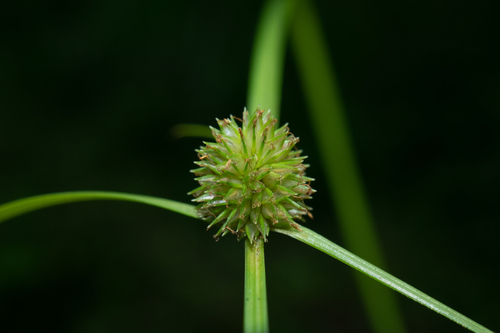
Shortleaf Spikesedge
Cyperus brevifolius
A resilient inhabitant of damp soil, the Shortleaf Spikesedge brings a vibrant splash of lime-green to the often-overlooked corners of the garden. Its geometric stems and rounded seed heads offer a fascinating glimpse into the complex world of sedge biodiversity.
Quick Identification
Size
Stem height ranges from 5 to 50 cm (2 to 20 inches); flower heads are less than 1 cm (0.4 inches) in diameter.
Colors
Bright lime-green foliage and flower heads; occasionally develops brownish tints on mature scales.
Key Features
- Three-sided triangular stems typical of sedges
- Small, solitary, round green flower heads
- Spreads via slender horizontal underground rhizomes
- Short, grass-like leaves mostly clustered at the base
When You’ll See Them
Behavior
Shortleaf Spikesedge is a resilient perennial that acts more like a ground-hugging carpet than a vertical grass. It spreads primarily through an extensive network of underground stems called rhizomes, which allow it to quickly colonize bare or damp patches of soil. Unlike many ornamental plants, it is highly opportunistic, flourishing in areas where the soil remains consistently moist or even saturated.
In a backyard setting, this species is often perceived as a 'weed' because of its ability to outcompete traditional turfgrass in wet conditions. However, it plays a vital role in soil stabilization and provides micro-habitats for tiny invertebrates. It doesn't move in the traditional sense, but its growth pattern shows a clear preference for following moisture gradients across a landscape.
EverydayEarth exclusive
Camera Tips
Capturing the Shortleaf Spikesedge requires a different strategy than photographing mobile wildlife. Because this plant is low-growing—often staying under 10 inches in managed lawns—you should mount your camera on a ground-level spike or a low tripod. Aim for a horizontal angle to capture the unique 'three-sided' geometry of the stems and the spherical shape of the lime-green seed heads against the background.
For AI-powered cameras, use a macro lens attachment if available. The seed heads are less than a centimeter wide, and a standard wide-angle trail cam may miss the intricate detail of the spikelets. Position the camera about 12 to 18 inches away from a healthy cluster. To trigger 'action' shots, set your camera to time-lapse mode; this allows you to observe the slow unfolding of the inflorescence over several days or the way the leaves move in response to morning dew and evaporation.
Lighting is critical for this species. The bright green color can easily wash out in harsh midday sun. The best images are captured during the 'golden hours' of shortly after sunrise or just before sunset, when the low-angle light highlights the texture of the seed heads. If your camera has a high-speed trigger, you might also capture the small pollinators, such as hoverflies or tiny bees, that occasionally visit the flowers.
Consider placing your camera near a known 'wet spot' in your yard after a rainstorm. The Shortleaf Spikesedge looks most vibrant when beads of water cling to its waxy leaves. Ensure your camera's focus is locked on the flower head rather than the background grass to help the AI identification software accurately recognize the Cyperus brevifolius structure.
Similar Species
Species that look similar or are commonly confused with Shortleaf Spikesedge.
Yellow Nutsedge
Yellow Nutsedge grows much taller (up to 3 feet) and has yellowish, umbrella-like flower clusters compared to the single green heads of the Shortleaf Spikesedge.
Globe Sedge
Globe Sedge has multiple round flower heads clustered together, whereas Shortleaf Spikesedge typically features only one head per stem.
Frequently Asked Questions
Record Shortleaf Spikesedge at your habitat
Connect a camera to start building your own species record — AI identifies every visitor automatically.