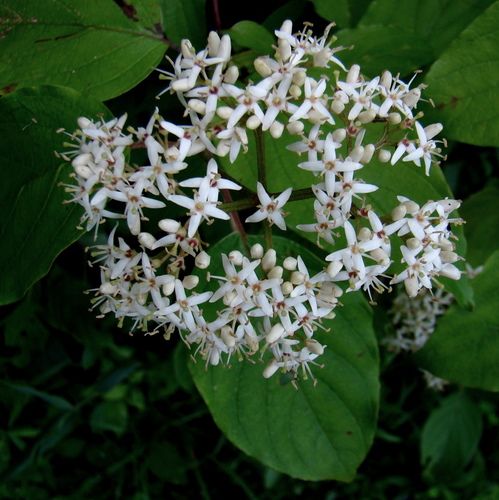
silky dogwood
Cornus amomum
The silky dogwood is the ultimate backyard 'buffet' for birds, offering high-fat blue berries and dense nesting cover. This moisture-loving shrub is a must-have for any wildlife enthusiast looking to attract colorful songbirds and beneficial pollinators.
Quick Identification
Size
6-12 feet (1.8-3.6 meters) tall and wide; multi-stemmed and colonial in habit.
Colors
Cream-white flowers, olive-green foliage, reddish-brown or purple stems, and distinctive cobalt-blue berries.
Key Features
- Flat-topped clusters of small white flowers (cymes)
- Cobalt-blue fruit (drupes) ripening in late summer
- Young stems covered in fine, silky brownish hairs
- Oval leaves with 4-5 pairs of veins that curve toward the tip
When You’ll See Them
Behavior
Unlike some garden plants that stand alone, silky dogwood tends to form thickets through a process called layering, where low-hanging branches touch the ground and sprout new roots. This creates a complex architectural 'behavior' that provides safe, interconnected corridors for small mammals like rabbits and chipmunks to navigate your property while staying hidden from aerial predators.
EverydayEarth exclusive
Camera Tips
To capture the best footage of the silky dogwood, you must view the plant as a 'wildlife stage.' During the late summer (August through September), focus your camera specifically on a cluster of ripening blue berries. This is the peak window for capturing high-energy interactions. Mount your camera on a nearby stake or adjacent tree at a distance of 3-5 feet to ensure the berries are in sharp focus. This setup is perfect for filming 'berry-snatching' behavior from species like Cedar Waxwings and Gray Catbirds.
For those interested in the 'hidden' visitors, place a second camera at the base of the shrub, roughly 6 inches off the ground. The dense, suckering growth of silky dogwood creates a natural tunnel for ground-dwelling wildlife. By angling the camera along the edge of the thicket, you can capture elusive visitors like woodcocks, swamp sparrows, and various small mammals that use the plant as a protective shield while moving through your yard.
Lighting is crucial for this species because its dark blue berries can easily get lost in deep shadows. Position your camera facing North to ensure even, diffused lighting throughout the day, avoiding the 'blown-out' highlights that occur when the sun hits the leaves directly. If your AI camera has a 'time-lapse' feature, use it during the flowering period in May to capture the slow unfurling of the creamy blossoms, which will attract a mesmerizing array of pollinators including the specialized dogwood andrena bee.
Similar Species
Species that look similar or are commonly confused with silky dogwood.
Frequently Asked Questions
Record silky dogwood at your habitat
Connect a camera to start building your own species record — AI identifies every visitor automatically.