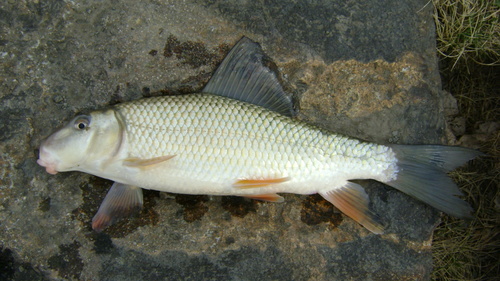
Silver Redhorse
Moxostoma anisurum
The Silver Redhorse is a shimmering, long-lived 'ghost' of the river bottom, capable of living for over 40 years in clean, healthy waterways.
Quick Identification
Size
18-24 inches (45-60 cm) on average, reaching up to 30 inches (76 cm); weighs 2-10 lbs (0.9-4.5 kg).
Colors
Bright silver to brassy-white scales on the sides; white belly; fins are typically slate-gray or dusky, never bright red.
Key Features
- Large, shimmering silver scales
- Sucker-shaped mouth with grooved (plicate) lips
- Semi-circular dorsal fin with a slate-gray tint
- Deep-bodied profile compared to other suckers
When You’ll See Them
Behavior
The Silver Redhorse is a patient and remarkably long-lived resident of North American river systems. Unlike many other freshwater fish, these suckers are exceptionally slow-growing and can live for over 40 years, making them one of the oldest living members of their family. They spend the majority of their time near the bottom of clear rivers and lakes, using their specialized mouths to vacuum up nutrients from the substrate. They are generally peaceful and move in small loose groups, though they become highly migratory during the spring when they head upstream to find gravelly spawning beds.
While they are often dismissed as 'trash fish' by uninformed anglers, the Silver Redhorse is actually a vital bio-indicator. Because they are sensitive to siltation and chemical pollutants, their presence in a backyard creek or local river is a hallmark of a healthy, well-oxygenated ecosystem. They are wary of shadows and sudden movements from above, but they can be observed from riverbanks if the watcher remains still and uses polarized lenses to cut through the surface glare.
EverydayEarth exclusive
Camera Tips
To capture the Silver Redhorse on an AI-powered camera, you need to go beneath the surface. If you have a backyard creek or river access, mount a waterproof action camera or a specialized underwater trail camera just a few inches off the bottom. Look for 'runs'—areas where the water is 2 to 4 feet deep with a steady current and a clean, rocky floor. Angle the camera slightly upward toward the water's surface to catch the sunlight hitting their silver scales, which creates a brilliant flash that helps the AI identify the species.
You can encourage Silver Redhorse to linger in front of your lens by creating a 'feeding station.' Clear a small patch of algae or silt to reveal the bright gravel underneath; these fish are naturally attracted to freshly disturbed riverbeds where food might have been uncovered. Placing the camera near a large submerged log or boulder that breaks the current can also be effective, as the fish often rest in the 'slack water' behind these structures to conserve energy.
Timing is critical for the best footage. During the spring spawning run (typically April through June), these fish move into shallower water and are much more active during the day. In the summer months, focus your recording during the early morning hours when the light is soft. If you are using a camera mounted above the water, look for shallow riffles where the water is less than a foot deep; the Silver Redhorse will often breach the surface with their dorsal fins as they navigate through the thin water, providing a great opportunity for a traditional trail cam trigger.
Similar Species
Species that look similar or are commonly confused with Silver Redhorse.
Frequently Asked Questions
Record Silver Redhorse at your habitat
Connect a camera to start building your own species record — AI identifies every visitor automatically.