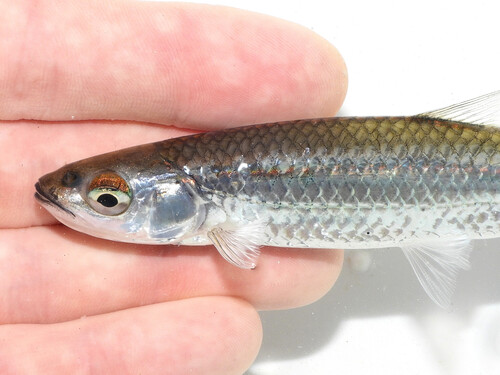
Silver Shiner
Notropis photogenis
Often called the 'trout of the minnow world,' the Silver Shiner is a shimmering, high-energy acrobat found in our cleanest rivers. Its lightning-fast leaps and iridescent scales make it a prized find for backyard stream watchers.
Quick Identification
Size
3 to 5.5 inches (7.5 to 14 cm) in length; weight is typically under 1 ounce (28 grams)
Colors
Brilliant silver sides with iridescent blue or green reflections; olive-green back; white underside; distinct dark crescent-shaped marks between the nostrils
Key Features
- Two dark crescent marks between the nostrils
- Slender, streamlined body with deeply forked tail
- Large eyes relative to head size
- Dorsal fin origin located behind the pelvic fin origin
When You’ll See Them
Behavior
The Silver Shiner is an exceptionally active and social species, typically found schooling in the mid-to-upper layers of the water column. Unlike many other minnow species that forage along the bottom, the Silver Shiner is a surface-oriented hunter. They are renowned among naturalists for their agility and speed, often seen darting through moderate currents in search of drifting prey.
One of their most distinctive behaviors is their tendency to leap completely out of the water to catch low-flying insects, much like a miniature trout. This high-energy lifestyle requires clean, well-oxygenated water. While they are schooling fish, they do not exhibit complex social hierarchies, instead moving as a cohesive unit to confuse predators like smallmouth bass or kingfishers.
EverydayEarth exclusive
Camera Tips
Capturing the Silver Shiner requires a specialized approach since they are entirely aquatic. If you are using an underwater AI-powered camera, the best placement is in a 'run'—the section of a stream where water flows steadily over a gravel bed at a depth of 2 to 3 feet. Position the camera horizontally, facing slightly upstream or across the current, to capture the fish as they hold their position in the flow. Because they are visual hunters, ensure your camera is placed in a spot that receives direct sunlight; the light will catch their iridescent scales, making the AI identification much more accurate.
For those using streamside trail cameras, focus on the 'tail-out' of a pool—the area where a deep pool begins to shallow and speed up into a riffle. This is where Silver Shiners often congregate to feed on surface insects. To capture their famous leaping behavior, set your camera to a high-speed burst mode or high-frame-rate video. Mounting the camera on a low tripod or a stake just inches above the water level will provide a dramatic, 'action-shot' perspective that shows the fish breaking the surface.
Clarity is your biggest challenge. After heavy rains, the water may become turbid, making photography difficult. Plan your best 'shoots' during dry spells when the water is crystal clear. If you find the fish are camera-shy, avoid using bright metallic mounts; instead, use matte black or camouflaged housings that blend into the rocky riverbed. Since these fish are attracted to surface movement, you don't need traditional bait—simply finding a spot with a natural abundance of hatching insects will ensure a steady stream of subjects.
Similar Species
Species that look similar or are commonly confused with Silver Shiner.
Frequently Asked Questions
Record Silver Shiner at your habitat
Connect a camera to start building your own species record — AI identifies every visitor automatically.