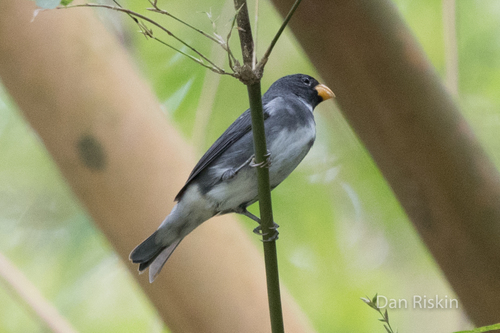
Slate-colored Seedeater
Sporophila schistacea
A nomadic gem of the Neotropical forests, the Slate-colored Seedeater is a master of timing, appearing wherever bamboo seeds are most plentiful. With its sleek gray plumage and distinctive song, it is a prized find for any backyard observer.
Quick Identification
Size
10.5–11.5 cm (4.1–4.5 in) in length; Weight: 11–13 g (0.39–0.46 oz)
Colors
Males are uniform slate-gray with a white wing speculum; females are olive-brown with buffy-brown underparts.
Key Features
- Uniform slate-gray plumage in males
- Thick, stubby bill (often yellow or dusky)
- Small white patch (speculum) on the wing
- Nomadic behavior following bamboo masting
When You’ll See Them
Geographic range
Where Does the Slate-colored Seedeater Live?
This striking seedeater is native to the Neotropics, spanning across Central and South America. Its core range includes the humid lowlands of Panama, Colombia, Venezuela, and the Amazon Basin, stretching down through Peru, Bolivia, and parts of Brazil. Because of its nomadic nature following bamboo cycles, it can occasionally be found in unexpected pockets of forest across the Guianas and northern Central America.
Basemap © OpenStreetMap contributors
Behavior
The Slate-colored Seedeater is a nomadic and somewhat elusive songbird, known for its sudden appearances in areas where bamboo is seeding. Unlike many of its more sedentary relatives, this species travels in search of masting events, making its presence in any given backyard or forest edge unpredictable but exciting for birdwatchers. They are generally social, frequently joining mixed-species flocks alongside other seedeaters and tanagers during the non-breeding season.
These birds spend most of their time in the mid-to-upper levels of the canopy or along the edges of humid forests, though they will descend to lower shrubs to feed on ripening seeds. Their song is a series of rapid, high-pitched trills and whistles, often used by males to defend temporary feeding territories. While they aren't overly shy, their preference for dense foliage and higher strata can make them difficult to spot without the aid of a well-placed camera.
EverydayEarth exclusive
Camera Tips
Capturing the Slate-colored Seedeater on camera requires a bit of strategy due to their nomadic lifestyle. Since these birds are heavily attracted to bamboo masting (seeding) events, placing your camera near flowering bamboo or tall, seeding grasses at the edge of a wooded area is your best bet. Position the camera at a height of 4 to 6 feet, angled slightly downward to capture them as they cling to vertical grass stalks or bamboo stems to feed.
While they don't typically visit standard bird feeders filled with large sunflower seeds, you can lure them by offering 'wild bird' mixes containing small millets and niger seeds. Scatter some of the seed on a flat platform feeder or even on top of a large, flat rock near cover. This species prefers to feed close to the safety of dense foliage, so avoid placing cameras in the middle of wide-open lawns; instead, tuck them near the forest fringe.
For the best results, set your AI camera to a high sensitivity for motion detection, as these birds are small and move quickly. A fast shutter speed or a short video burst (10-15 seconds) is ideal for capturing their rapid movements while feeding. Early morning is the peak time for activity, so ensure your camera is positioned to avoid direct lens flare from the rising sun, which can wash out the subtle slate-gray tones of the male's plumage.
Similar Species
Species that look similar or are commonly confused with Slate-colored Seedeater.
Frequently Asked Questions
Record Slate-colored Seedeater at your habitat
Connect a camera to start building your own species record — AI identifies every visitor automatically.