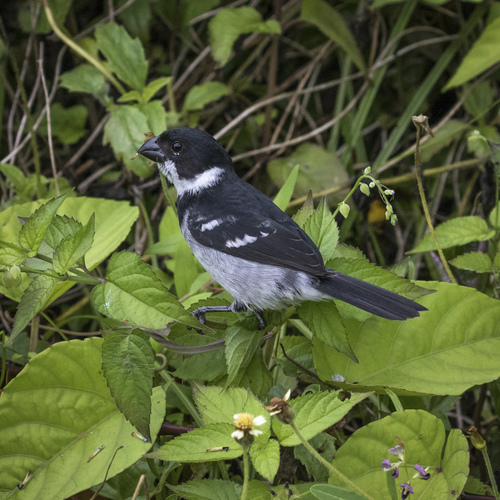
Wing-barred Seedeater
Sporophila americana
A dapper little finch with striking tuxedo-like plumage, the Wing-barred Seedeater is a master of the grasslands. Watch for its acrobatic displays and listen for its melodic song in the tropical sun.
Quick Identification
Size
Length: 10–11 cm (4 in); Weight: 10–14 g (0.35–0.5 oz)
Colors
Males have black upperparts, white underparts, a white throat patch, and two distinct white wing bars. Females are a modest olive-brown above and paler buff below.
Key Features
- Two prominent white bars on the wing coverts
- Short, thick, conical bill designed for cracking seeds
- Male has a distinctive white 'mustache' or throat crescent
- Small, active body with a notched tail
When You’ll See Them
Behavior
The Wing-barred Seedeater is a social and energetic passerine, often seen in small groups or mixed-species flocks. They are famous for their acrobatic feeding style, frequently clinging to the stems of tall grasses and swaying as they pick off seeds. During the breeding season, males become highly territorial and vocal, perched prominently on shrubs or fence lines to deliver a sweet, whistling song that can last for several seconds.
In suburban environments, these birds are relatively bold and adapt well to human presence, provided there are patches of tall grass or garden edges for cover. They are diurnal and spend the majority of their daylight hours foraging. While they are primarily seed-eaters, they have been observed showing curiosity toward garden water features and bird baths, making them a delightful subject for backyard observation.
EverydayEarth exclusive
Camera Tips
To capture the best footage of Wing-barred Seedeaters, position your AI-powered camera at 'perch level,' typically 3 to 5 feet off the ground. These birds prefer to land on horizontal branches or the tops of sturdy grass stalks before hopping down to feed. Aim your camera toward a bird feeder containing white millet or a patch of seeding ornamental grasses. Because they are small and move rapidly, use a high-speed trigger setting or a camera with a high frame rate to avoid motion blur during their quick hops.
Lighting is crucial for identifying the male's specific markings. Try to position the camera with the sun at its back (facing north or south depending on your hemisphere) to highlight the white wing bars against the black plumage. If you are using a trail camera in a more wild setting, look for 'edges' where forest meets field; these are natural corridors for seedeaters. A shallow, clean birdbath can also be a magnet for these birds, as they love to bathe during the hottest part of the afternoon.
During the rainy season, these birds are much more active. Ensure your camera housing is clean and clear of raindrops, as the contrast between the bird's white belly and dark back can sometimes trick auto-exposure settings in low-light, overcast conditions. If your camera allows for manual exposure compensation, a slight underexposure (-0.3 or -0.7) can help preserve the detail in the white patches of the male’s throat and wings.
Similar Species
Species that look similar or are commonly confused with Wing-barred Seedeater.
Variable Seedeater
Variable Seedeaters lack the consistent dual white wing bars and are generally found further west and north into Central America.
Lesson's Seedeater
Lesson's males have a much more extensive white crown stripe and a different throat pattern, though they share the same small size.
Yellow-bellied Seedeater
While similar in shape, the male Yellow-bellied Seedeater has a distinct olive-yellow belly rather than the bright white of the Wing-barred.
Frequently Asked Questions
Record Wing-barred Seedeater at your habitat
Connect a camera to start building your own species record — AI identifies every visitor automatically.