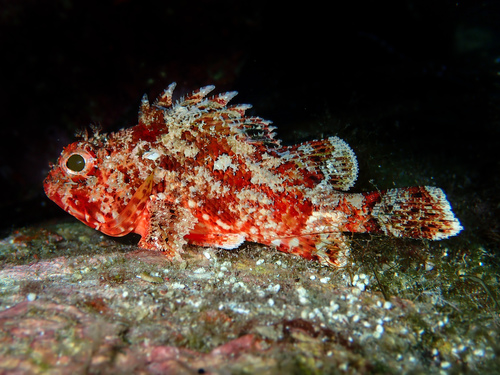
Small Red Scorpionfish
Scorpaena notata
A master of disguise with a spiny, 'punk-rock' silhouette, the Small Red Scorpionfish is the hidden gem of the Mediterranean reefs. Though small, this venomous predator is a fascinating subject for anyone exploring the underwater world of our coastal backyards.
Quick Identification
Size
Length up to 24 cm (9.5 in), but more commonly 12–18 cm (4.7–7 in); weight typically between 100–300g (3.5–10.5 oz).
Colors
Mottled reddish-brown to bright orange-red; lacks a white spot on the dorsal fin; often features a dark blotch on the rear of the spiny dorsal fin.
Key Features
- Stocky body with a large, bony head
- Absence of fleshy tentacles or 'beards' on the chin
- Deep notch in the dorsal fin separating spiny and soft rays
- Mottled skin providing expert camouflage against rocks
When You’ll See Them
Behavior
The Small Red Scorpionfish is a master of camouflage, spending the majority of its life motionless on the seafloor. It is a quintessential 'sit-and-wait' predator, relying on its incredible ability to mimic the textures and colors of algae-covered rocks and coral. While it appears sluggish, this fish is capable of lightning-fast strikes when small prey wanders within range of its large, vacuum-like mouth.
Socially, these fish are largely solitary and territorial, rarely interacting with others except during the spawning season. They are well-protected by venomous spines along their dorsal, anal, and pelvic fins. While not aggressive, they will not flee when approached, instead trusting their camouflage and keeping their spines erect to deter potential threats.
EverydayEarth exclusive
Camera Tips
To capture the Small Red Scorpionfish on a trail or 'backyard' camera, you will need a waterproof underwater setup. If you live on the coast or have access to a dock, the best placement is directly on the seafloor. Use a weighted camera housing or a dedicated underwater tripod to keep the lens steady against currents. Position the camera at a low angle, aiming it toward the base of a rocky outcrop or the edge of a seagrass bed, as these fish rarely swim more than a few inches off the bottom.
Lighting is the most critical factor for this species. Because they are most active at night and perfectly camouflaged, a standard daytime shot might just look like a pile of rocks. Use a wide-angle underwater video light with a warm or red-tinted filter. Red light is less visible to many marine species and will allow you to capture natural hunting behaviors without startling the fish. Set your camera to record in high definition with a high frame rate to capture the split-second 'snap' when the scorpionfish strikes its prey.
Attracting this species is relatively easy if you use a scent lure. Secure a small mesh bag filled with crushed oily fish, such as sardines or mackerel, about two feet in front of your camera lens. While the scorpionfish might not eat the bait directly, the scent will attract small shrimp and crabs—the scorpionfish’s favorite snacks. Once the 'prey' arrives, the Small Red Scorpionfish will likely emerge from its crevice to set up an ambush right in front of your camera.
Seasonal timing is less important than water clarity. Aim for days with low wind and minimal swell to ensure the water is clear and free of suspended sediment. In the spring and early summer, they are often found in shallower water (less than 10 meters deep), making them more accessible for backyard underwater explorers with shorter tether lines or shallow-water housings.
Similar Species
Species that look similar or are commonly confused with Small Red Scorpionfish.
Frequently Asked Questions
Record Small Red Scorpionfish at your habitat
Connect a camera to start building your own species record — AI identifies every visitor automatically.