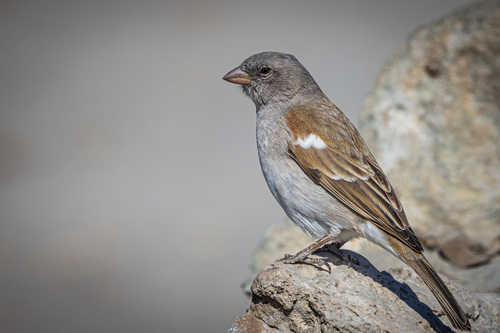
Southern Grey-headed Sparrow
Passer diffusus
A clean-cut and handsome resident of Southern Africa, the Southern Grey-headed Sparrow is the sophisticated native cousin of the common house sparrow. With its warm chestnut back and namesake grey hood, it brings a touch of wild savanna charm to any backyard.
Quick Identification
Size
Length: 15–16 cm (6 inches); Weight: 20–35 g (0.7–1.2 oz); Wingspan: 22–25 cm (8.5–10 inches)
Colors
Uniform grey head and neck; rich chestnut-brown back and rump; white shoulder patch (wing-bar); pale grey to off-white underparts; black bill when breeding, horn-colored otherwise.
Key Features
- Uniformly grey head without facial masks or bibs
- Distinctive white wing-bar on the shoulder
- Chestnut-colored mantle and rump
- Thick, conical seed-eater beak
When You’ll See Them
Geographic range
Where Does the Southern Grey-headed Sparrow Live?
The Southern Grey-headed Sparrow is native to the southern regions of the African continent. Its primary range covers Angola, Zambia, and Malawi southward through Namibia, Botswana, Zimbabwe, and Mozambique. It is a common and widespread resident throughout South Africa, where it has successfully expanded into urban environments and garden habitats.
Basemap © OpenStreetMap contributors
Behavior
The Southern Grey-headed Sparrow is a social and gregarious bird, typically found in small family groups or larger mixed flocks during the non-breeding season. Unlike many other sparrow species that are strictly tied to human habitation, this bird is equally at home in the wilderness. They spend a significant portion of their day on the ground, using a characteristic hopping motion to forage for food. They are known to be quite vocal, making their presence known with a repetitive, cheerful 'cheep-choop' call.
These birds are opportunistic nesters, frequently utilizing holes in trees, fence posts, or the eaves of houses. They are even known to take over the abandoned mud nests of swallows. While they can be bold around bird feeders, they generally remain more cautious than the invasive House Sparrow. Their social structure is loosely territorial during the breeding season, but they often tolerate other seed-eaters in neutral feeding zones.
EverydayEarth exclusive
Camera Tips
To capture high-quality images of Southern Grey-headed Sparrows, focus your camera on ground-level foraging areas or low-hanging bird feeders. These birds are frequent visitors to gardens and respond well to seed trays. Placing your camera 1 to 1.5 meters away from a feeder filled with fine birdseed or crushed maize will yield excellent results. Because they are relatively small, ensure your camera has a decent macro focus or a minimum trigger distance that allows for close-ups without blurring.
Water is a powerful attractant for this species, especially in drier regions. A shallow bird bath with a rough bottom for grip is an ideal stage for your camera. Aim for a side-on angle to catch the light reflecting off their chestnut backs and the clean grey of their heads. If your camera supports high-speed video, use it near water; their vigorous bathing behavior creates beautiful splashes that look great in slow motion.
Lighting is crucial for bringing out the subtle textures of their plumage. Position your camera facing away from the sun to avoid silhouettes, ideally capturing them during the early morning 'golden hour.' During the breeding season (usually following the first rains), keep an eye out for birds with strikingly dark black bills—this indicates a breeding adult in peak condition and makes for a more compelling wildlife portrait.
Because they are quick and often move in groups, set your camera to 'burst mode' or a short video trigger. This increases the chances of capturing a clear frame among the rapid hopping and wing-flicking typical of the species. If you are using a trail camera in a more wild setting, look for prominent perches near waterholes or fruiting trees, as they often land on a nearby branch to scan for predators before descending to feed.
Similar Species
Species that look similar or are commonly confused with Southern Grey-headed Sparrow.
Frequently Asked Questions
Record Southern Grey-headed Sparrow at your habitat
Connect a camera to start building your own species record — AI identifies every visitor automatically.