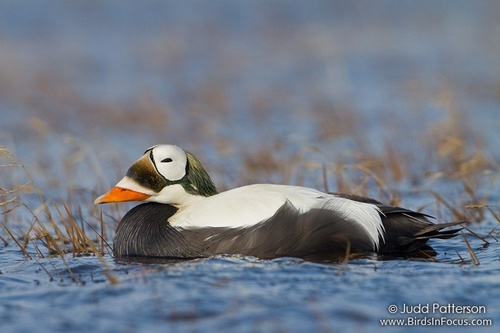
Spectacled Eider
Somateria fischeri
A master of the Arctic ice, the Spectacled Eider is famous for the stunning circular patches around its eyes. This rare sea duck survives the winter in the heart of the Bering Sea, huddling in the gaps of the pack ice.
Quick Identification
Size
Length 50–58 cm (20–23 in); Wingspan approx. 90 cm (35 in); Weight 1.1–1.8 kg (2.5–4.0 lb)
Colors
Males have a white back, black belly, and pale green head with large white eye patches; females are mottled brown with pale brown eye patches
Key Features
- Large circular patches around eyes ('spectacles')
- Feathering extends halfway down the bill
- Males have a shaggy, pale-green nape
- Sturdy, sloping profile from forehead to bill tip
When You’ll See Them
Geographic range
Where Does the Spectacled Eider Live?
The Spectacled Eider is a specialist of the Far North, native to the Arctic regions of Russia and the United States. Its breeding grounds are confined to the coastal fringes of northern and western Alaska and the northeastern shores of Siberia. During the winter, these birds are found almost exclusively in the central Bering Sea, where they congregate in the gaps of the sea ice south of St. Lawrence Island.
Basemap © OpenStreetMap contributors
Behavior
Spectacled Eiders are highly specialized sea ducks known for their remarkable resilience in extreme Arctic environments. During the breeding season, they are relatively solitary or found in small pairs across the coastal tundra, where they build well-concealed nests near small ponds. They are less vocal than many other duck species, maintaining a low profile to avoid predators like gulls and foxes.
Their most fascinating social behavior occurs during the winter. The entire global population migrates to the Bering Sea, where they gather in massive, dense flocks within openings in the sea ice known as polynyas. By huddling together and constantly swimming, they prevent these small patches of water from freezing, allowing them to dive for food in some of the harshest conditions on Earth.
EverydayEarth exclusive
Camera Tips
Capturing the Spectacled Eider on camera requires a specialized approach since they inhabit remote, treeless environments. Because there are no trees to mount a camera, you should utilize ground stakes or low-profile tripods camouflaged with local vegetation. Position your camera at the edge of small tundra ponds or narrow channels between wetlands, as these are the primary corridors used by breeding pairs for foraging and movement.
Lighting is a major challenge in the Arctic. During the summer breeding season, the 24-hour daylight can lead to harsh glares off the water. Set your camera’s exposure compensation to a slightly negative value to ensure the brilliant white feathers on the male's back aren't overexposed. If your camera allows, use a high-speed trigger setting to capture the quick diving action that characterizes their feeding behavior.
Since these ducks are sensitive to disturbance, use a camera with a high-quality zoom lens or a long-range PIR sensor to keep the equipment at a distance from potential nesting sites. Cold temperatures, even in summer, can significantly reduce battery life. We recommend using lithium batteries or an external solar power pack if the camera will be left unattended for several days in the Alaskan or Siberian wilderness.
Similar Species
Species that look similar or are commonly confused with Spectacled Eider.
Frequently Asked Questions
Record Spectacled Eider at your habitat
Connect a camera to start building your own species record — AI identifies every visitor automatically.