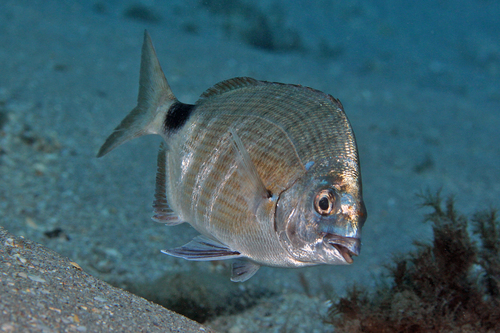
Spottail Seabream
Diplodus holbrookii
Meet the "pinfish with a spot," a shimmering coastal regular that brings life to every pier and jetty. With its curious personality and distinctive tail marking, the Spottail Seabream is a favorite for underwater camera enthusiasts.
Quick Identification
Size
Typically 6 to 10 inches (15–25 cm) in length, occasionally reaching up to 18 inches (46 cm); weight usually ranges from 0.5 to 2 lbs (0.2–0.9 kg).
Colors
Shimmering silver to pale gold body with a distinctive large, black saddle-shaped blotch at the base of the tail and a dark border along the gill covers.
Key Features
- Large black spot at the base of the tail
- Silvery, deep-bodied oval shape
- Dark border on the operculum (gill cover)
- Small mouth with sharp, incisor-like teeth
When You’ll See Them
Behavior
Spottail Seabream are lively, social fish known for their inquisitive nature and schooling behavior. Often found darting around pier pilings and rocky jetties, they are highly active during the day, constantly picking at surfaces for food. They are known to be quite bold around underwater cameras, often approaching the lens to investigate reflections or potential food sources, making them excellent subjects for backyard dock cameras.
While younger individuals stay in the protection of seagrass beds and shallow estuaries, adults venture into slightly deeper coastal waters. They are notorious "bait stealers" among coastal anglers due to their quick, nipping feeding style. In a community setting, they play a vital role in the ecosystem by grazing on algae and keeping small invertebrate populations in check.
EverydayEarth exclusive
Camera Tips
To capture the best footage of Spottail Seabream, position your underwater camera near vertical structures like pier pilings or dock supports where these fish naturally congregate to graze. Use a wide-angle lens and set the camera at a depth of 2 to 5 feet, depending on the tide. Since they are attracted to movement and contrast, a weighted "bait cage" filled with crushed shrimp or squid placed about 18 inches in front of the lens will draw them in and keep them centered in the frame for clear identification.
Lighting is the most critical factor for bringing out their shimmering silver scales. Aim to record during the middle of the day (10 AM to 2 PM) when the sun is directly overhead, providing maximum light penetration through the water column. If you are in an area with significant tidal movement, the hour before and after high tide usually offers the clearest water and highest fish activity. Avoid placing the camera in heavy surf zones, as bubbles and suspended sand will trigger motion sensors unnecessarily and result in cloudy footage.
Because Spottail Seabream have a persistent nipping habit, ensure your camera housing is durable and lacks small, protruding plastic parts they might try to bite. If using an AI-triggered camera, set the motion sensitivity to a high level to catch their quick, darting movements. Periodically cleaning the lens port of algae is essential, as these fish may actually graze directly on your camera setup if it becomes overgrown with marine life!
Similar Species
Species that look similar or are commonly confused with Spottail Seabream.
Pinfish
Pinfish have vertical yellow stripes and a small spot near the shoulder, whereas Spottail Seabream have a large, dark blotch on the tail.
Sheepshead
Much larger than the seabream, Sheepshead feature bold vertical black-and-white stripes and distinct, human-like teeth.
Silver Perch
Lacks the prominent black tail spot and has a more elongated, less disc-like body shape compared to the seabream.
Frequently Asked Questions
Record Spottail Seabream at your habitat
Connect a camera to start building your own species record — AI identifies every visitor automatically.