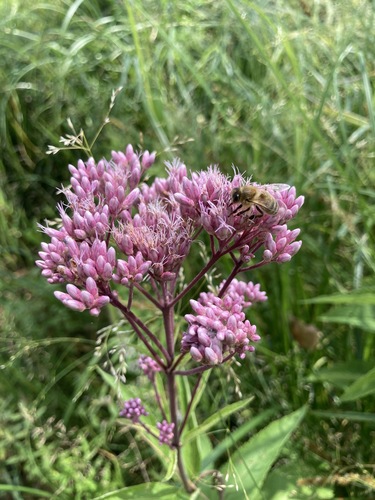
spotted Joe-Pye weed
Eutrochium maculatum
A towering icon of the American wetlands, Spotted Joe-Pye Weed is a pollinator powerhouse known for its massive pink flower heads and distinctively speckled stems.
Quick Identification
Size
0.9–2.4 meters (3–8 feet) tall; 0.6–1.2 meters (2–4 feet) spread
Colors
Dusty rose to purplish-pink flower clusters; stems are distinctively purple-spotted or solid purple
Key Features
- Stems are purple-spotted or solid purple, never entirely green
- Leaves arranged in whorls of 4 to 5 around the stem
- Flat-topped, branched clusters of 9 to 22 disk flowers
- Large, serrated, lance-shaped leaves up to 10 inches long
When You’ll See Them
Behavior
Spotted Joe-Pye weed is a statuesque perennial that dominates the late-summer landscape. While it may appear stationary, it is the center of a frenetic ecosystem. As a high-nectar producer, it serves as a critical "gas station" for butterflies, bees, and moths. The plant grows rapidly throughout the spring and early summer, reaching its impressive height just as many other spring wildflowers begin to fade, providing a vital food source during the hottest months.
Its interaction with humans is primarily through horticulture and conservation; it is a favorite for rain gardens and butterfly enthusiasts. The flowers emit a faint, vanilla-like fragrance when warmed by the sun, which helps attract large swallowtail butterflies and migrating monarchs. In the winter, the dried seed heads remain upright, providing structural interest and a source of food for small birds that pick at the remaining seeds.
EverydayEarth exclusive
Camera Tips
To capture the true majesty of Spotted Joe-Pye weed and the wildlife it attracts, mount your camera at a height of 4 to 6 feet, angled slightly downward toward the flat-topped flower clusters. Since these plants can grow taller than a human, placing the camera on a nearby fence post or a tall tripod is essential. Aim for a south-facing orientation so the sunlight illuminates the vibrant pink petals and the intricate wings of visiting butterflies without creating harsh shadows.
For AI-powered cameras, set your trigger sensitivity to high and focus on the "landing pad" of the flower heads. Because the plant sways significantly in the wind, use a fast shutter speed (at least 1/500s or faster) if your camera allows manual overrides, or select a 'sports' or 'action' mode to prevent motion blur on both the flowers and the fast-moving insects. If you are using a trail camera for video, set the clip length to at least 15-20 seconds to capture the full sequence of a butterfly feeding.
Late summer (August) is the prime window for filming. During this time, the plant is a hub for Monarchs, Tiger Swallowtails, and various bumblebees. If your camera has a time-lapse feature, try setting it to take one photo every 30 minutes from June through August to document the incredible vertical growth of the spotted stems. This creates a compelling visual story of how the plant transforms from a small shoot into a towering giant.
Avoid using artificial lures or baits; the high nectar content of the Joe-Pye weed is more than enough to attract local wildlife. Instead, ensure the area around the base of the plant is clear of tall grasses that might obstruct the camera’s view of the unique spotted stems, which are a key identification feature. If you are photographing in the early morning, look for dew-covered blossoms which can create stunning, high-contrast images as the first light hits the purple-speckled stalks.
Similar Species
Species that look similar or are commonly confused with spotted Joe-Pye weed.
Frequently Asked Questions
Record spotted Joe-Pye weed at your habitat
Connect a camera to start building your own species record — AI identifies every visitor automatically.