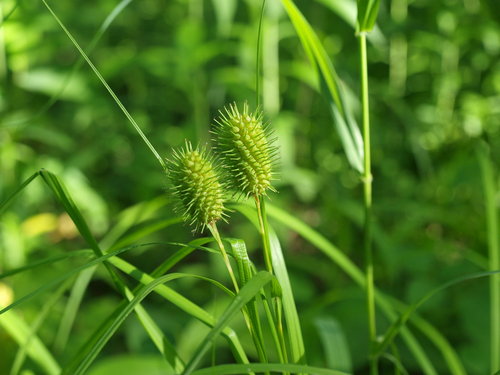
squarrose sedge
Carex squarrosa
Recognizable by its spiky, mace-like seed heads, the Squarrose Sedge is a geometric wonder of the wetlands. This hardy plant is a favorite for wildlife gardeners looking to support local pollinators and foraging birds in damp, shaded spots.
Quick Identification
Size
Stems reach 12-36 inches (30-90 cm) in height; seed heads are 0.6-1.2 inches (1.5-3 cm) in diameter.
Colors
Bright green leaves and stems; seed heads start pale green and mature to a golden-tan or chocolate brown.
Key Features
- Distinctive globe-shaped seed heads resembling a medieval mace
- Bristly 'squarrose' texture from long, spreading seed beaks
- Trigonous (three-sided) stems characteristic of sedges
- Clump-forming growth habit without aggressive runners
When You’ll See Them
Behavior
Squarrose Sedge is a perennial, clump-forming plant that serves as a cornerstone species for North American wetlands. Unlike many grasses that spread aggressively via underground runners, this sedge grows in neat, architectural tufts. Its most notable "behavior" is its seasonal transformation; in early spring, it produces lush, M-shaped green foliage, followed by the emergence of its iconic mace-like flowering spikes in early summer. These spikes remain rigid and upright long after the seeds have matured, providing structural diversity to the forest floor.
Ecologically, the Squarrose Sedge acts as a vital host and shelter. It is a known larval host for several species of butterflies and moths, including the Eyed Brown butterfly. In the wild, it provides cover for small amphibians and insects in damp environments. While it doesn't move across the landscape, its heavy seeds are designed to fall near the parent plant or be dispersed by rising floodwaters, allowing it to colonize bottomland hardwood forests and shaded pond edges over time.
EverydayEarth exclusive
Camera Tips
To capture the architectural beauty of Squarrose Sedge on a trail camera, focus on a low-angle setup. Place your camera on a ground stake or a short tripod roughly 12 to 24 inches off the forest floor. Positioning the lens about three feet away from a healthy clump will allow you to capture the fine, bristly details of the 'mace' seed heads without the image becoming blurry. If your camera has a macro or close-focus setting, this is the perfect species to test it on.
Because this plant thrives in wet areas, you have a unique opportunity to capture the wildlife that interacts with it. Use a high-sensitivity motion trigger setting; while the plant itself only moves in the wind, the heavy seeds attract swamp sparrows, wood ducks (in flooded areas), and various small rodents. By aiming your camera at the base of the plant, you can document the 'hidden' world of foragers that rely on these seeds for protein during the late summer and fall months.
Time-lapse mode is an excellent way to document the life cycle of this sedge. Set your camera to take one photo every 24 hours starting in late May. By August, you will have a stunning visual record of the seed heads emerging, expanding, and changing color from a vibrant lime green to a deep, rustic brown. This is particularly effective if you have a rain garden where the water levels fluctuate, as you can see how the plant reacts to sudden moisture.
Lighting is crucial for this species. Try to position your camera facing North or South to avoid the direct glare of the rising or setting sun. Dappled sunlight filtering through a forest canopy creates the most natural look for Squarrose Sedge, highlighting the translucent quality of the perigynia (the sacs surrounding the seeds). If you are using a camera with an infrared flash for night shots, the rigid structure of the dried seed heads in winter creates hauntingly beautiful, high-contrast images against a snowy backdrop.
Similar Species
Species that look similar or are commonly confused with squarrose sedge.
Frank's Sedge
Frank's Sedge features more elongated, cylindrical seed spikes compared to the rounded, mace-like heads of Squarrose Sedge.
Cattail Sedge
Cattail Sedge has seed spikes that are significantly longer and narrower, closely resembling a miniature green cattail.
Hop Sedge
Hop Sedge has much larger, inflated, and loosely clustered seed sacs that resemble the hops used in brewing.
Frequently Asked Questions
Record squarrose sedge at your habitat
Connect a camera to start building your own species record — AI identifies every visitor automatically.