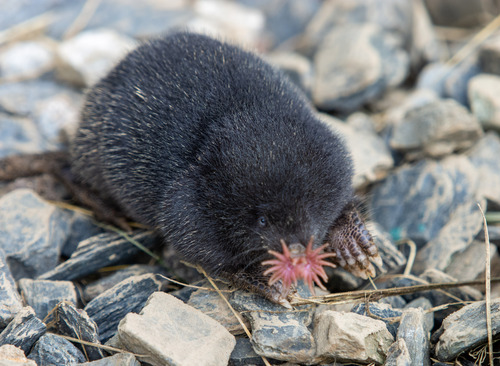
Star-nosed Mole
Condylura cristata
Equipped with a supernatural sense of touch and a star-shaped nose, this semiaquatic mole is the fastest hunter in the underground world. Watch as it navigates the dampest corners of your backyard with precision and speed.
Quick Identification
Size
15-20 cm (5.9-7.9 inches) in length; weighs between 35-75 g (1.2-2.6 oz)
Colors
Uniform dark brown to blackish fur with a paler underside; distinctive pink fleshy nasal rays
Key Features
- 22 fleshy pink tentacles surrounding the snout
- Large, shovel-like forepaws with heavy claws
- Long, thick, scaly tail that swells in winter with fat
- Dense, water-repellent velvety fur
When You’ll See Them
Behavior
The star-nosed mole is a marvel of biological engineering, best known for being the fastest-eating mammal in the world. Using its 22 nasal tentacles—which contain over 25,000 minute sensory receptors—it can identify and consume prey in less than a quarter of a second. Unlike most other moles, this species is semi-aquatic and an excellent swimmer, often foraging along the muddy bottoms of streams and ponds using its paddle-like feet for propulsion.
These moles are active year-round and do not hibernate; they have even been observed swimming under solid ice during the winter months. While they spend much of their time in complex tunnel systems, they are more social than other mole species and are sometimes found living in small, loose colonies. In the backyard setting, they are shy and rarely seen above ground, though their presence is unmistakable due to the unique 'volcano-shaped' mounds of soil they push to the surface.
EverydayEarth exclusive
Camera Tips
Capturing the star-nosed mole on a trail camera is a rewarding challenge because they are almost exclusively subterranean or underwater. To find the perfect spot, look for 'fresh' soil mounds in the dampest part of your yard, particularly near a pond, stream, or drainage ditch. Position your camera at ground level, literally touching the grass, and angle it slightly downward toward a known tunnel exit. If you can find a spot where a tunnel opens into a body of water, you have a high chance of filming them as they transition from land to their aquatic hunting grounds.
Because these animals are incredibly small and move with lightning speed, your camera settings are critical. Use the 'Burst Mode' or 'Rapid Fire' setting to capture 3-5 photos per trigger, as a single shot will often catch nothing but a tail or a blur of fur. A high trigger speed (0.2s or faster) is essential. If your camera has a 'Macro' or close-focus lens, use it; the star-nosed mole is best viewed from a distance of 2-4 feet to see the incredible detail of its snout tentacles.
For night captures, ensure your IR (Infrared) flash is not too bright, as it can 'white out' the subject at such close range. If your camera has adjustable flash power, set it to 'Low' or 'Close Range.' You can also try placing a camera near a log or a flat stone in a marshy area; moles often use these as 'latrines' or resting spots above the water line. Unlike many mammals, they aren't attracted to traditional baits like peanut butter, but maintaining a healthy, chemical-free lawn with plenty of natural earthworms is the best way to keep them coming back to your camera site.
Similar Species
Species that look similar or are commonly confused with Star-nosed Mole.
Frequently Asked Questions
Record Star-nosed Mole at your habitat
Connect a camera to start building your own species record — AI identifies every visitor automatically.