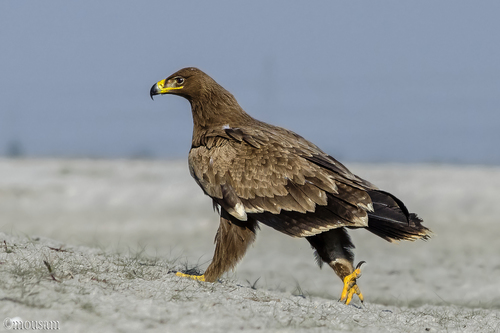
Steppe Eagle
Aquila nipalensis
A majestic master of the open plains, the Steppe Eagle is one of the world's most impressive migratory raptors. Known for its deep brown plumage and incredible transcontinental journeys, this 'Endangered' eagle is a symbol of the wild, untamed grasslands.
Quick Identification
Size
Length: 60–81 cm (24–32 in); Wingspan: 165–215 cm (65–85 in); Weight: 2.3–4.9 kg (5–10.8 lbs)
Colors
Rich umber to dark brown plumage; yellow cere and gape; dark grey bill with a black tip; juveniles have a bold white band across the underwing.
Key Features
- Extraordinarily wide yellow gape extending behind the eye
- Oval-shaped nostrils (unlike the round nostrils of the Tawny Eagle)
- Densely feathered legs down to the toes
- Long, broad wings with deeply fingered primary feathers
When You’ll See Them
Geographic range
Where Does the Steppe Eagle Live?
The Steppe Eagle is a wanderer of the Old World, primarily breeding in a broad belt that stretches from southeastern Europe through southern Russia and Central Asia into Mongolia and northern China. As the seasons shift, these eagles undertake massive migrations to avoid the winter cold, traveling south to inhabit the open landscapes of the Middle East, the Indian Subcontinent, and East and Southern Africa. They are truly international birds, crossing over dozens of national borders twice a year during their epic journeys between continents.
Basemap © OpenStreetMap contributors
Behavior
These birds are exceptionally versatile in their hunting methods. While they are capable of soaring at great heights to spot prey, they are frequently observed walking on the ground or crouching near the burrows of small mammals, waiting patiently to ambush their next meal. They are also known to be 'kleptoparasites,' meaning they will brazenly steal food from other birds of prey. In areas with high human activity, they are generally cautious, though they have learned to scavenge near landfill sites or slaughterhouses during their wintering periods.
EverydayEarth exclusive
Camera Tips
If you are in a migratory corridor or wintering area, you can attract them using ethically sourced carrion, such as livestock remains or roadkill (always check local regulations first). Steppe Eagles are communal scavengers and will quickly descend on a reliable food source. Set your camera to a fast trigger speed and use 'burst' or 'multi-shot' mode to capture the action, as the transition from landing to feeding involves significant movement. Because they are active during the peak of the day, pay close attention to your camera's exposure settings; use a polarizing filter if possible to reduce glare from the sun-drenched plains.
Water is another excellent lure for Steppe Eagles, especially in arid environments. A ground-level birdbath or a small artificial watering hole in an open field can be a magnet for these birds, who need to drink and bathe after their long flights. Place your camera about 15-20 feet away from the water source to ensure the entire bird fits in the frame, as their 7-foot wingspan can easily outgrow a tight shot. During migration periods, morning and late afternoon are the best times for photography, as the birds are more likely to be landing to rest or preparing for takeoff.
Similar Species
Species that look similar or are commonly confused with Steppe Eagle.
Tawny Eagle
Smaller with a shorter gape that doesn't reach past the eye and round nostrils.
Golden Eagle
Larger with a golden-brown nape and a much smaller gape; lacks the oval nostrils of the Steppe.
Lesser Spotted Eagle
Smaller and slimmer with a different wing profile and more pronounced spots on the upperwing coverts.
Frequently Asked Questions
Record Steppe Eagle at your habitat
Connect a camera to start building your own species record — AI identifies every visitor automatically.