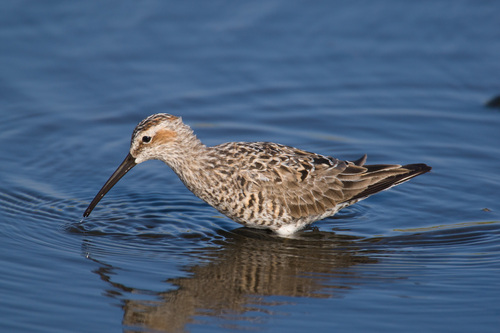
Stilt Sandpiper
Calidris himantopus
An elegant wader with a penchant for deep water, the Stilt Sandpiper is a master of the mudflats. Its long, greenish legs and rhythmic feeding style make it one of the most sophisticated shorebirds to visit your local wetlands.
Quick Identification
Size
Length: 8-9 in (20-23 cm); Wingspan: 15-17 in (38-43 cm); Weight: 1.8-2.5 oz (50-70 g)
Colors
Breeding adults feature heavy dark barring on the underparts and a distinctive rusty-chestnut patch on the cheek and crown. Non-breeding plumage is a refined gray above and white below, with a prominent white stripe over the eye. Legs are a consistent dull greenish-yellow.
Key Features
- Long, greenish-yellow 'stilt-like' legs
- Slender bill with a slight downward droop at the tip
- Prominent white eyebrow stripe (supercilium)
- Heavy dark horizontal barring on the belly during breeding season
When You’ll See Them
Behavior
The Stilt Sandpiper is a graceful and somewhat understated traveler, often found wading deeper into the water than other small sandpipers. They have a characteristic 'sewing machine' feeding style, rhythmically probing their long bills deep into the mud with a vertical motion. While they can be found in large flocks during migration, they are generally less frantic and more deliberate in their movements compared to the smaller 'peeps' like Least or Western Sandpipers.
These birds are long-distance migrants, traveling from the Arctic tundra to South America. During their stopovers in local wetlands or flooded backyard fields, they are relatively social and will frequently associate with Lesser Yellowlegs and Dowitchers. They are rarely aggressive and spend the majority of their daylight hours focused on refueling for their long journey.
EverydayEarth exclusive
Camera Tips
To capture the Stilt Sandpiper on camera, location is everything. These birds are specific about water depth; they prefer to wade in water that is belly-deep, which is much deeper than where you would find a Pectoral or Least Sandpiper. Position your camera at the edge of a shallow pond, flooded lawn, or marshy mudflat. For the best cinematic results, mount the camera just a few inches above the ground or water level using a low-profile stake. This 'worm’s eye view' emphasizes their long legs and makes for much more intimate footage than an overhead angle.
Because Stilt Sandpipers are constantly moving their heads while feeding, use a fast shutter speed or a high frame rate (60fps or higher) if your camera allows. This prevents 'motion blur' from their rapid probing. If you are using a trigger-based trail camera, set it to burst mode to take 3-5 photos per trigger. This increases your chances of getting a clear shot of the bill out of the water or catching the bird in its elegant stepping motion. Avoid using high-intensity flashes at night, though these birds are primarily diurnal, a sudden light can startle them and other local wildlife.
If you have a backyard with a water feature or a seasonally flooded area, you can attract them during migration by keeping the edges muddy and free of tall, dense vegetation. They prefer an open view to keep an eye out for predators. Placing your camera near a known 'hotspot' where the water is 2 to 4 inches deep is the sweet spot. During the fall migration, which starts as early as July for adults, keep your cameras active and check them frequently, as these birds may only stay in one location for a day or two before continuing south.
Similar Species
Species that look similar or are commonly confused with Stilt Sandpiper.
Lesser Yellowlegs
Has much brighter yellow legs and a perfectly straight bill without the Stilt Sandpiper's slight downward droop.
Long-billed Dowitcher
Dowitchers have a much longer, thicker bill and lack the Stilt Sandpiper's long-legged, elegant appearance.
Pectoral Sandpiper
Smaller with shorter legs and a very distinct, sharp line between the streaked breast and white belly.
Frequently Asked Questions
Record Stilt Sandpiper at your habitat
Connect a camera to start building your own species record — AI identifies every visitor automatically.