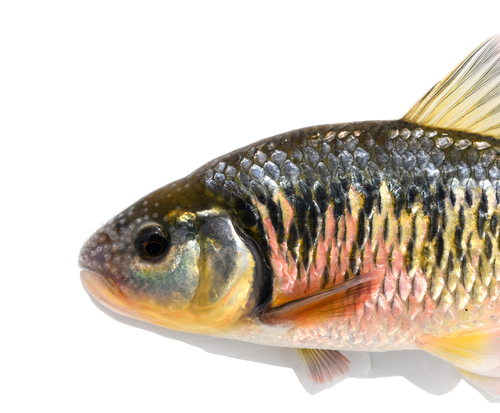
Striped Shiner
Luxilus chrysocephalus
A shimmering resident of North America's clear-water creeks, the Striped Shiner is a master of mid-stream agility. Known for its brilliant silver scales and the breathtaking rose-colored hues of breeding males, it brings a flash of hidden beauty to every backyard stream.
Quick Identification
Size
3 to 7 inches (7.5 to 18 cm) in length; typically weighs less than 1 ounce (28 grams).
Colors
Bright silver sides with a blue-gray or olive back. Breeding males develop striking rose-pink or reddish fins and heads with iridescent blue highlights.
Key Features
- Large, diamond-shaped scales on the sides
- Dark parallel stripes on the upper back converging in a V-pattern
- Deep, compressed body shape compared to other minnows
- Terminal mouth without barbels
When You’ll See Them
Behavior
Striped Shiners are energetic, schooling fish that dominate the mid-water levels of clear streams. They are highly social and are frequently observed in mixed-species schools, though they maintain a distinct hierarchy within their own groups. They are known for their 'jumpy' nature, often rising to the surface to catch low-flying insects or snapping at debris floating downstream.
During the spring, their behavior shifts toward reproduction. Males become intensely territorial and aggressive, defending small patches of gravel. They are famous 'nest associates,' often moving into the pebble nests built by larger fish like Chubs. Watching a school of Striped Shiners in a backyard creek is a lesson in fluid motion, as the entire group can change direction in a split second at the slightest hint of a predator.
EverydayEarth exclusive
Camera Tips
Capturing the Striped Shiner requires a shift from traditional trail cameras to waterproof action cameras or specialized underwater housing. For the best results in a backyard stream, use a weighted 'ground' mount—a flat plate or a heavy rock with a camera attachment—to keep the device stable against the current. Position the camera in a 'run' (the transition area between a shallow riffle and a deeper pool), as shiners often hover here waiting for food to drift down. Point the lens slightly upward toward the surface to capture the natural sunlight filtering through the water, which makes their silver scales sparkle.
Lighting is the most critical factor for underwater fish photography. Set your camera to record during the brightest part of the day, typically between 10 AM and 2 PM. Avoid using the camera's built-in LEDs, as they often reflect off suspended sediment, creating a 'snow' effect that ruins the image. Instead, find a spot where the tree canopy opens up to allow direct sunlight to hit the stream bed. High frame rates (60fps or 120fps) are recommended because these fish move incredibly fast; slow-motion playback will reveal beautiful details of their swimming mechanics and social interactions that the naked eye misses.
To draw the shiners into the frame, you can gently disturb the upstream substrate (the rocks and sand on the bottom) just before you start recording. This releases 'benthic macroinvertebrates' (tiny bugs) into the current, which will immediately attract a hungry school of shiners to your camera's location. Avoid using bread or crackers as bait, as this can be harmful to the fish and the local water quality; sticking to natural 'chumming' by stirring the rocks is much more effective and safer.
During the peak breeding season in late spring, look for areas with clean, pea-sized gravel. If you spot a larger fish like a Chub building a mound of stones, place your camera nearby. Striped Shiners will flock to these nests to spawn, providing you with high-action footage of males displaying their vibrant rose-pink breeding colors and competing for the best positions. Ensure your camera is set to a wide-angle view to capture the full scope of the schooling behavior.
Similar Species
Species that look similar or are commonly confused with Striped Shiner.
Common Shiner
Very similar in appearance but lacks the distinct converging V-pattern of stripes on its back.
Warpaint Shiner
Has a bold black vertical bar behind the gill cover and bright orange-red markings on the face.
Hornyhead Chub
Much stockier with smaller scales and a distinct dark spot at the base of the tail.
Frequently Asked Questions
Record Striped Shiner at your habitat
Connect a camera to start building your own species record — AI identifies every visitor automatically.