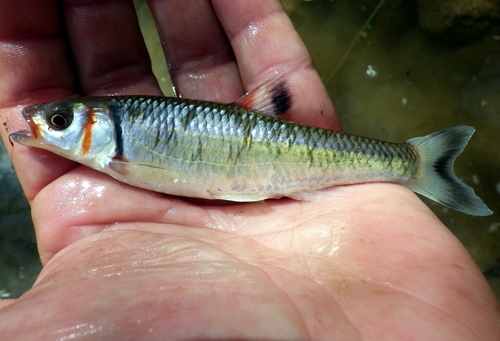
Warpaint Shiner
Coccotis coccogenis
With a vibrant crimson stripe across its cheek and a shimmering iridescent body, the Warpaint Shiner is the hidden gem of Appalachian waterways. This energetic schooling fish brings a splash of color and constant motion to clear mountain streams.
Quick Identification
Size
Typically 9 cm (3.5 in) in length, though they can reach a maximum of 14 cm (5.5 in).
Colors
Shimmering silver-blue body with a distinct vertical red bar on the cheek and a red patch at the base of the dorsal fin. Breeding males develop more intense coloration and small tubercles on the head.
Key Features
- Bright red vertical 'warpaint' bar on the cheek
- Large, terminal mouth relative to other shiner species
- Distinct black band on the dorsal fin
- Sleek, elongated silver body with iridescent blue highlights
When You’ll See Them
Behavior
The Warpaint Shiner is a high-energy, social fish that thrives in the clear, oxygen-rich waters of mountain streams. They are most frequently observed in medium-to-large schools, darting through moderate currents. Unlike many bottom-dwelling minnows, the Warpaint Shiner is a surface-oriented species, often seen hovering in the upper water column to keep a watchful eye for falling insects.
One of their most fascinating social behaviors is 'nest association.' During the spawning season, Warpaint Shiners often congregate around the large, gravelly nests built by River Chubs. By laying their eggs in the chub's nest, the shiners benefit from the chub's protective behavior and the clean, aerated gravel. While they are naturally wary of large movements, they are incredibly curious and will often investigate objects placed in their environment if they remain still.
EverydayEarth exclusive
Camera Tips
To capture the striking colors of the Warpaint Shiner, you need an underwater camera setup or a waterproof action camera positioned in a clear, shallow riffle or at the tail-end of a pool. Aim for water depths between 1 and 2 feet. Mount your camera on a weighted base to keep it stable against the current, and angle it slightly upward toward the surface. This placement captures the sunlight filtering through the water, which is essential for making their iridescent silver and red 'warpaint' markings pop on screen.
Sunlight is the most critical factor for a high-quality capture. Choose a spot where the stream receives direct midday sun. The Warpaint Shiner's scales are highly reflective; when the sun hits them at the right angle, they flash a brilliant blue-silver that AI-powered cameras can easily track. Avoid filming immediately after a heavy rain, as the increased turbidity (cloudiness) of the water will make it difficult for the camera to focus on the fast-moving fish.
If you want to bring the school directly in front of your lens, try the 'sediment stir' technique. Stand a few feet upstream from your camera and gently disturb the gravel with your foot. This releases small nymphs and larvae into the current. The opportunistic Warpaint Shiners will quickly move into the 'scent trail' to feast on the drifting snacks, providing you with close-up action shots. During the late spring and early summer, look for large piles of stones on the stream bed—these are chub nests. Placing your camera near these nests is the best way to record the dramatic spawning displays of the shiner.
Similar Species
Species that look similar or are commonly confused with Warpaint Shiner.
Common Shiner
Lacks the distinctive red cheek bar and has a deeper, more slab-sided body shape.
River Chub
Much larger and more robust with a horizontal dark stripe rather than the vertical red cheek markings.
Saffron Shiner
Smaller with bright yellow-gold fins during the breeding season rather than red markings.
Frequently Asked Questions
Record Warpaint Shiner at your habitat
Connect a camera to start building your own species record — AI identifies every visitor automatically.