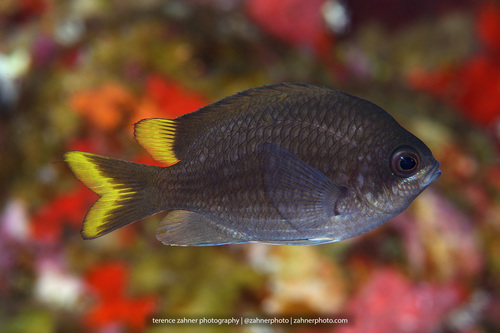
Sunshinefish
Chromis insolata
A shimmering inhabitant of the Western Atlantic's deep reef slopes, the Sunshinefish is a master of the mid-water column. With its sleek olive-silver body and graceful movements, it provides a fascinating look into the biodiversity of our deeper coastal waters.
Quick Identification
Size
Grows up to 16 cm (6.3 inches) in length
Colors
Olive-brown or grayish on the upper body, fading to a silvery-white or pale yellow underside; features a distinct dark spot at the base of the pectoral fins.
Key Features
- Deep, oval-shaped body profile
- Deeply forked tail fin
- Dark spot at the base of the pectoral fin
- Olive-brown upper body contrasting with a lighter belly
When You’ll See Them
Geographic range
Where Does the Sunshinefish Live?
The Sunshinefish is native to the Western Atlantic Ocean, maintaining a strong presence from the warm waters of Bermuda and the Florida coast down through the Caribbean Sea. These fish are most commonly found in the coral-rich environments of the Gulf of Mexico and along the tropical shores of Central and South America, extending as far as the coast of Brazil. Unlike many shore-hugging damselfish, they prefer the deeper, more stable environments of outer reef slopes and rocky walls, where they can forage in nutrient-rich currents.
Basemap © OpenStreetMap contributors
Behavior
The Sunshinefish is a reef-associated species known for its relatively shy nature compared to other damselfish. They are typically found in deeper water, often hovering just above the substrate of reef slopes or rocky walls. Unlike some of their more aggressive cousins, Sunshinefish are generally peaceful and tend to congregate in small, loose groups rather than forming tight schools. They are diurnal, spending the daylight hours foraging and retreating into the safety of reef crevices at night to avoid predators.
In their natural habitat, they play a vital role in the reef ecosystem by managing plankton populations. While they are occasionally found in the aquarium trade, they are less common than other Chromis species due to the depth at which they live. To divers and underwater observers, they appear as quick, shimmering flashes of silver and olive, darting into cover the moment they perceive a threat.
EverydayEarth exclusive
Camera Tips
To capture the Sunshinefish on an underwater AI-powered camera, you should target depths where the reef begins to slope away from the shallows. Position your camera housing on a stable rocky outcrop or secure it to a reef-safe mount at depths between 20 and 50 meters. These fish are most active in the water column directly above the reef structure, so angling your lens slightly upward toward the surface can help silhouette them against the downwelling light, though a horizontal view against the reef wall is better for identification.
Lighting is your biggest challenge when photographing this species. Because they live in deeper water where sunlight is filtered, their natural olive and silver colors can appear dull or grey. Use external video lights with a high Color Rendering Index (CRI) to restore their natural vibrancy. If your camera has AI-subject tracking, configure it to trigger on small, fast-moving objects in the mid-water, as Sunshinefish are constantly darting to catch plankton.
Since these fish are relatively small and wary of large disturbances, a stationary 'drop-cam' setup works best. Avoid using bait, as this species is a specialist planktivore and won't be attracted to traditional fish food; instead, rely on high-frame-rate settings to catch their rapid movements. Early afternoon provides the best ambient light penetration at depth, making it the ideal window for clear, high-resolution captures.
Similar Species
Species that look similar or are commonly confused with Sunshinefish.
Frequently Asked Questions
Record Sunshinefish at your habitat
Connect a camera to start building your own species record — AI identifies every visitor automatically.