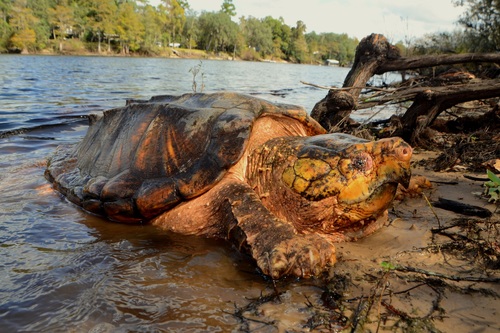
Suwannee Alligator Snapping Turtle
Macrochelys suwanniensis
A prehistoric relic of the Deep South, the Suwannee alligator snapping turtle is a massive, ridge-shelled predator found nowhere else on Earth but its namesake river basin.
Quick Identification
Size
Carapace length 40-80 cm (16-32 in); weight 35-80 kg (77-176 lbs), with rare males exceeding 90 kg
Colors
Dark brown, olive, or grey-black shell often covered in algae; skin is greyish-brown with yellowish tones around the neck
Key Features
- Three prominent longitudinal ridges (keels) on the shell
- Massive head with a powerful, hooked beak
- Fleshy, pink worm-like lure on the tongue
- Long, thick tail with scale-like tubercles
When You’ll See Them
Geographic range
Where Does the Suwannee Alligator Snapping Turtle Live?
This prehistoric-looking reptile is native to the North American continent and is found in a very specific, narrow geographic range. It is endemic to the Suwannee River basin, which winds through southern Georgia and into the Florida Panhandle. Because it is restricted to this single drainage system and does not travel overland between river basins, it is considered one of the most range-restricted large turtles in the world.
Basemap © OpenStreetMap contributors
Behavior
The Suwannee alligator snapping turtle is a master of camouflage and patience. As a sit-and-wait predator, it spends the vast majority of its life motionless on the river floor, often partially buried in mud or tucked under submerged logs. It is famous for its unique hunting strategy: it holds its mouth wide open to reveal a small, pink, worm-like appendage on its tongue. By wriggling this lure, it entices fish to swim directly into its jaws, which snap shut with incredible speed and force.
Unlike the more aggressive common snapping turtle, this species is relatively docile when left alone in the water but can be extremely defensive on land. They are primarily solitary and highly aquatic, with females only leaving the water once a year to lay eggs in sandy upland soils. Because they have a very low metabolic rate, they can remain submerged for long periods, surfacing only occasionally for a breath of air.
EverydayEarth exclusive
Camera Tips
Capturing a Suwannee alligator snapping turtle on a backyard or trail camera requires specific proximity to the Suwannee River or its tributaries. Because they are almost entirely aquatic, your best window for a clear shot is during the nesting season (May through July). Focus your camera on sandy banks or clearing slopes within 50-100 feet of the water's edge, as this is where females will emerge to dig their nests.
Set your camera at a low height—roughly 12 inches off the ground—to capture the turtle's profile and shell texture. Since they are most active at night, ensure your camera has a high-quality infrared (no-glow) flash. This prevents the 'white-out' effect on their dark shells and avoids startling the turtle, which might cause it to retreat to the water before finishing its nesting cycle.
If you have a dock or waterfront property, you can occasionally lure them toward the shallows for a photo by securing a perforated container of oily fish, like sardines or mackerel, just below the water line. The scent can draw them into the range of a shore-mounted camera. Use a fast trigger speed and a multi-shot burst setting; while they move slowly, their scale and prehistoric appearance are best captured in a series of clear, high-resolution images.
Similar Species
Species that look similar or are commonly confused with Suwannee Alligator Snapping Turtle.
Alligator Snapping Turtle
Nearly identical in appearance but found in the Mississippi River drainage and other Gulf rivers further west; the two species are genetically distinct.
Common Snapping Turtle
Smaller with a smoother, less ridged shell and a much longer neck; lacks the specialized tongue lure.
Frequently Asked Questions
Record Suwannee Alligator Snapping Turtle at your habitat
Connect a camera to start building your own species record — AI identifies every visitor automatically.