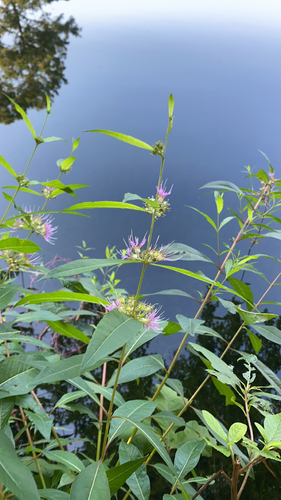
swamp loosestrife
Decodon verticillatus
The graceful architect of the marsh, Swamp Loosestrife creates vibrant pink-fringed arches that serve as living bridges for wetland wildlife. This native perennial is a must-have for any backyard pond or shoreline camera setup.
Quick Identification
Size
2 to 8 feet (0.6 to 2.4 meters) in height; arching stems can spread significantly over water surfaces.
Colors
Bright green to deep green lance-shaped leaves; clusters of vibrant pink to magenta bell-shaped flowers; stems turn reddish-brown and woody at the base.
Key Features
- Arching woody stems that root at the tips when they touch water
- Whorled or opposite leaves in groups of three or four
- Clusters of pinkish-purple flowers tucked into the leaf axils
- Spongy, thickened tissue at the base of the stem (aerenchyma)
When You’ll See Them
Behavior
Swamp Loosestrife, often called Waterwillow, is a fascinating perennial that acts as a structural architect in wetland ecosystems. Unlike many plants that simply grow upward, this species sends out long, graceful stems that arch toward the water. When the tips of these stems touch the muddy substrate or water's surface, they develop spongy tissue and sprout new roots, a process known as vegetative layering. This allows the plant to literally 'walk' across the shoreline over time, creating dense thickets that stabilize the banks.
Beyond its growth patterns, Swamp Loosestrife is a vital community hub for wildlife. Its dense, arching structure provides essential cover for nesting waterfowl and a safe haven for small fish and amphibians hiding from predators. While it doesn't move in the traditional sense, its seasonal transformation is dramatic, shifting from lush green foliage to a riot of pink blooms, and finally to deep red or burgundy leaves in the autumn before dropping its foliage for the winter.
EverydayEarth exclusive
Camera Tips
When setting up an EverydayEarth camera to capture Swamp Loosestrife, remember that you aren't just filming a plant—you are filming a high-traffic wildlife highway. Because the stems arch over the water, they create natural bridges for semi-aquatic life. Position your camera at a low angle (about 12-18 inches above the water line) focused on a prominent arching stem. You are likely to capture turtles using the stems as basking spots or frogs using them as hunting perches.
For the best visual results, utilize the plant's stunning floral display during the mid-summer months. Set your camera to a time-lapse mode during the peak bloom (July and August) to capture the incredible diversity of pollinators. Hummingbirds, bumblebees, and various butterfly species are frequent visitors to the bell-shaped flowers. Aim your lens so it captures the flowers in the foreground with a bit of the open water in the background to get that perfect 'wetland' aesthetic.
Lighting is crucial for this species. Because it often grows at the edge of dark wooded swamps, wait for the 'Golden Hour'—shortly after sunrise or before sunset—when the low light hits the magenta flowers and makes them pop against the dark water. If your camera has a trigger for motion, the movement of the stems in a breeze can sometimes cause false triggers; adjust your sensitivity settings or use a 'fixed interval' capture mode to monitor the plant's seasonal changes and the visitors it attracts without filling your SD card with wind-blown leaves.
Similar Species
Species that look similar or are commonly confused with swamp loosestrife.
Purple Loosestrife
A tall, invasive upright plant with long vertical spikes of flowers, whereas Swamp Loosestrife has arching stems and flowers in the leaf axils.
American Water Willow
Features white and purple orchid-like flowers on long stalks rather than bell-shaped magenta flowers tucked against the stem.
Frequently Asked Questions
Record swamp loosestrife at your habitat
Connect a camera to start building your own species record — AI identifies every visitor automatically.