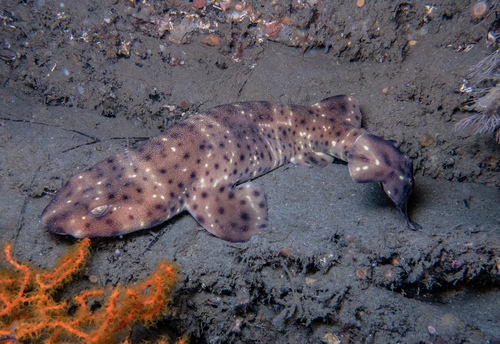
Swellshark
Cephaloscyllium ventriosum
Meet the master of the underwater 'puff.' The Swellshark is a beautifully mottled reef dweller known for its incredible ability to double in size when threatened.
Quick Identification
Size
Typically 80-100 cm (31-39 in) in length, weighing up to 4 kg (9 lbs).
Colors
Yellowish-brown to tan base color with dark brown spots and splotches, often interspersed with smaller white spots. The underside is lighter and heavily mottled.
Key Features
- Broad, flattened head with a short snout
- Large, oval, cat-like eyes with gold irises
- Heavily spotted pattern across the entire body and fins
- Two dorsal fins positioned far back toward the tail
When You’ll See Them
Behavior
The Swellshark is a primarily nocturnal and sluggish species that spends its daylight hours hiding deep within rocky crevices or tucked away in kelp holdfasts. They are remarkably sedentary during the day, often seen stacking on top of one another in favored hiding spots. When night falls, they emerge to cruise the reef in search of food, moving slowly along the seafloor using a combination of swimming and 'walking' on their pectoral fins.
Their most famous behavior is a unique defense mechanism. If threatened by a predator like a seal or a larger shark, the Swellshark bends its body into a U-shape, grabs its tail in its mouth, and swallows a large amount of water or air. This causes its stomach to expand, effectively doubling its girth. By doing this inside a rocky crack, the shark wedges itself so tightly that it becomes impossible for a predator to pull it out.
While they are generally shy and pose no threat to humans, they are curious around divers at night. They rely heavily on their ampullae of Lorenzini—electroreceptors that detect the faint electrical fields of living prey—allowing them to find crabs and small fish even in the pitch-black darkness of the Pacific depths.
EverydayEarth exclusive
Camera Tips
Capturing a Swellshark on camera requires an underwater setup, ideally placed near rocky reef transitions or the edges of kelp forests. Since these sharks are nocturnal, your camera must have high-quality infrared (IR) or low-light capabilities. Avoid using bright white lights if possible, as sudden illumination can cause them to retreat into crevices; instead, use a red light filter or subtle IR LEDs which are less intrusive to their sensitive eyes.
Placement is key for the Swellshark. Position your camera about 12-18 inches off the seafloor, angled slightly downward toward a sandy patch adjacent to a rocky ledge. This 'edge' habitat is where they often forage for crustaceans. If you are using a waterproof housing in a tidepool or shallow reef, ensure the camera is weighted or strapped to a heavy rock to prevent it from being moved by the surge or kelp movement.
To attract a Swellshark to your camera’s field of view, use a scent-based lure rather than a physical bait they can eat. A perforated PVC pipe filled with crushed oily fish (like mackerel or sardines) works wonders. Secure the scent canister about 3 feet in front of the lens. The shark will follow the 'chum line' to the source, giving you ample time to record its distinctive 'walking' movement and spotted patterns. Look for them particularly during high tides at night when they venture into shallower areas to hunt.
When reviewing your footage, keep an eye out for their glowing eyes; the tapetum lucidum in a Swellshark's eye reflects light brilliantly, often appearing before the body is visible. Set your camera to record 20-30 second clips rather than still photos, as their slow-moving nature is best captured in video, allowing you to see the rhythmic pumping of their gills and their unique method of navigating the rocky terrain.
Similar Species
Species that look similar or are commonly confused with Swellshark.
Frequently Asked Questions
Record Swellshark at your habitat
Connect a camera to start building your own species record — AI identifies every visitor automatically.