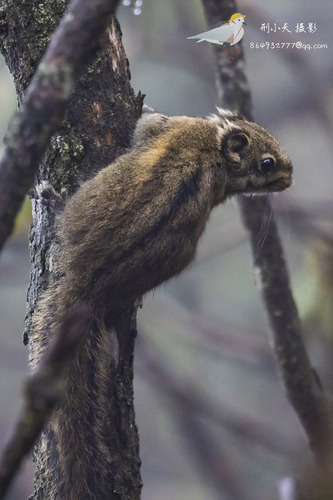
Swinhoe's Striped Squirrel
Tamiops swinhoei
Meet the Swinhoe's Striped Squirrel, a tiny, energetic mountain-dweller that looks like a cross between a squirrel and a chipmunk. Found across the highland forests of Asia, these social acrobats are known for their striking stripes and unique love for floral nectar.
Quick Identification
Size
Body: 10–16 cm (4–6.3 in); Tail: 8–11 cm (3.1–4.3 in); Weight: 40–85 g (1.4–3 oz)
Colors
Olive-brown to grayish-brown base; five pale cream or buff stripes alternating with four dark brown or black stripes; distinctive white tufts on the tips of the ears.
Key Features
- Five light longitudinal stripes on the back and sides
- Distinctive white hair tufts on the ear tips
- Arboreal behavior, frequently climbing vertical tree trunks
- Small, slender build with a bushy, medium-length tail
When You’ll See Them
Geographic range
Where Does the Swinhoe's Striped Squirrel Live?
Native to the Asian continent, Swinhoe's Striped Squirrel is widely distributed throughout Central and Southern China, extending into Northern Myanmar, Vietnam, and Laos. It is a highland specialist, most commonly found in the temperate forests and mountainous regions of the Himalayan foothills. While it remains resident within its native Asian range, it thrives in various high-altitude ecosystems from 1,000 to nearly 4,000 metres.
Basemap © OpenStreetMap contributors
Behavior
Swinhoe's Striped Squirrels are exceptionally active and agile diurnal rodents. Unlike many of their solitary relatives, they are quite social and are frequently observed foraging in small groups or nesting together in tree hollows. They are master climbers, spending the vast majority of their lives in the canopy or clinging to the vertical bark of trees where they search for food and escape predators.
These squirrels are known for their vocal nature, often emitting high-pitched, bird-like chirps to communicate with one another or warn the group of danger. While they are generally shy around humans, they are highly inquisitive and can become accustomed to human presence in areas like tea plantations or mountain resorts where they may venture onto balconies or garden fences in search of snacks.
EverydayEarth exclusive
Camera Tips
Because Swinhoe's Striped Squirrels are strictly arboreal, the biggest mistake people make is placing cameras on the ground. For the best results, mount your AI-powered camera 4 to 6 feet up a tree trunk with rough bark. These squirrels use vertical trunks as 'highways' to navigate the forest, and a trunk-mounted camera will capture them as they pause to scan their surroundings.
To get them to sit still for a high-quality photo, try using a sweet lure. These squirrels have a natural affinity for nectar and fruit; a small smear of honey, jam, or even peanut butter mixed with honey on the bark directly in front of the lens works wonders. Placing a few sunflower seeds in a natural crevice of the bark can also keep them occupied for several minutes, providing plenty of time for your camera to trigger.
These are fast-moving creatures, so ensure your camera is set to a high trigger speed or 'burst mode.' Capturing a sequence of 3 to 5 images is ideal because they tend to move in sudden, jerky bursts. If your camera supports high-definition video, use it—the sight of them grooming their white ear tufts or interacting with other members of their group is far more rewarding than a single still image.
Lighting is key for highlighting their intricate stripes. Position your camera on a tree that receives dappled morning sunlight, as this is when they are most active and their colors pop against the bark. Avoid pointing the camera directly at the sun, as the glare can wash out the subtle color differences in their five longitudinal stripes.
Similar Species
Species that look similar or are commonly confused with Swinhoe's Striped Squirrel.
Frequently Asked Questions
Record Swinhoe's Striped Squirrel at your habitat
Connect a camera to start building your own species record — AI identifies every visitor automatically.