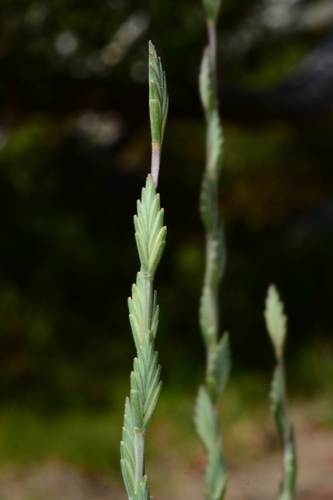
Tall Wheat Grass
Thinopyrum obtusiflorum
A towering giant of the meadow, Tall Wheat Grass is a hardy perennial known for its striking blue-green blades and its ability to provide year-round shelter for backyard wildlife.
Quick Identification
Size
Stands between 1.2 and 3 meters (4 to 10 feet) tall, with leaf blades measuring 15 to 40 cm (6 to 16 inches).
Colors
Foliage is typically a striking glaucous blue-green; seed heads turn a straw-tan or golden-brown color as they mature in late summer.
Key Features
- Impressive height, often reaching over 6 feet tall
- Stiff, upright stems that remain standing through winter
- Long, unbranched seed spikes with widely spaced spikelets
- Coarse, flat leaves with a distinctive bluish waxy coating
When You’ll See Them
Behavior
Tall Wheat Grass is a robust, perennial bunchgrass that is known for its incredible hardiness and ability to thrive in challenging environments. Unlike many other grasses that wither in poor soil, this species is highly tolerant of salinity and alkaline conditions, making it a common sight in reclaimed pastures and along roadside ditches where salt runoff is prevalent.
While it doesn't 'behave' in a social sense, it plays a vital role in its ecosystem by providing dense vertical structure. It grows in thick, localized clumps that expand slowly over time via short underground rhizomes. For humans, it is often seen as a beneficial forage crop for livestock or as a tool for erosion control, though in some regions it can become aggressive and outcompete native meadow species.
In a backyard or farm setting, Tall Wheat Grass acts as a sanctuary for wildlife. Its stiff culms (stems) remain upright even under heavy snow, providing essential winter cover for ground-nesting birds and small mammals. During the summer, it serves as a host for various insect larvae and a high-perch singing platform for grassland birds.
EverydayEarth exclusive
Camera Tips
When capturing Tall Wheat Grass on your backyard camera, height is your primary challenge and advantage. Because this grass can tower over 6 feet, avoid placing your camera on the ground looking straight into the thicket, as you will likely only get triggered by blowing blades. Instead, mount your camera on a fence post or a tall stake at about 4 to 5 feet high, angling it slightly downward to capture the swaying seed heads and the birds that land on them.
Since AI cameras often trigger on motion, Tall Wheat Grass can be a 'false trigger' culprit on windy days. To mitigate this, use a camera with adjustable sensitivity or set 'Masking Zones' in your app to exclude the most active moving blades. Alternatively, lean into the motion! Using a time-lapse mode during a breezy afternoon can create a beautiful 'shimmering' effect as the blue-green leaves catch the light, documenting the rhythmic nature of your backyard meadow.
For the best lighting, aim your camera North or South to avoid the direct glare of the rising or setting sun. The glaucous (waxy) coating on the leaves of Tall Wheat Grass reflects light beautifully during the 'Golden Hour' (the hour before sunset), turning the blue-green hue into a soft, ethereal silver. This is also the best time to catch wildlife, such as deer or rabbits, moving through the tall stalks.
If you are looking to capture biodiversity, focus your camera on the seed spikes during the late summer and autumn. Many songbirds, particularly finches and sparrows, will cling to these rigid stems to feed on the grain. Position the camera about 3 feet away from a healthy bunch to get high-detail shots of these feeding interactions. In winter, keep the camera active; the standing straw provides excellent contrast for spotting dark-colored birds against a snowy, golden-grass background.
Similar Species
Species that look similar or are commonly confused with Tall Wheat Grass.
Frequently Asked Questions
Record Tall Wheat Grass at your habitat
Connect a camera to start building your own species record — AI identifies every visitor automatically.