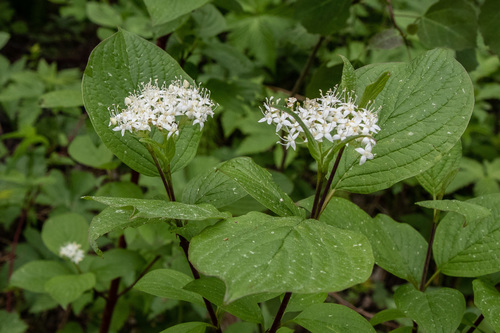
Tatarian dogwood
Cornus alba
Famous for its stunning crimson stems that glow against the winter snow, the Tatarian dogwood is a versatile shrub that transforms any backyard into a year-round wildlife sanctuary.
Quick Identification
Size
Grows up to 3 meters (10 feet) in height with a spread of 1.5 to 3 meters (5-10 feet).
Colors
Bright coral-red to deep crimson stems; medium green or variegated white-and-green leaves; white to pale blue fruits.
Key Features
- Vibrant red winter bark on young stems
- Opposite, ovate leaves with distinct curving veins
- Clusters of small, creamy white flowers in spring
- White drupes (berries) often tinted with blue
When You’ll See Them
Behavior
The Tatarian dogwood is a vigorous, deciduous shrub known for its suckering habit, meaning it frequently sends up new shoots from its root system to form dense thickets. While it remains stationary, it undergoes a dramatic visual transformation through the seasons, serving as a dynamic backdrop for backyard wildlife. In the spring and summer, its dense foliage provides excellent nesting cover for small songbirds and shade for ground-dwelling creatures.
As a key player in the suburban ecosystem, this dogwood interacts with local fauna primarily as a host and food source. It doesn't 'behave' in the animal sense, but its growth pattern is aggressive enough to create natural corridors in gardens. In the winter, its striking red stems provide a rare splash of color in the dormant landscape, making it a favorite for gardeners looking to add year-round visual interest.
EverydayEarth exclusive
Camera Tips
To capture the best images of a Tatarian dogwood, focus on its role as a hub for wildlife. Position your camera about 3 to 4 feet off the ground, angled slightly downward toward the middle branches where the white berries appear in late summer. This is the prime spot to catch birds like Northern Cardinals or Cedar Waxwings as they stop to feed. Because the berries are a major draw, setting your camera to 'Burst Mode' or 'Photo + Video' will help you capture the quick movements of feeding birds.
If you are interested in the plant's aesthetic beauty, winter is the best time for photography. The red stems pop brilliantly against a snowy background. Set your camera’s exposure compensation slightly higher (+0.5 or +1.0) if there is snow on the ground to prevent the stems from looking too dark or underexposed. Macro settings are excellent in late spring for capturing the intricate clusters of tiny white flowers that attract a variety of native pollinators.
For those using AI-powered cameras, the Tatarian dogwood makes an excellent 'staging area.' Place the camera on a fence post or tripod nearby, looking into the shrub's interior. The dense branches provide a sense of security for birds, making them more likely to linger in front of the lens. Avoid placing the camera too close to the outer leaves, as wind can cause 'false triggers'; instead, clear a small window of sight through the foliage to a specific branch or fruit cluster.
Similar Species
Species that look similar or are commonly confused with Tatarian dogwood.
Frequently Asked Questions
Record Tatarian dogwood at your habitat
Connect a camera to start building your own species record — AI identifies every visitor automatically.