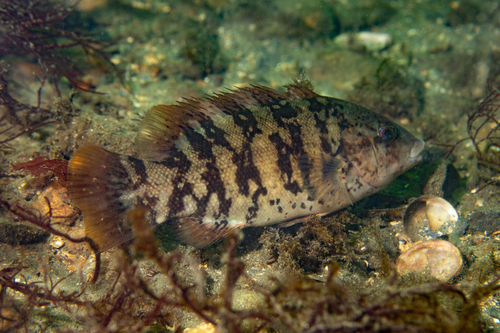
Tautog
Tautoga onitis
Meet the 'bulldog of the Atlantic,' a sturdy reef-dweller known for its powerful jaws and penchant for shipwrecks. The Tautog is a master of the rocky shoreline, offering a glimpse into the hidden, rugged world beneath the waves.
Quick Identification
Size
Typically 35-60 cm (14-24 inches) long; weights usually range from 1-4 kg (2-9 lbs), though trophy specimens can reach 90 cm and 11 kg (25 lbs).
Colors
Mottled dark olive, chocolate brown, or charcoal gray with irregular black blotches; older males often develop a prominent white chin and a more uniform gray color.
Key Features
- Blunt, rounded head with a steep profile
- Thick, fleshy lips covering powerful crushing teeth
- Heavy, deep-bodied shape with a long dorsal fin
- Small eyes set high on the head
When You’ll See Them
Geographic range
Where Does the Tautog Live?
The Tautog is a native resident of the Western Atlantic Ocean, hugging the rugged coastline of North America. Its core range extends from the chilly waters of Nova Scotia and New Brunswick in Canada southward to the temperate shores of South Carolina in the United States. They are most densely populated in the coastal stretches between Cape Cod and the mouth of the Chesapeake Bay, where the abundance of rocky glacial debris and man-made structures provides the perfect labyrinthine habitat for them to thrive.
Basemap © OpenStreetMap contributors
Behavior
Tautog are the homebodies of the Atlantic reef. Unlike many wandering sea fish, they are highly structure-oriented and rarely stray far from their preferred rock pile, shipwreck, or pier piling. They are strictly diurnal, meaning they are active only during daylight hours. At night, they exhibit a fascinating behavior similar to mammalian sleep; they wedge themselves into crevices or lie on their sides on the sandy bottom, entering a state of torpor so deep that divers can often touch them without eliciting a flight response.
Known as the 'bulldog' of the ocean, the Tautog is famous for its stubborn strength. They are solitary and can be quite territorial regarding their favorite 'hole' in the rocks. While they don't school in the traditional sense, several individuals may congregate around a particularly rich food source or a large piece of underwater wreckage. Their social interactions are most visible during the spring spawning season when they move into shallower inshore waters.
EverydayEarth exclusive
Camera Tips
Capturing Tautog on camera requires an underwater setup, such as a waterproof 'drop cam' or a specialized action camera mounted to a weighted base. Because Tautog are 'structure-hungry,' you should place your camera as close to hard substrate as possible. Aim for the interface where a rock pile meets the sand or right against a pier piling. Position the lens horizontally about 6-12 inches off the bottom to capture their natural foraging behavior and blunt facial profiles.
To guarantee a sighting, use a 'chum' bag or a mesh container filled with cracked green crabs or crushed blue mussels. Tautog have an incredible sense of smell and will quickly emerge from their rocky hiding spots once they detect the scent of crushed shellfish. Ensure your bait is secured; these fish are powerful and will attempt to swim off with a whole crab if it isn't tied down. Since they are active during the day, you won't need artificial infrared lighting, which often reflects off suspended particles in the water (backscatter) and ruins the shot.
Timing is everything with Tautog. In the spring and fall, they move into very shallow water (often less than 20 feet deep), making it easier to get enough natural light for clear video. During the height of summer or the dead of winter, they may move to deeper offshore wrecks. Set your camera to record in high frame rates if possible; while they look slow, their strike on a crab is lightning-fast. Check your local tide charts and try to deploy your camera during 'slack tide' when the current is slowest, as this reduces camera shake and ensures the fish spend more time in the frame rather than fighting the current.
Similar Species
Species that look similar or are commonly confused with Tautog.
Frequently Asked Questions
Record Tautog at your habitat
Connect a camera to start building your own species record — AI identifies every visitor automatically.