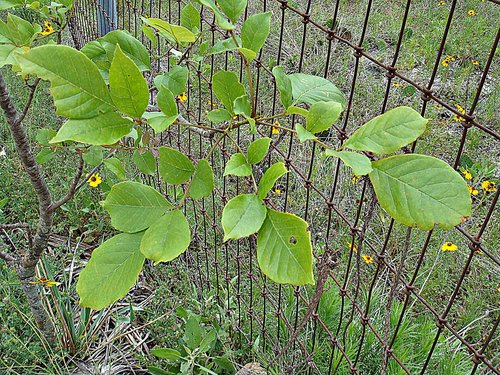
Texas ash
Fraxinus albicans
A resilient icon of the limestone hills, the Texas ash provides a cooling canopy and the most vibrant autumn display in the South Central United States. It is a vital sanctuary for backyard birds and a master of drought survival.
Quick Identification
Size
Height: 9-14 meters (30-45 feet); Trunk diameter: 30-60 cm (12-24 inches)
Colors
Dark green upper leaves with pale, whitish undersides; bark is light gray to dark gray; fall foliage turns brilliant shades of gold, orange, and deep purple.
Key Features
- Compound leaves with 5-7 rounded or oval leaflets
- Whitish/pale undersides of foliage
- Gray bark with deep, diamond-shaped furrows
- Small, single-winged seeds (samaras) in hanging clusters
When You’ll See Them
Geographic range
Where Does the Texas ash Live?
The Texas ash is a native specialist of the South Central United States and Northern Mexico, with its heartland located in the Edwards Plateau. Its range extends from the Arbuckle Mountains of southern Oklahoma through Central Texas and westward into the Trans-Pecos region, eventually reaching into the Mexican state of Durango. It is uniquely adapted to the high-calcium soils of these regions, thriving where many other hardwood species struggle.
Basemap © OpenStreetMap contributors
Behavior
The Texas ash is a hardy, long-lived deciduous tree that serves as a cornerstone of the rocky limestone ecosystems in the South Central United States. Unlike its taller relatives in the eastern forests, this species has adapted to drier conditions by remaining more compact and developing a deep, resilient root system. It is wind-pollinated, producing small, inconspicuous flowers in the early spring before its leaves fully unfurl.
Ecologically, the Texas ash is a provider. Its dense, rounded canopy offers vital shade in the heat of the Texas summer, while its deeply furrowed bark creates a micro-habitat for various insects, which in turn attracts insectivorous birds. In the autumn, it is one of the most celebrated trees in its range, providing a dramatic color transition that stands out against the evergreen junipers of the Hill Country.
EverydayEarth exclusive
Camera Tips
Capturing the Texas ash on an AI-powered camera is a rewarding exercise in documenting seasonal change and the wildlife that depends on it. To capture the tree's full architectural beauty, place your camera about 15 to 20 feet away from the main trunk. Use a wide-angle setting and angle the camera slightly upward to include the crown; this is the best way to record the stunning transition of the leaves from green to deep purple and gold during the autumn months.
For a closer look at the wildlife the Texas ash attracts, mount a camera directly onto one of the lower, sturdier limbs, facing back toward the trunk or along a horizontal branch. The deeply fissured bark is a favorite hunting ground for Ladder-backed Woodpeckers and Nuthatches. If your camera has a time-lapse feature, this species is a perfect subject; setting it to take one photo daily at noon throughout the spring will create a beautiful visual record of the "leaf-out" process when the vibrant new greens emerge.
Because the Texas ash often grows in bright, open areas, be mindful of the sun's position. The pale undersides of the leaves can easily become overexposed (appearing as bright white spots) in harsh midday light. If possible, position your camera facing North or South to avoid direct lens flare. During the winter, keep the camera active; the unique diamond-patterned bark provides excellent texture for black-and-white photography and remains a focal point for wintering birds seeking shelter in the branch structure.
Similar Species
Species that look similar or are commonly confused with Texas ash.
Frequently Asked Questions
Record Texas ash at your habitat
Connect a camera to start building your own species record — AI identifies every visitor automatically.