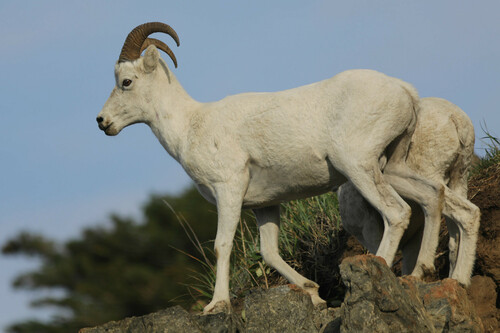
Thinhorn Sheep
Ovis dalli
The undisputed masters of the northern crags, Thinhorn Sheep navigate vertical wilderness with breathtaking ease. Whether pure white or charcoal grey, these iconic rams are the crowning jewel of the subarctic mountains.
Quick Identification
Size
1.3-1.8 m (4.3-5.9 ft) long; 46-110 kg (100-240 lbs)
Colors
Dall subspecies are pure white year-round; Stone subspecies range from charcoal grey to dark brown with white rumps and bellies.
Key Features
- Massive, yellowish-brown curling horns on rams
- Slim, slightly curved horns on ewes
- Pure white or dark grey-brown coat
- Stocky, muscular build for climbing
- Distinctive white rump patches on darker individuals
When You’ll See Them
Geographic range
Where Does the Thinhorn Sheep Live?
Native to the rugged wilderness of northwestern North America, the Thinhorn Sheep is a true icon of the subarctic peaks. Their core range extends across the vast mountain chains of Alaska and the Yukon Territory, reaching eastward into the Northwest Territories and southward into the northern half of British Columbia. These hardy survivors are masters of the high country, sticking primarily to the Brooks Range, the Alaska Range, and the Mackenzie Mountains where the air is thin and the slopes are steep.
Basemap © OpenStreetMap contributors
Behavior
Thinhorn Sheep are the ultimate high-altitude specialists, defined by their remarkable agility on nearly vertical rock faces. They are highly social but generally live in sex-segregated bands for most of the year. Rams form bachelor groups where dominance is established not just by age, but through dramatic horn-clashing contests, particularly during the autumn rut. These social hierarchies help reduce actual physical injury by establishing clear 'rank' through posturing and ritualized displays.
Ewes and their lambs congregate in separate nursery herds, relying on 'escape terrain'—steep, rugged cliffs—to stay safe from predators like wolves, bears, and golden eagles. Unlike many other mountain mammals, Thinhorn Sheep have incredible eyesight and prefer open alpine ridges where they can spot threats from miles away. They are wary of human encroachment and will quickly retreat to higher ground if they feel pressured, though they can become accustomed to predictable human presence near established trails.
EverydayEarth exclusive
Camera Tips
Capturing Thinhorn Sheep requires a strategic approach to altitude and terrain. If you are lucky enough to live near their alpine habitat, place your camera on prominent ridgelines or 'saddles'—the low points between two peaks—as these are the primary highways sheep use to travel between grazing areas. Look for well-worn game trails that hug the edges of cliffs; sheep rarely venture more than a few hundred yards from the safety of rocky escape terrain.
Natural mineral licks are the absolute goldmine for camera placement. In the early summer (May and June), Thinhorn Sheep are desperate for minerals like calcium and magnesium to support horn growth and milk production. A camera aimed at a known lick can capture entire herds in a single frame. Because these areas are often exposed to extreme winds, ensure your camera is mounted to a sturdy rock or a low-profile heavy-duty stake rather than a flimsy sapling that will trigger false motions.
Regarding settings, Thinhorn Sheep are most active during the 'golden hours' of dawn and dusk. Use a high-quality camera with a fast trigger speed (0.3 seconds or less) and set a short 're-trigger' interval. Because their white coats (in the case of Dall sheep) can easily blow out in bright mountain sun, consider underexposing your daytime settings by one stop if your camera allows. In the winter, lithium batteries are non-negotiable, as alkaline sets will fail instantly in the sub-zero temperatures of the sheep's northern range.
Similar Species
Species that look similar or are commonly confused with Thinhorn Sheep.
Frequently Asked Questions
Record Thinhorn Sheep at your habitat
Connect a camera to start building your own species record — AI identifies every visitor automatically.