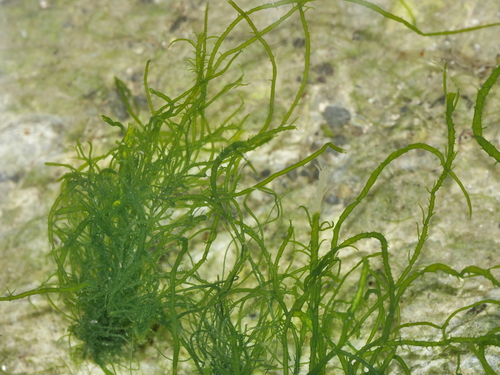
Thread Weed
Ulva compressa
A vibrant splash of emerald in the gray stone of the coastline, Thread Weed is a resilient survivor of the tides. This delicate-looking seaweed forms lush, flowing meadows that support a hidden world of marine life.
Quick Identification
Size
Length: 2-30 cm (0.8-12 inches); Width: 1-10 mm (0.04-0.4 inches)
Colors
Bright grass-green to vibrant lime-green; can become translucent or yellowish when aged or stressed
Key Features
- Slender, tubular filaments that are often flattened or 'compressed'
- Branching usually occurs only at the very base of the plant
- Forms dense, hair-like mats on rocks or shells
- Hollow structure that can trap small air bubbles
When You’ll See Them
Loading activity data...
Behavior
Thread Weed is a highly resilient green alga that thrives in the dynamic environment of the intertidal zone. Unlike many land plants, it doesn't have a root system; instead, it uses a small, disc-like holdfast to anchor itself firmly to rocks, pilings, or even the shells of mollusks. It is a 'pioneer species,' often being among the first organisms to colonize new or disturbed surfaces in the marine environment. Because it can tolerate wide fluctuations in salinity, it is frequently found in estuaries where freshwater meets the sea.
This seaweed plays a vital role in coastal ecosystems by providing a nursery habitat for tiny crustaceans and juvenile fish. While it doesn't 'behave' in a social sense, it responds dramatically to the rhythm of the tides, swaying gracefully in the current and laying flat against the substrate when the water recedes to conserve moisture. In nutrient-rich waters, Thread Weed can grow rapidly, sometimes forming large blooms that indicate high levels of nitrogen or phosphorus in the local environment.
EverydayEarth exclusive
Camera Tips
Capturing the beauty of Thread Weed requires a shift from traditional trail cameras to waterproof action cameras or specialized underwater housings. For the best results in a 'coastal backyard' or tide pool, mount your camera using a weighted tripod or a suction cup mount on a stable rock surface during low tide. Position the lens just a few inches from a healthy patch of the weed. As the tide returns, the camera will capture the transition from a flat, matted state to the ethereal, flowing movement of the filaments as they are submerged.
Time-lapse mode is your best friend when filming Thread Weed. Set your camera to take a photo every 5 to 10 seconds over a period of 2-3 hours during a rising tide. This creates a stunning visual narrative of the 'reawakening' of the intertidal zone. Ensure your camera is set to a wide-angle view to capture the surrounding ecosystem, including the small snails or crabs that may come to forage within the green threads as the water level rises.
Lighting is the biggest challenge in marine photography. Use the mid-day sun to your advantage, as the light penetrates the shallow water most effectively between 10 AM and 2 PM. If you are filming in a shaded tide pool, a small waterproof LED light can help pop the vibrant green color against the dark rocks. Avoid using a flash, as it can create harsh reflections on the water's surface and the wet surfaces of the algae.
Maintenance is critical when dealing with saltwater environments. After every deployment, even if the camera stayed above the splash zone, wipe the exterior and lens with a fresh-water-dampened cloth to remove salt crystals. Salt spray can cloud a lens quickly, so check the housing every few hours. If you are using an AI-powered camera designed for land use, never submerge it; instead, use a high-quality zoom lens from a safe distance on a pier or overlook to capture the weed at low tide.
Similar Species
Species that look similar or are commonly confused with Thread Weed.
Frequently Asked Questions
Record Thread Weed at your habitat
Connect a camera to start building your own species record — AI identifies every visitor automatically.