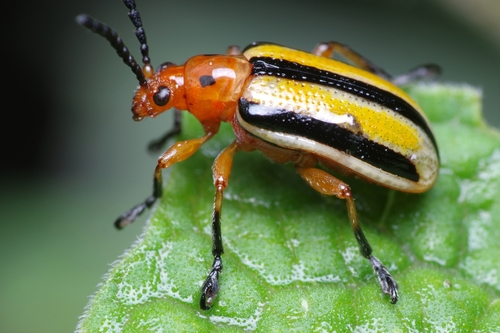
Three-lined Potato Beetle
Lema daturaphila
A striking visitor to the summer garden, the Three-lined Potato Beetle is known for its bold racing stripes and its unusual larval defense strategies. While a challenge for potato farmers, they are a delight for macro photographers and backyard nature observers.
Quick Identification
Size
6 to 8 mm (0.24 to 0.31 inches) in length
Colors
Bright yellow-orange body with three distinct black longitudinal stripes; the thorax typically features two small black dots.
Key Features
- Three bold black stripes running down the wing covers
- Two small black spots on the orange prothorax
- Bright orange-yellow primary body color
- Slender, oblong body shape
When You’ll See Them
Behavior
The Three-lined Potato Beetle is a fascinating specialist of the nightshade family. While the adults are visually striking with their "racing stripes," their behavior is perhaps most famous for a somewhat gross defensive tactic used by their larvae. To protect themselves from predators like birds and ladybugs, the larvae cover their backs with their own waste (fecal shields), creating a physical and chemical barrier that makes them unappealing to eat.
Adults are active during the warmer parts of the day, moving along the leaves of host plants to feed and mate. When threatened, these beetles often perform a "reflex bleeding" or drop from the plant entirely, playing dead in the leaf litter below to evade capture. Despite being a pest to potato growers, they are relatively slow-moving and provide excellent subjects for macro observation.
EverydayEarth exclusive
Camera Tips
To capture high-quality images of the Three-lined Potato Beetle, you need to focus your efforts on their primary food sources. Place your AI-powered camera or macro rig directly adjacent to potato plants or wild nightshades (Solanum nigrum). Since these beetles are small, a camera with a close-focusing distance or a dedicated macro lens is essential. Aim for a side-profile or top-down angle to clearly showcase the three namesake stripes on their elytra.
Lighting is your biggest challenge with these shiny insects. Midday sun can cause harsh reflections off their smooth wing covers. If possible, position your camera so the host plant provides some dappled shade, or use a small diffuser to soften the light. Early morning is often the best time for photography; while they are less active until it warms up, they are also less likely to fly away or drop from the plant when you approach or adjust your equipment.
Don't just look for the adults! Set your camera to capture the underside of leaves to find their bright orange eggs laid in neat rows. Additionally, documenting the larvae with their unique "fecal shields" makes for a great storytelling series on the insect's life cycle. Use a high shutter speed (at least 1/250s) even though they move slowly, as wind moving the leaves can easily blur your shots.
If you are using a trail camera, ensure it has a macro or "close-up" mode enabled. Most standard trail cameras focus at 3-5 feet, which is too far for a 7mm beetle. Use an external clip-on macro lens if your device supports it, and mount the camera on a small stake driven into the garden bed for maximum stability at the plant's level.
Similar Species
Species that look similar or are commonly confused with Three-lined Potato Beetle.
Striped Cucumber Beetle
Features a yellow thorax without the two black spots found on the Three-lined Potato Beetle, and prefers squash and cucumber plants.
Western Corn Rootworm
Has less distinct stripes that often bleed together and is typically found in or near cornfields rather than on nightshades.
Frequently Asked Questions
Record Three-lined Potato Beetle at your habitat
Connect a camera to start building your own species record — AI identifies every visitor automatically.