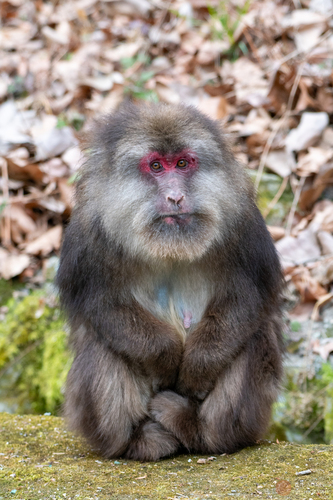
Tibetan Macaque
Macaca thibetana
The Tibetan Macaque is a shaggy-haired mountain dweller known for its expressive face and complex social life. One of Asia’s largest monkeys, it thrives in the misty, high-altitude forests of the East.
Quick Identification
Size
Body length 58–71 cm (23–28 in); Weight 9–19 kg (20–42 lbs), with males significantly larger than females
Colors
Dense, shaggy fur ranging from sandy-brown to deep chocolate; adults have pinkish faces with prominent light-colored beards and whiskers
Key Features
- Extremely short, stump-like tail
- Thick, shaggy coat adapted for cold mountain air
- Robust, stocky build with a large, broad head
- Prominent facial whiskers and beard in both sexes
When You’ll See Them
Geographic range
Where Does the Tibetan Macaque Live?
The Tibetan Macaque is primarily native to the mountainous regions of East Asia, with its core populations found throughout central and southern China. Its range extends from the eastern Tibetan plateau through the provinces of Sichuan, Shaanxi, and as far east as Guangdong. While predominantly a Chinese endemic species, smaller, isolated populations have also been documented in the high-elevation forests of northeastern India.
Basemap © OpenStreetMap contributors
Behavior
While they spend a significant amount of time on the forest floor foraging, they are also agile climbers who retreat to trees or rocky cliffs to sleep. Their interactions with humans vary; in tourist-heavy areas like Mt. Emei, they have become bold and are known to beg for or even steal food. However, in the wild, they remain wary of humans and highly protective of their troop members, often using loud vocalizations to signal danger.
EverydayEarth exclusive
Camera Tips
Lighting can be a challenge under the dense forest canopy. Set your camera to a fast trigger speed (0.3s or less) to catch their quick, jerky movements, and use a 'no-glow' infrared flash for any activity during the low-light hours of dawn and dusk. This prevents the troop's dominant males from becoming spooked or aggressive toward the device.
High-resolution video mode is significantly better than still photos for this species. Video allows you to capture their complex social interactions, such as grooming or infant-mediated greetings, which are central to their troop dynamics. Avoid using food as bait, as this can lead to habituation and aggression; instead, look for natural attractants like fallen wild fruit or fresh bamboo shoots during the spring season.
Similar Species
Species that look similar or are commonly confused with Tibetan Macaque.
Stump-tailed Macaque
The Stump-tailed Macaque has a more reddish-to-dark-brown coat and a bright red face that darkens with age, unlike the pinkish-beige face of the Tibetan species.
Rhesus Macaque
Rhesus Macaques are smaller, leaner, and have much longer tails compared to the nearly tailless Tibetan Macaque.
Frequently Asked Questions
Record Tibetan Macaque at your habitat
Connect a camera to start building your own species record — AI identifies every visitor automatically.