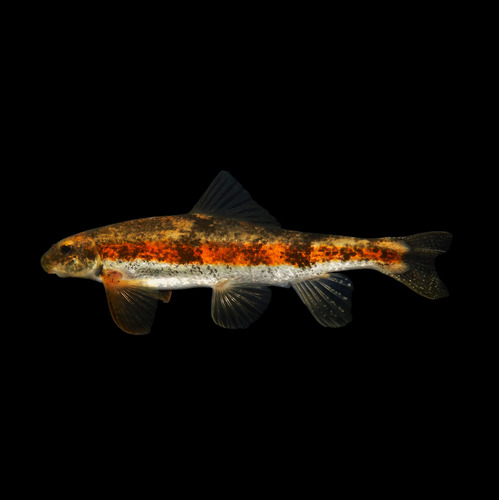
Torrent Sucker
Thoburnia rhothoeca
A master of the mountain rapids, the Torrent Sucker thrives in the swiftest currents of the Appalachian highlands. This specialized fish uses its unique anatomy to hug the rocky bottom of Virginia's clearest streams.
Quick Identification
Size
Typically 4 to 6 inches (10-15 cm) in length; weight is generally under 0.25 lbs (110g).
Colors
Olive-brown to dark green dorsal side with 6-7 distinct dark saddles across the back; white or cream belly.
Key Features
- Subterminal sucker-like mouth for bottom feeding
- Highly streamlined, torpedo-shaped body
- Dark saddle-like blotches across the back
- Adapted for high-velocity mountain stream currents
When You’ll See Them
Behavior
The Torrent Sucker is a specialized survivalist, perfectly adapted to live in the most turbulent sections of mountain streams. Unlike many fish that fight the current, this species uses its flattened belly and wide pectoral fins to create downforce, effectively 'pinning' itself to the rocky substrate. They spend most of their lives in the 'boundary layer' where water friction against the rocks creates a pocket of slower-moving water.
They are generally solitary and highly territorial regarding their favorite feeding rocks. You will often see them darting from one stone to another with incredible speed, a necessity in the high-energy environments they inhabit. While they are sensitive to siltation and pollution, in healthy Appalachian streams, they can be found in surprising densities, though their camouflage makes them nearly invisible to the untrained eye.
EverydayEarth exclusive
Camera Tips
Capturing a Torrent Sucker requires an underwater action camera or a specialized waterproof trail camera setup. To get the best results, submerge your camera in a shallow riffle—areas where the water is breaking over stones. Use a weighted base or a 'rock mount' to keep the camera steady, as the high-velocity water they prefer will easily sweep away a standard tripod. Face the lens slightly upstream or at a 45-degree angle to the current to capture the fish as they move between rocks.
Lighting is your biggest challenge underwater. Aim for mid-day when the sun is directly overhead to penetrate the water column and illuminate the stream bed. Because these fish are small and move quickly, set your camera to the highest frame rate possible (at least 60fps) to avoid motion blur. If your camera has a 'macro' or close-focus setting, enable it, as you'll want to place the lens within 12-18 inches of potential feeding rocks.
To increase your chances of a 'hit,' look for rocks that appear 'clean' or have visible scrape marks; these are active feeding sites. During the spring spawning season, look for pockets of pea-sized gravel just downstream of large boulders. Torrent Suckers often congregate here, and a well-placed camera can capture fascinating social behaviors and vibrant breeding colors that aren't visible during the rest of the year.
Similar Species
Species that look similar or are commonly confused with Torrent Sucker.
Frequently Asked Questions
Record Torrent Sucker at your habitat
Connect a camera to start building your own species record — AI identifies every visitor automatically.