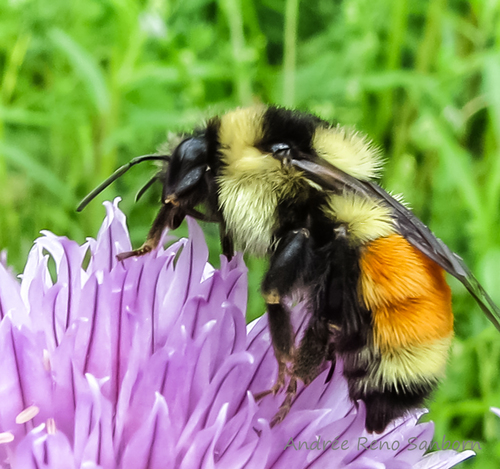
Tricolored Bumble Bee
Bombus ternarius
With its signature sunset-orange belt and industrious nature, the Tricolored Bumble Bee is one of the most striking pollinators in the northern backyard. A master of buzz pollination, this small but mighty insect is a vital link in our local food systems.
Quick Identification
Size
Queens: 17–19 mm (0.67–0.75 in); Workers/Males: 8–13 mm (0.31–0.51 in)
Colors
Bright orange abdominal bands (segments 2 and 3), yellow thorax with a black central patch, and a black tail.
Key Features
- Two prominent orange bands across the middle of the abdomen
- Yellow thorax with a distinct black 'V' or triangular patch between the wings
- Compact, round body shape compared to other bumblebee species
- Yellow face with a black top of the head
When You’ll See Them
Behavior
These bees are incredibly efficient pollinators, utilizing a technique called 'buzz pollination.' They grab onto a flower and vibrate their flight muscles to shake pollen loose from the anthers. While they are docile while foraging, they are fiercely protective of their ground nests. Unlike honeybees, they do not produce large amounts of honey, as the colony dies off in the autumn, leaving only the newly mated queens to hibernate and restart the cycle the following year.
EverydayEarth exclusive
Camera Tips
Lighting is the most critical factor for showcasing their unique orange bands. Try to position your camera so the sun is behind you, illuminating the bee's back as it lands. Mid-morning is the ideal time for filming; the bees are active but the sunlight isn't yet too harsh or direct, which can wash out their colors. If your AI camera has adjustable trigger zones, focus the zone specifically on the flower heads to avoid false triggers from wind-blown leaves in the background.
If you are using a trail camera with a 'time-lapse' feature, set it to a short interval (1-3 seconds) during peak activity hours. This is often more effective than motion-triggering for small insects. For the best educational footage, try to capture them 'buzz pollinating'—you can actually see the bee's entire body vibrate violently. Lastly, avoid using insecticides or chemical lures near your camera station; a healthy patch of native wildflowers is the only lure you need to attract this colorful species.
Similar Species
Species that look similar or are commonly confused with Tricolored Bumble Bee.
Frequently Asked Questions
Record Tricolored Bumble Bee at your habitat
Connect a camera to start building your own species record — AI identifies every visitor automatically.