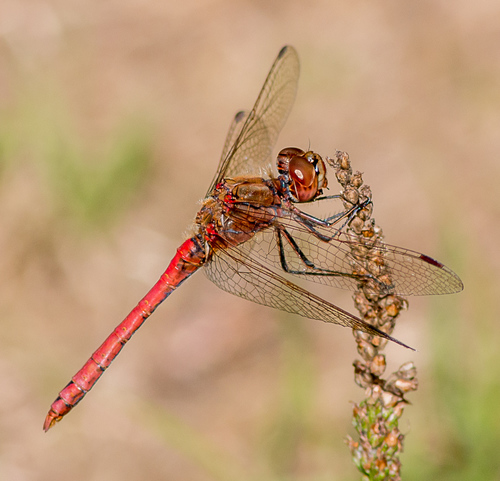
Vagrant Darter
Sympetrum vulgatum
A vibrant master of the late-summer garden, the Vagrant Darter is easily identified by its unique 'moustache' and its habit of returning to the same sunny perch after every hunting flight.
Quick Identification
Size
Body length 35-40 mm (1.4-1.6 in); Wingspan 50-60 mm (2-2.4 in)
Colors
Males are primarily orange-red; females and immatures are golden-yellow to olive-brown. Both have black legs with a pale yellow stripe.
Key Features
- Black 'moustache' line extending down the side of the eye margin
- Deep orange-red abdomen in mature males
- Legs are black with a prominent yellow or beige longitudinal stripe
- Two small black dots on the side of the thorax
When You’ll See Them
Behavior
Vagrant Darters are classic 'perch-and-pounce' predators. They spend a significant portion of their day stationed on sun-drenched twigs, garden canes, or warm stones, scanning the sky for passing prey. Once an insect is spotted, they launch with explosive speed, snatching their target mid-air before frequently returning to the exact same perch to eat. This site-fidelity makes them wonderful subjects for patient observers.
In the late afternoon, these dragonflies often seek out vertical surfaces like house walls or fence panels to soak up the day's remaining warmth. While they are usually found near still water where they breed, they are highly mobile and will wander far into suburban gardens and meadows in search of food. Unlike some more aggressive dragonfly species, they are relatively tolerant of human presence, allowing for close approach if you move slowly and avoid casting a shadow over them.
EverydayEarth exclusive
Camera Tips
To capture high-quality footage of a Vagrant Darter, you must identify their preferred 'lookout' spots. Look for prominent, sun-exposed perches such as the tips of bamboo garden stakes, dried flower heads, or the tops of wooden fence posts near a water source. Position your AI-powered camera about 12 to 20 inches away from these points. Because they are habitual and often return to the same twig dozens of times a day, you can set your focus and wait for the subject to come to you.
For the best results, orient your camera so that the sun is behind you or to the side; this highlights the vibrant reds of the male and the intricate veining in the wings. If your camera has a macro mode or a high-trigger sensitivity setting, enable it, as the rapid movement of a dragonfly can be missed by standard motion sensors designed for larger mammals. High shutter speeds are essential if you want to freeze the action of their wings during takeoff and landing.
If you want to encourage them to land in a specific frame, place a 'perching station'—a simple vertical stick or a tall flowering plant like a Verbena—in a wind-sheltered, sunny corner of your yard. Early morning is the best time for setup, as the dragonflies are less active when temperatures are lower, allowing you to position equipment without disturbing them. As the sun hits your chosen perch, the Vagrant Darter will likely claim it as its hunting base for the afternoon.
Similar Species
Species that look similar or are commonly confused with Vagrant Darter.
Frequently Asked Questions
Record Vagrant Darter at your habitat
Connect a camera to start building your own species record — AI identifies every visitor automatically.