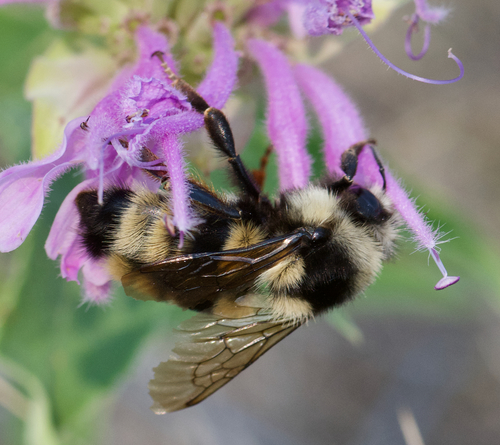
Vancouver Bumble Bee
Bombus vancouverensis
The Vancouver Bumble Bee is a vibrant, mountain-dwelling pollinator known for its striking orange bands and sophisticated social life. A master of the western landscape, this resilient bee is a welcome guest in any nectar-rich backyard.
Quick Identification
Size
Workers: 8–14 mm (0.3–0.55 in); Queens: 15–19 mm (0.6–0.75 in); Males: 8–13 mm (0.3–0.5 in)
Colors
Mix of black and yellow bands; many individuals feature prominent orange or reddish-orange bands on the middle abdominal segments.
Key Features
- Distinctive 'T' or 'V' shaped patch of black hair on the thorax between the wing bases
- Abdomen often displays a 'two-form' color pattern with yellow, black, and sometimes bright orange
- Dense, fuzzy hair covering the entire body
- Short-to-medium tongue length compared to other bumble bees
When You’ll See Them
Behavior
The Vancouver Bumble Bee is a highly social insect that lives in annual colonies started by a single queen each spring. These bees are renowned for their 'buzz pollination' technique, where they vibrate their flight muscles at a specific frequency to dislodge pollen from stubborn flowers like tomatoes and blueberries. They are remarkably efficient foragers, capable of navigating complex mountainous terrain and variable weather conditions in western North America.
Unlike many other bee species, the Vancouver Bumble Bee has a sophisticated kin recognition system. They use specific pheromones to identify nestmates and relatives, a trait shared with only a few other bumble bee species. This social complexity makes them fascinating subjects for observation, as they display high levels of cooperation within the colony while remaining generally docile and non-aggressive toward humans unless their nest is directly disturbed.
EverydayEarth exclusive
Camera Tips
To capture high-quality footage of the Vancouver Bumble Bee, you should position your AI-powered camera within 8 to 12 inches of 'pollinator magnets'—bright, nectar-rich flowers like Purple Coneflower, Lavender, or native Lupine. Because bumble bees move quickly and their wings beat hundreds of times per second, use a camera setting with a high frame rate (at least 60fps) to reduce motion blur and capture the intricate details of their fuzzy thorax.
Since most standard trail cameras have a deep focal range, consider using a macro lens attachment if your device supports it. This will allow you to see the distinctive 'T-shape' markings on the thorax and the pollen baskets (corbiculae) on their hind legs. Aim your camera so the sun is behind it or to the side; direct backlight can wash out the subtle color transitions between the yellow and orange bands on the bee's abdomen.
Placement is key: focus your camera on a specific cluster of flowers rather than a wide garden view. Bumble bees are creatures of habit and will often return to the same patch of flowers throughout the day. If you are using an AI-trigger system, ensure the sensitivity is set to 'high' for small subjects, and try to minimize background movement from swaying grass or hanging branches that might cause false triggers.
Similar Species
Species that look similar or are commonly confused with Vancouver Bumble Bee.
Frequently Asked Questions
Record Vancouver Bumble Bee at your habitat
Connect a camera to start building your own species record — AI identifies every visitor automatically.