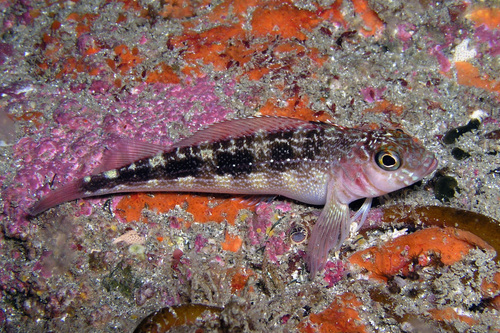
Variable Triplefin
Forsterygion varium
The Variable Triplefin is the bold sentry of the New Zealand reef, a small fish with a big personality that can change its color from mottled orange to jet black.
Quick Identification
Size
Typically 12–20 cm (5–8 inches) in length
Colors
Highly variable; usually mottled orangey-brown with 5-6 dark vertical bands. Breeding males turn a striking dark brown or jet black with white fins.
Key Features
- Three distinct dorsal fins
- Thick, dark vertical bands on the sides
- Large, expressive eyes with a pointed snout
- Propels itself using large, fan-like pectoral fins
When You’ll See Them
Geographic range
Where Does the Variable Triplefin Live?
Native to the southwestern Pacific, specifically the temperate coastal waters of New Zealand, the Variable Triplefin is a ubiquitous presence across the country's rocky shorelines. Its core range spans from the subtropical North Island to the subantarctic Snares Islands, making it one of New Zealand's most widespread marine fish. Additionally, it has established a significant introduced population in the estuaries and rocky coasts of Tasmania, Australia, likely arriving as a hitchhiker in oyster shipments or ballast water.
Basemap © OpenStreetMap contributors
Behavior
The Variable Triplefin is a charismatic and territorial resident of the reef, known for its "perching" behavior. Unlike many fish that swim continuously, triplefins spend most of their time resting on their large pectoral fins, surveying their surroundings for food or intruders. They are remarkably bold and will often hold their ground or even approach divers and cameras out of curiosity.
During the breeding season, which typically peaks in winter and spring, social dynamics become intense. Males select a prime piece of rocky real estate, often under a ledge, and perform displays to attract females. Once eggs are laid, the male becomes a dedicated guardian, fanning the eggs with his fins to provide oxygen and fiercely defending the nest against much larger predators. Their movements are characterized by short, rapid darts rather than sustained swimming.
EverydayEarth exclusive
Camera Tips
To capture the Variable Triplefin on camera, you will need a waterproof setup or an action camera in a dive housing. Because these fish are benthic (bottom-dwellers), placement is everything. Position your camera on a flat rock or nestled in the sand at the base of a reef wall. Using a weighted mini-tripod is essential to prevent the surge from knocking the camera over. For the best perspective, angle the lens slightly upward to capture the fish's unique habit of 'sitting' on its fins.
While the AI-powered cameras on EverydayEarth are typically used for land animals, the same principles of site selection apply here. Look for 'high-traffic' areas such as the edges of kelp beds or near barnacle-covered rocks. Variable Triplefins are incredibly curious; they are often the first fish to investigate a new object in their territory. If you are filming in a rock pool, keep your movements slow to avoid splashing, which can trigger their flight response.
If you want to ensure a sighting, you can use a small amount of bait, though it's often not necessary given their inquisitive nature. A crushed mussel or sea urchin placed just in front of the lens will attract not just the Variable Triplefin, but likely several other reef species. Set your camera to a high frame rate, as their darting movements are extremely fast and can appear blurry at standard settings. In the shallowest areas, midday sun provides the best natural lighting to showcase their mottled patterns.
Similar Species
Species that look similar or are commonly confused with Variable Triplefin.
Frequently Asked Questions
Record Variable Triplefin at your habitat
Connect a camera to start building your own species record — AI identifies every visitor automatically.