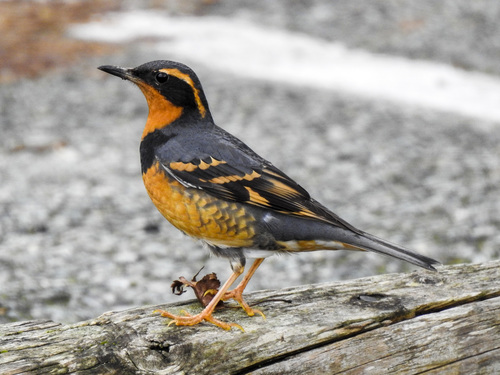
Varied Thrush
Ixoreus naevius
A masterpiece of the misty woods, the Varied Thrush combines the familiar shape of a robin with a striking, high-contrast palette of slate and burnt orange. To see one on your camera is to glimpse the wild spirit of the ancient evergreen forests.
Quick Identification
Size
Length: 7.5–10 in (19–26 cm); Wingspan: 13–17 in (34–43 cm); Weight: 2.3–3.5 oz (65–100 g)
Colors
Males have slate-blue backs, bright orange underparts, and a bold black breast band. Females are similar but more muted, with olive-brown backs and a gray-brown breast band. Both feature a striking orange stripe above the eye and orange bars on dark wings.
Key Features
- Bold black or dark gray V-shaped breast band
- Prominent orange stripe (supercilium) above the eye
- Two bright orange bars on each wing
- Heavy-set 'robin-like' silhouette with a shorter tail
When You’ll See Them
Behavior
The Varied Thrush is a shy, somewhat reclusive bird of the deep, damp forests. Unlike its more social relative, the American Robin, the Varied Thrush is often solitary and can be surprisingly territorial. During the winter months, when they descend to lower elevations and suburban gardens, they are known to defend food sources vigorously, often chasing away larger birds from ground-feeding areas.
Their movement is distinctive; they spend much of their time on the ground, hopping through thick leaf litter and using their bills to flick leaves aside in search of prey. Perhaps their most iconic trait is their song—a single, long, buzzy whistle on a constant pitch, followed by a pause and then another note at a different pitch, creating an eerie, mechanical sound that defines the atmosphere of the Pacific Northwest woods.
EverydayEarth exclusive
Camera Tips
To capture high-quality footage of a Varied Thrush, you must think low. These birds are almost exclusively ground-dwellers when they visit human habitats. Mount your camera no more than 6 to 12 inches off the ground, ideally pointing toward a patch of natural leaf litter or a shaded area under a shrub like a Rhododendron or Salal. They are far more likely to visit a camera placed in a 'corridor' of cover than one in the middle of an open lawn.
Water is your best lure. A ground-level birdbath or a shallow recirculating pond is an irresistible draw for a Varied Thrush. Because they are shy, try to place the camera near the water's edge and use a wide-angle lens setting if available. If you are using bait, skip the hanging feeders; instead, scatter hulled sunflower seeds, suet nuggets, or dried mealworms directly on the ground or on a low platform feeder. They are particularly active during dark, drizzly days when other birds might stay under cover.
For camera settings, prioritize a fast trigger speed and a short 'cool-down' period. Varied Thrushes move with sudden, jerky hops and quick head-flicks that can result in motion blur in the low-light conditions they prefer. If your AI camera allows for sensitivity adjustments, set it to high—their dark plumage often blends into the shadows of the forest floor, making them harder for some sensors to trip. During the peak of winter, keeping your camera active during early morning 'civil twilight' is essential, as they are often the first birds to emerge from cover at dawn.
Similar Species
Species that look similar or are commonly confused with Varied Thrush.
Frequently Asked Questions
Record Varied Thrush at your habitat
Connect a camera to start building your own species record — AI identifies every visitor automatically.