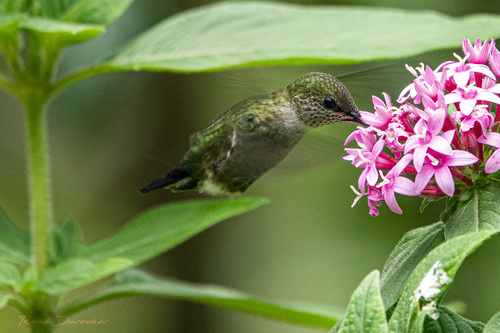
Vervain Hummingbird
Mellisuga minima
The Vervain Hummingbird is a literal heavyweight of the Caribbean bird world in spirit, if not in size. As the second-smallest bird on the planet, this emerald-hued marvel brings high-speed drama to every backyard garden it visits.
Quick Identification
Size
Length: 6 cm (2.4 in); Wingspan: 8–9 cm (3.1–3.5 in); Weight: 2–2.4 g (0.07–0.08 oz)
Colors
Metallic grass-green upperparts, pale grey to white underparts; males have a slightly notched dark tail, while females have white-tipped outer tail feathers.
Key Features
- World's second smallest bird
- Extremely short, straight black bill
- Metallic green back and crown
- High-pitched, insect-like buzzing song
When You’ll See Them
Geographic range
Where Does the Vervain Hummingbird Live?
Native to the Caribbean, the Vervain Hummingbird is a regional specialist found exclusively on the islands of the Greater Antilles. Its core range encompasses the entirety of Jamaica and the island of Hispaniola, which is shared by the Dominican Republic and Haiti. While it is a non-migratory resident, it is highly adaptable and can be found from coastal sea-level gardens up to high-elevation mountain forests.
Basemap © OpenStreetMap contributors
Behavior
The Vervain Hummingbird is a master of rapid-fire movement, often mistaken for a large bee or a hawkmoth due to its diminutive size. Despite being one of the smallest vertebrates on Earth, it is surprisingly bold and territorial. It can be found zip-lining through gardens and forest edges, frequently pausing to hover with nearly invisible wingbeats as it probes tiny flowers for nectar.
Unlike many larger hummingbirds that dominate high-up canopy flowers, the Vervain often feeds closer to the ground, favoring low-lying shrubs and herbaceous plants. They are relatively social around food sources but will aggressively defend a choice patch of flowers from other small birds. Their vocalization is unique—a long, complex series of high-pitched squeaks and clicks that sounds more like a cricket or a cicada than a typical bird song.
EverydayEarth exclusive
Camera Tips
Capturing the Vervain Hummingbird requires a strategy focused on precision and proximity. Because of their tiny 2-gram bodies, they may not always trigger standard PIR (Passive Infrared) motion sensors on trail cameras if they are more than a few feet away. For the best results, use a camera with a dedicated 'Macro' mode or a high-resolution sensor that allows for tight cropping. Position your camera on a tripod just 2 to 4 feet away from a cluster of nectar-rich plants like Stachytarpheta (Vervain) or Cape Honeysuckle.
Lighting is your best friend when filming this species. To capture the iridescent metallic green of their feathers, place your camera with the sun at your back, illuminating the bird's front as it visits flowers. Early morning light is particularly effective for avoiding harsh shadows while still providing enough shutter speed to freeze their rapid wing movement. Set your camera to its highest possible frame rate (60fps or higher) to capture the fluid motion of their hovering.
If you are using an AI-powered backyard camera, set a 'Motion Zone' specifically around a favorite perch or a feeder with a very small aperture. Vervain Hummingbirds are creatures of habit and will often return to the exact same twig to preen or survey their territory between feedings. Locating these 'sentry perches' is the secret to getting a clear, still shot of a bird that is otherwise a blur of motion.
Similar Species
Species that look similar or are commonly confused with Vervain Hummingbird.
Frequently Asked Questions
Record Vervain Hummingbird at your habitat
Connect a camera to start building your own species record — AI identifies every visitor automatically.