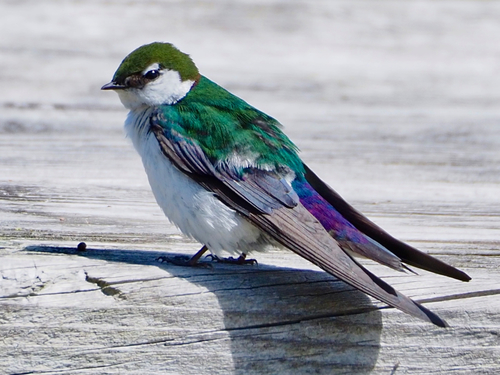
Violet-green Swallow
Tachycineta thalassina
Meet the emerald acrobat of the Western skies. With its shimmering violet rump and dazzling white face, the Violet-green Swallow is a jewel of the backyard that brings life to the air with its high-speed maneuvers.
Quick Identification
Size
Length: 12 cm (4.7 in); Wingspan: 27 cm (10.6 in); Weight: 14 g (0.5 oz)
Colors
Iridescent emerald green back and bronze head; violet-purple rump and tail; bright white underparts and face patches that wrap above the eye.
Key Features
- White rump patches that nearly meet over the tail
- White facial patches extending above and behind the eye
- Deeply notched tail
- Streamlined, compact body with long pointed wings
When You’ll See Them
Sightings on EverydayEarth
Jun 16, 2026
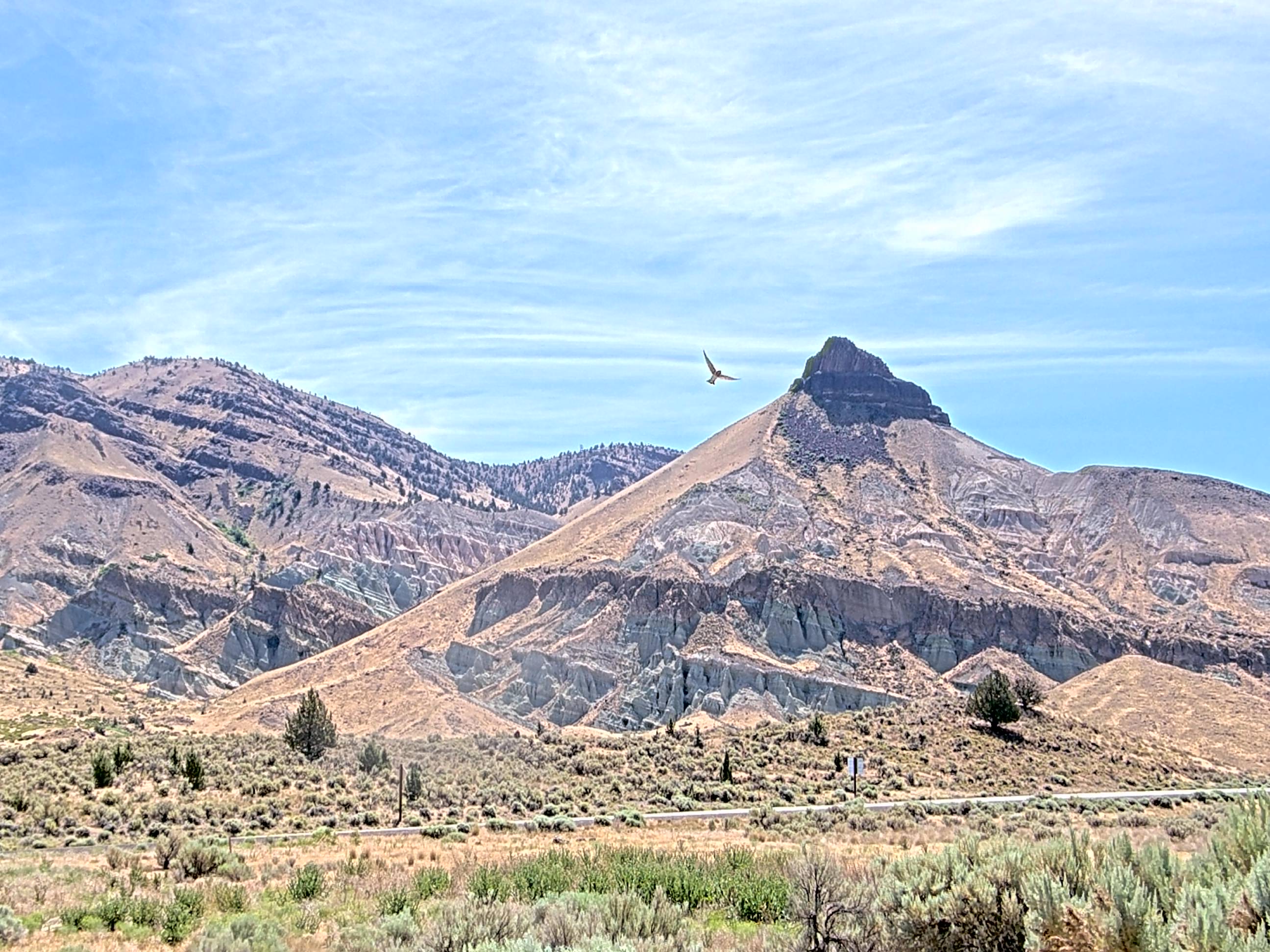
A bird is seen in mid-flight, gliding against the clear blue sky over the arid landscape of Sheep Rock. Its wings are fully extended as it maneuvers through the air.
Apr 21, 2026
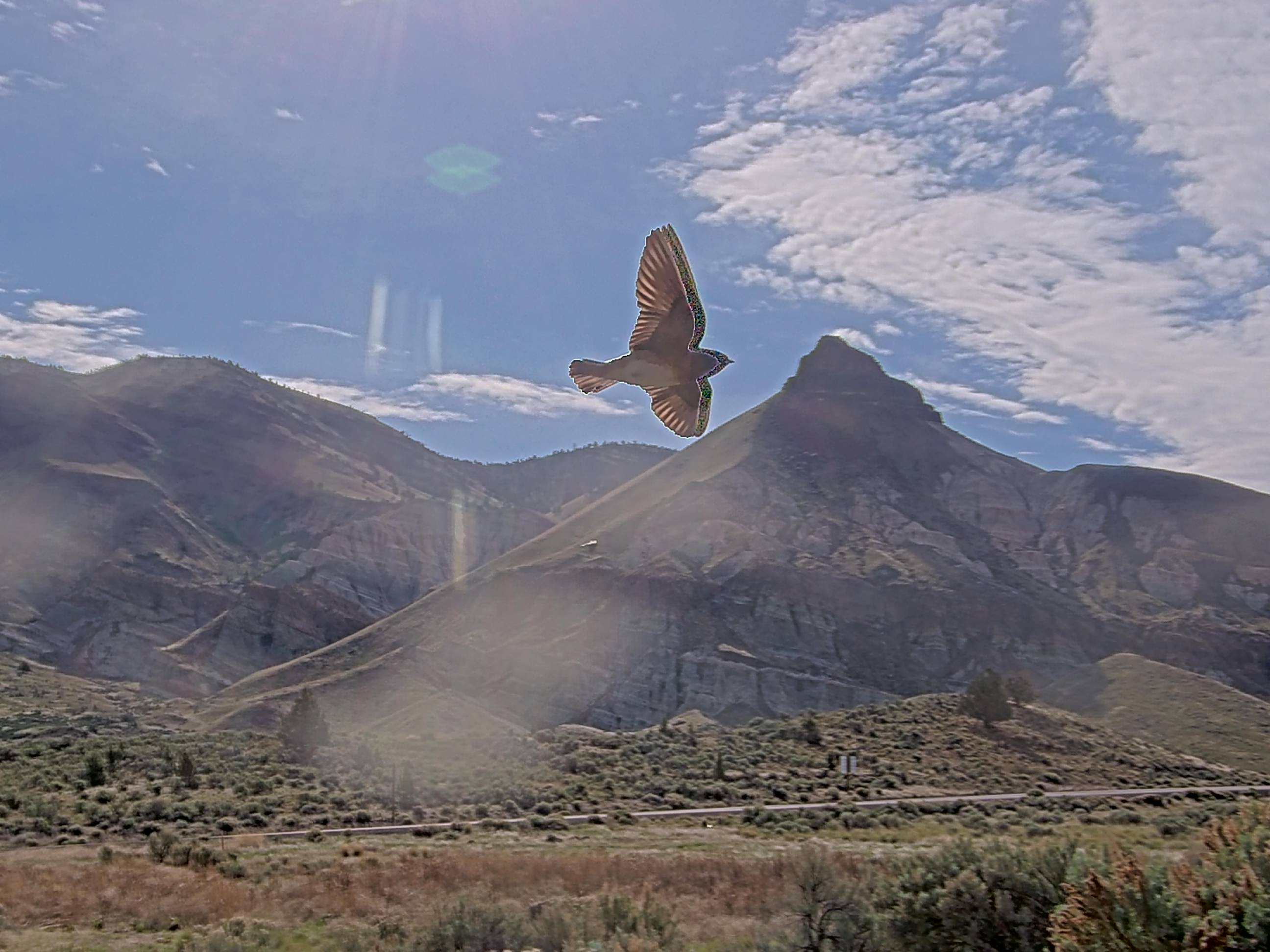
A Violet-green Swallow is captured in mid-flight, soaring across the landscape with Sheep Rock visible in the background. The bird's wings are fully extended as it maneuvers through the air.
Geographic range
Where Does the Violet-green Swallow Live?
Native to the western half of North America, the Violet-green Swallow is a signature species of the Pacific coast and the Rocky Mountains. Its breeding range stretches from the subarctic forests of Alaska and the Yukon down through the western United States and into the highlands of Mexico. As a migratory species, they head south for the winter, settling in Mexico and Central America, where they can be found in a variety of open landscapes and coastal regions.
Basemap © OpenStreetMap contributors
Behavior
The Violet-green Swallow is a master of the air, known for its incredibly agile flight patterns as it weaves through the sky to catch insects on the wing. Unlike many other swallows that might forage low over water, these birds are frequently seen high above the canopy or circling around cliff faces and suburban neighborhoods. They are highly social, often seen in small flocks or nesting in loose colonies where suitable cavities are available.
During the breeding season, they are secondary cavity nesters, meaning they rely on pre-existing holes in trees, cliffs, or man-made nest boxes. They are generally tolerant of humans and will readily move into backyard birdhouses, providing hours of entertainment with their acrobatic displays and soft, twittering songs. Their social structure is complex, often involving cooperative gathering around high-quality nesting sites during the spring migration.
EverydayEarth exclusive
Camera Tips
To capture the stunning iridescence of the Violet-green Swallow on your AI-powered camera, placement is everything. Since these are cavity nesters, the most effective strategy is to mount your camera 6–12 inches away from the entrance of a dedicated swallow nest box. Position the camera at a slight side angle to capture the bird's profile as it enters and exits, which helps the AI identify the distinctive white rump patches and facial markings. Avoid pointing the camera directly into the sun to prevent silhouetted shots; instead, aim for light that hits the bird from the side to make those green and violet feathers shimmer.
Unlike many backyard birds, swallows aren't attracted to traditional seed feeders. To draw them into your camera's field of view, provide a 'feather station' during the nesting season. Place a small wire mesh basket filled with clean, white chicken or duck feathers nearby. The swallows will swoop down to grab these for lining their nests, offering fantastic action shots. Additionally, a birdbath with a 'mister' or moving water feature can be a magnet for these birds, as they love to bathe on the wing or drink from the surface while flying.
Set your camera to a high shutter speed or 'Action' mode if available, as their movements are lightning-fast. A high-frame-rate video setting is also recommended to capture their acrobatic landings. Because they are most active during the warmest parts of the day when insects are flying, ensure your camera's motion sensors are primed from sunrise to sunset. In the peak of summer, you might even catch the fledglings peering out of the nest box hole—a perfect moment for a high-resolution still image.
Similar Species
Species that look similar or are commonly confused with Violet-green Swallow.
Frequently Asked Questions
Record Violet-green Swallow at your habitat
Connect a camera to start building your own species record — AI identifies every visitor automatically.