Barn Swallow
Hirundo rustica
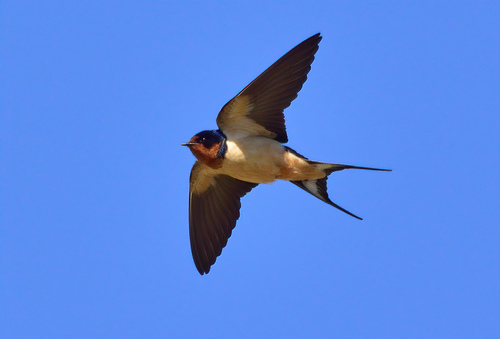
With their iconic forked tails and shimmering blue plumage, Barn Swallows are the ultimate aerial acrobats. These resilient world-travelers bring life to our barns and gardens, turning the sky into a stage for their graceful displays.
Quick Identification
Size
Length: 17-19 cm (6.7-7.5 in); Wingspan: 32-35 cm (12.6-13.8 in); Weight: 16-22 g (0.56-0.78 oz)
Colors
Metallic steel-blue upperparts, rufous (rusty-orange) forehead and throat, and creamy-buff to cinnamon underparts. Males are typically more vibrant than females.
Key Features
- Deeply forked tail with long, slender outer streamers
- Metallic blue-black back and crown
- Distinctive rusty-orange throat and forehead
- Long, pointed wings designed for high-speed flight
When You’ll See Them
Sightings on EverydayEarth
Jul 6, 2026
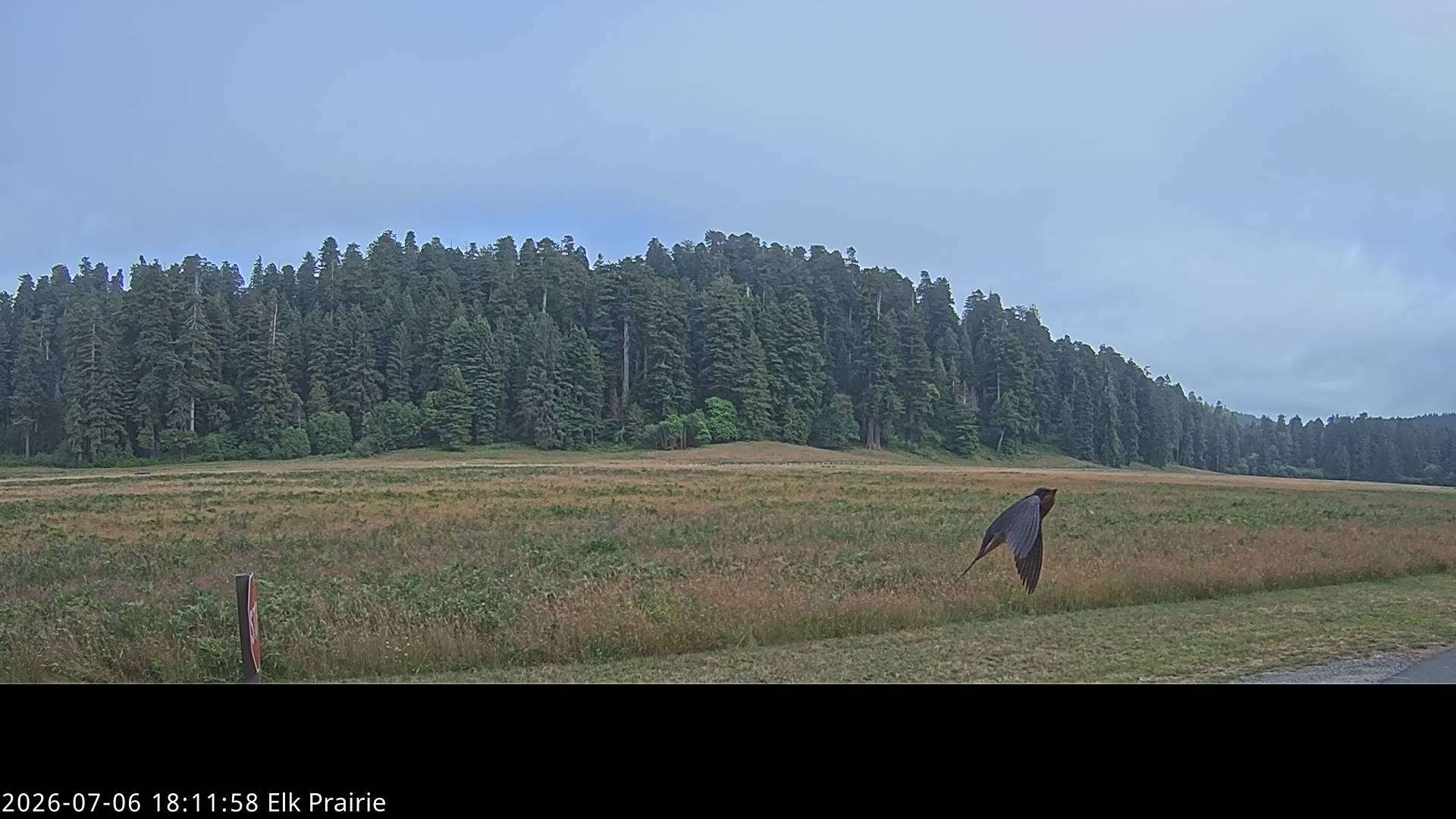
A Barn Swallow flies across the frame, its wings spread and distinctive forked tail visible against the background of the Elk Prairie grassland.
Jun 18, 2026
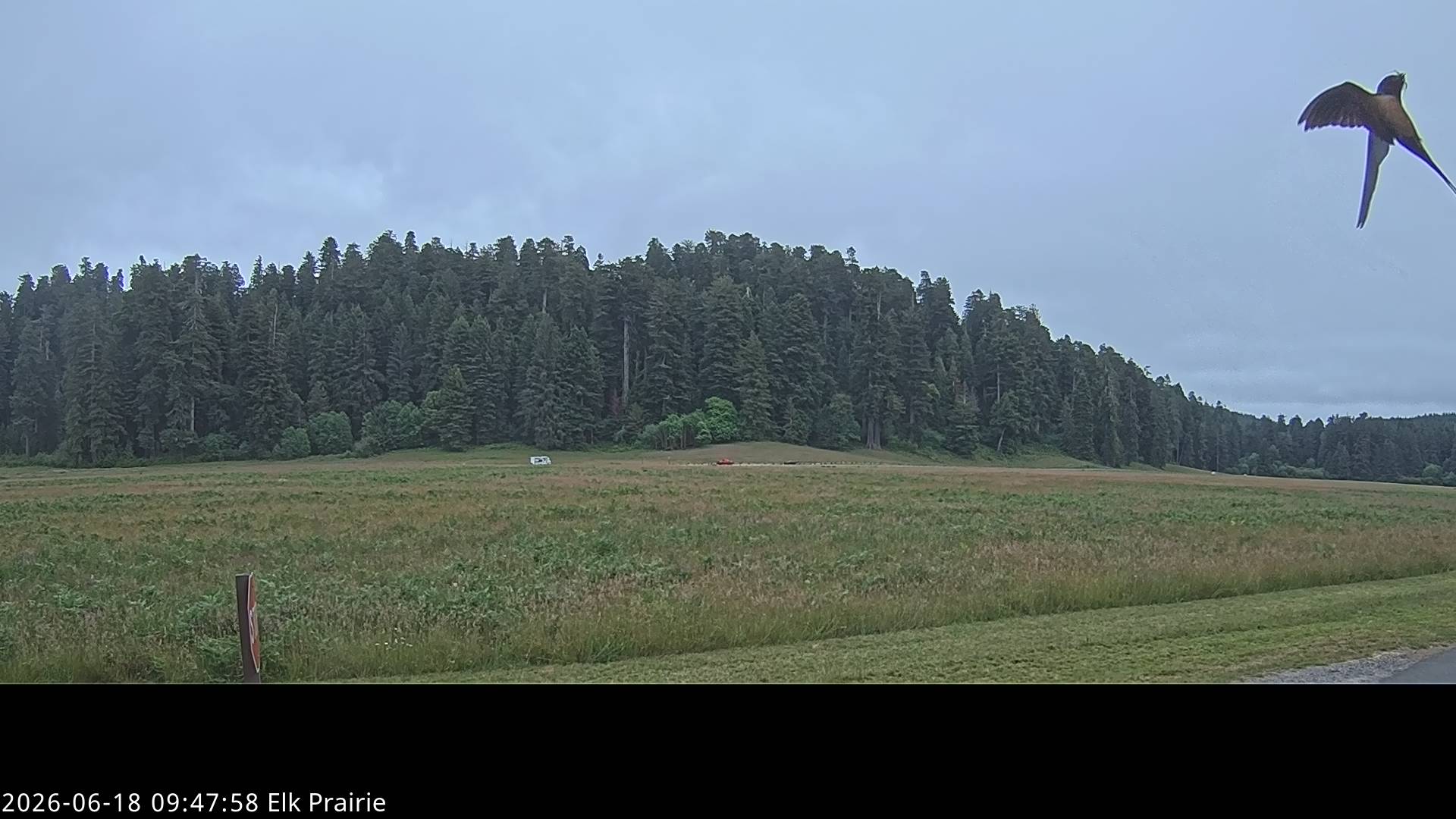
A Barn Swallow is captured mid-flight in the upper right quadrant of the frame, flying across the open grassland of Elk Prairie under an overcast sky.
May 23, 2026
A Barn Swallow flies rapidly across the upper part of the frame, banking through the air over the surface of the pond.
May 18, 2026
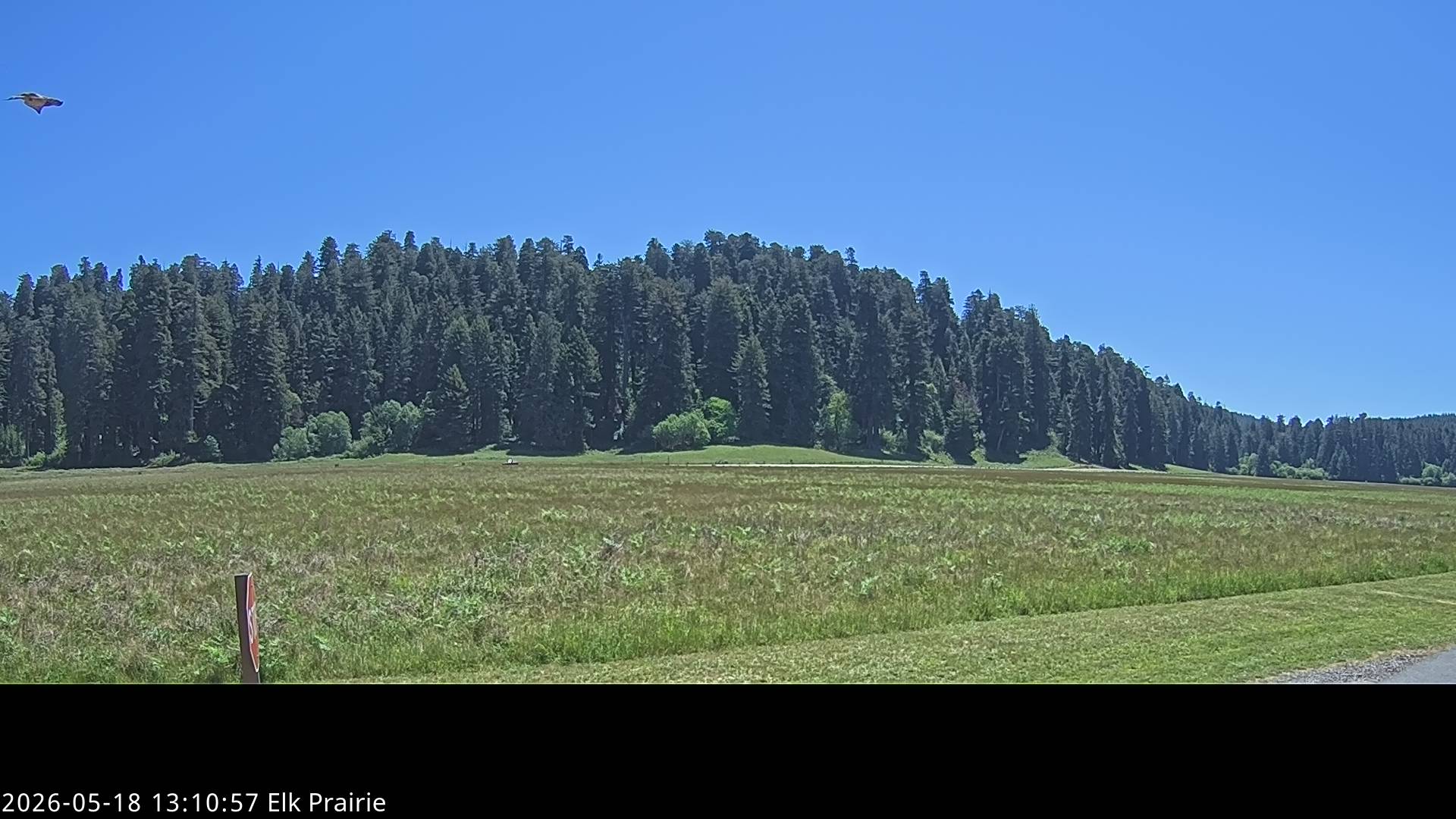
A Barn Swallow is captured in mid-flight across the open grassland of Elk Prairie, its distinctive forked tail and streamlined wings clearly visible against the bright blue sky.
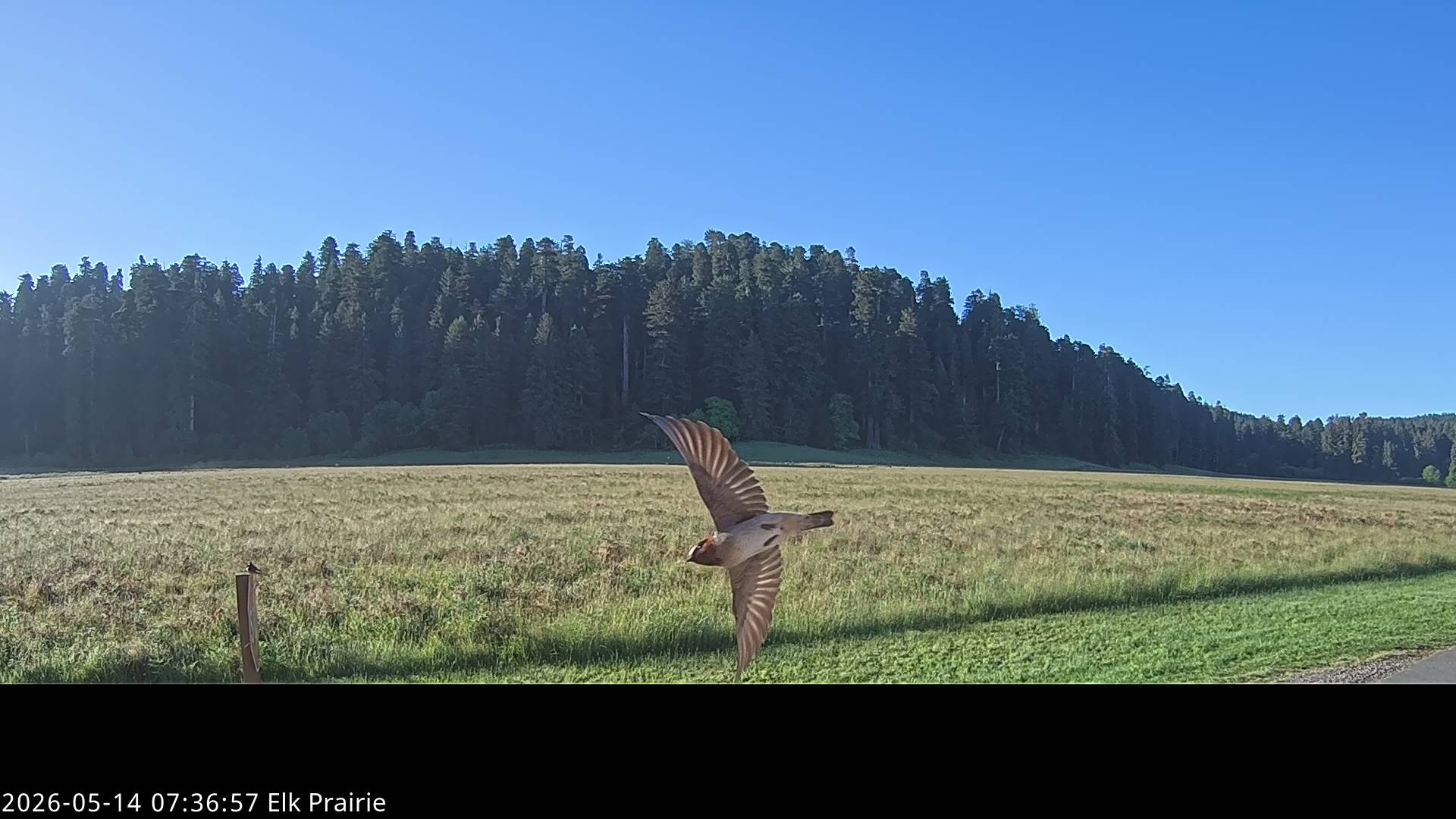
May 14, 2026
A Barn Swallow swoops through the frame, flying low over the grass of Elk Prairie. The bird's distinctive forked tail and orange-toned throat are clearly visible as it maneuvers past the lens during a bright, clear morning.
Geographic range
Where Does the Barn Swallow Live?
Native to the Northern Hemisphere, the Barn Swallow is the most widely distributed swallow in the world, breeding throughout North America, Europe, and Northern Asia. These incredible travelers are long-distance migrants, spending the winter months in the Southern Hemisphere, spanning South America, Sub-Saharan Africa, Southern Asia, and even reaching Northern Australia. They are truly global citizens, making their homes in rural and suburban landscapes across nearly every continent.
Basemap © OpenStreetMap contributors
Behavior
Barn Swallows are remarkable aerial acrobats, spending nearly all their daylight hours on the wing. They are highly social birds, often seen foraging in small groups or gathering in massive, chattering flocks before their long-distance migrations. Their flight is characterized by fluid, sweeping motions, as they dive and weave with incredible precision to catch insects just a few feet above the ground or water.
Historically, these swallows nested in caves, but they have lived alongside humans for so long that they now almost exclusively use man-made structures. They build cup-shaped nests out of mud pellets and straw, frequently attaching them to the rafters of barns, the undersides of bridges, or porch eaves. They are very vocal birds, constantly communicating with a series of cheerful twitters and liquid warbles that are a staple sound of the summer countryside.
EverydayEarth exclusive
Camera Tips
Capturing Barn Swallows on an AI camera requires a different approach than filming ground-dwelling wildlife. Because they are so fast, you should focus your camera on a 'destination' rather than open air. The best location is near an active nest, typically found under the eaves of a porch or on a rafter inside a shed or barn. Mount the camera about 4-6 feet away at a slightly upward angle. This distance ensures the wide-angle lens captures the parent arriving and the chicks' reactions without disturbing the birds.
Another excellent strategy is to create a 'mud station' during the spring nesting season (April and May). Barn Swallows need wet mud to build their nests; if you keep a patch of bare soil damp near your garden, they will visit it repeatedly. Place your camera on a low tripod or ground mount facing the mud. Set your camera to a high frame rate (60fps or higher) or a fast shutter speed to freeze the motion of their wings as they hover and land to collect mud pellets.
Finally, look for social perching spots. Barn Swallows love to sun themselves on low-hanging wires, fence lines, or even the tops of garden stakes. Position your camera to face a clear section of a fence with a clean background. Early morning is the best time for this, as the birds are less active and more likely to sit for several minutes to preen. For the best color, ensure the sun is behind your camera to illuminate the metallic blue sheen of their feathers.
Similar Species
Species that look similar or are commonly confused with Barn Swallow.
Cliff Swallow
Has a squared tail and a pale rump patch, whereas the Barn Swallow has a deeply forked tail and a solid blue back.
Tree Swallow
Features bright white underparts and a much shorter, notched tail compared to the Barn Swallow's rufous throat and long tail streamers.
Purple Martin
Much larger than a Barn Swallow; males are entirely dark purple-black without the rufous throat or deep tail fork.
Frequently Asked Questions
Record Barn Swallow at your habitat
Connect a camera to start building your own species record — AI identifies every visitor automatically.