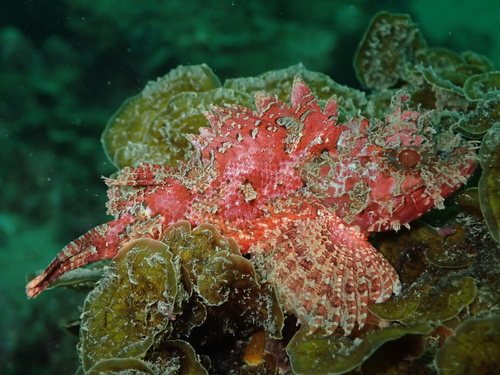
Weedy Scorpionfish
Scorpaenopsis cirrosa
A phantom of the reef, the Weedy Scorpionfish uses a suit of fleshy 'weeds' and mottled colors to vanish against the sea floor. Found in the rocky waters of the North-Western Pacific, this venomous master of disguise is the ultimate ambush predator.
Quick Identification
Size
Typically 15-25 cm (6-10 inches) in length; weighs approximately 0.5-1.4 kg (1-3 lbs)
Colors
Highly variable mottled patterns of reddish-brown, tan, orange, and white to match reef surroundings; no distinct difference between males and females
Key Features
- Fleshy skin flaps (cirri) mimicking algae and weeds
- Thick, venomous dorsal spines
- Deeply downturned mouth with a 'grumpy' expression
- Large, fan-like pectoral fins used for stabilization
- Camouflaged eyes that blend into facial markings
When You’ll See Them
Behavior
The Weedy Scorpionfish is a master of the 'sit and wait' strategy. It spends the vast majority of its life perfectly still, perched on rocky outcrops or nestled among coral rubble. By mimicking a piece of weed-covered rock, it becomes nearly invisible to both predators and unsuspecting prey. Unlike many other reef fish that swim actively, this species often 'walks' across the seabed using its pectoral fins or simply waits for the current to bring food its way.
While they are solitary and relatively sedentary, they are highly efficient predators. When a small fish or crustacean wanders too close, the scorpionfish opens its massive mouth with incredible speed, creating a vacuum that sucks the prey in instantly. To humans, they are non-aggressive but pose a significant danger due to their camouflage; their dorsal spines contain potent venom that can cause extreme pain and swelling if stepped on or handled.
EverydayEarth exclusive
Camera Tips
Capturing the Weedy Scorpionfish on camera requires specialized underwater equipment or a high-quality waterproof housing. Since these fish are masters of disguise, your primary challenge is spotting them. Focus your camera on 'cluttered' areas of the reef, such as the base of large sponges or inside rocky crevices, rather than open sandy patches. A macro lens or a close-up setting is ideal, as these fish allow cameras to get very close without fleeing, allowing you to capture the incredible detail of their fleshy skin flaps.
Because they are most active under the cover of darkness, you will need an external underwater video light. Avoid pointing the light directly at the fish to prevent 'blowout' on their reflective scales; instead, use a wide-angle beam to illuminate the entire scene. If you are using an AI-powered reef camera, set the motion trigger sensitivity to high, as the only movement you might see for hours is the slight flare of their gills or the occasional blink of an eye. This species is famous for staying in the exact same spot for days, so if you find one, you can return to it repeatedly for time-lapse opportunities.
To capture their lightning-fast feeding strike, use a high-speed frame rate (at least 60fps or higher). The strike happens in milliseconds and is often missed by standard recording speeds. Ensure your camera is securely weighted or mounted to a tripod; even slight surges in the current can ruin the focus on such a well-camouflaged subject. For the best color results, use a red filter if filming in shallow water during the day, or rely on high-CRI (Color Rendering Index) lights at night to bring out their natural reds and oranges.
Similar Species
Species that look similar or are commonly confused with Weedy Scorpionfish.
Frequently Asked Questions
Record Weedy Scorpionfish at your habitat
Connect a camera to start building your own species record — AI identifies every visitor automatically.