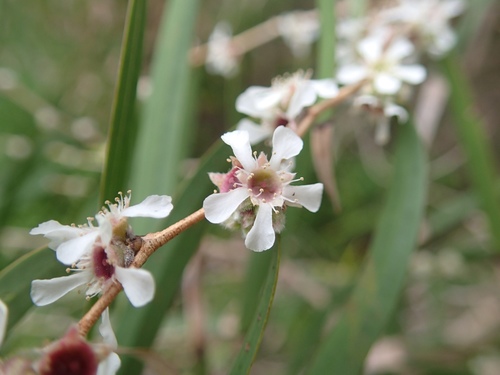
Western Australian Peppermint
Agonis flexuosa
The Western Australian Peppermint is the architectural heart of the Southwest garden, offering iconic weeping foliage and a refreshing scent. It serves as the ultimate high-rise apartment for the critically endangered Western Ringtail Possum.
Quick Identification
Size
Typically grows 10–15 meters (33–50 feet) tall with a canopy spread of 5–10 meters (16–33 feet).
Colors
Dull green to grey-green foliage, grey-brown fissured bark, and small white flowers with dark centers.
Key Features
- Distinctive weeping or pendulous branch habit
- Crushed leaves emit a strong, refreshing peppermint scent
- Fibrous, deeply fissured grey-bark on mature trunks
- Small white five-petaled flowers clustered along the stems
When You’ll See Them
Behavior
The Western Australian Peppermint is a resilient and graceful evergreen tree that defines the coastal and woodland landscapes of Southwest WA. While it doesn't 'behave' in the animal sense, it is a dynamic participant in its ecosystem, acting as a primary host for a vast array of biodiversity. Its weeping canopy provides a dense, cooling shade that creates a microclimate for smaller plants and ground-dwelling creatures below.
For humans, the tree is a staple of suburban landscaping due to its hardiness and aesthetic appeal. Historically and culturally, it holds deep significance for the Noongar people, who have traditionally used its leaves for medicinal purposes and its wood for crafting tools. In a backyard setting, it serves as a natural privacy screen and a sturdy anchor for local wildlife corridors.
EverydayEarth exclusive
Camera Tips
When setting up a camera to monitor a Western Australian Peppermint, your primary target should be the Western Ringtail Possum (Ngwayir), which relies almost exclusively on this tree for food and shelter. Mount your camera approximately 2 to 3 meters (6–10 feet) high, ideally positioned to look down a long, sturdy lateral branch or toward a fork in the tree where the canopy is densest. This is where possums are most likely to traverse or build their 'dreys' (nests).
Because the foliage is pendulous and moves easily in the wind, you may experience frequent false triggers if your camera's sensitivity is set too high. To counter this, use a camera with 'zone detection' features to focus the trigger area on the solid trunk or major branches rather than the swaying leaves. If you are specifically looking to capture the beautiful white blossoms or the insects they attract, use a macro lens or a close-focusing trail camera positioned within 1 meter of a flowering cluster during the spring months.
The bark of the Peppermint tree is very dark and fibrous, which can cause 'light suck' during night shots using infrared flash. To get the best detail on animals moving against the bark, consider an external IR light source to fill in the shadows. For daytime captures, the weeping leaves create a dappled light effect that can confuse auto-exposure; try to angle your camera so the sun is behind it to prevent blown-out highlights in the background.
Finally, since these trees are often visited by honeyeaters and bees during the flowering season (August–December), set your camera to 'Burst Mode' or 'High-Speed Video' to catch the rapid movement of birds fluttering between the leaf axils. No artificial bait is usually necessary, as the tree itself is the primary food source, but a birdbath placed at the base of the tree can significantly increase the variety of wildlife that enters your camera's frame.
Similar Species
Species that look similar or are commonly confused with Western Australian Peppermint.
Frequently Asked Questions
Record Western Australian Peppermint at your habitat
Connect a camera to start building your own species record — AI identifies every visitor automatically.