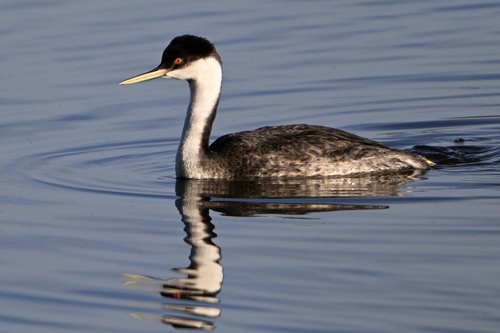
Western Grebe
Aechmophorus occidentalis
Witness the spectacular 'water-dance' of the Western Grebe, a master of the wetlands with a swan-like neck and piercing ruby eyes. These elegant divers are the stars of North America's western lakes, known for their incredible speed and synchronized courtship displays.
Quick Identification
Size
Length: 55–75 cm (22–30 in); Wingspan: 79–102 cm (31–40 in); Weight: 1.1–1.8 kg (2.4–4 lbs)
Colors
High-contrast black and white plumage; black crown extends below the eye; white neck and breast; dull greenish-yellow bill; vivid red eyes.
Key Features
- Extraordinarily long, slender white neck
- Black cap extends below the red eye
- Straight, spear-like greenish-yellow bill
- Large body with legs set far back for diving
When You’ll See Them
Geographic range
Where Does the Western Grebe Live?
Native to the North American continent, the Western Grebe thrives across a wide swath of the western interior and Pacific coastline. Its breeding range extends from south-central Canada—specifically the prairie provinces—down through the western United States to California and Colorado. During the winter, these birds migrate toward the Pacific coast, stretching from the sheltered bays of Southeast Alaska all the way south to the temperate waters of Baja California and inland reservoirs in central Mexico.
Basemap © OpenStreetMap contributors
Behavior
Western Grebes are famous for their elaborate and highly synchronized courtship displays, most notably 'rushing.' During this performance, a pair will rise vertically out of the water and sprint across the surface side-by-side for up to 20 meters, their feet pattering rapidly in a choreographed blur. This social behavior is essential for pair-bonding and is one of the most spectacular sights in the avian world.
These birds are highly aquatic and are rarely seen on land because their legs are positioned so far back on their bodies, making them exceptional divers but clumsy walkers. After the eggs hatch, the parents exhibit 'back-brooding,' where the chicks ride on the parents' backs to stay warm and protected from aquatic predators. They are gregarious birds, often nesting in large colonies that can number in the hundreds or even thousands.
EverydayEarth exclusive
Camera Tips
Capturing the Western Grebe on a backyard or trail camera requires a specialized setup focused on the water's edge. Because these birds spend almost 100% of their time on the water, your camera should be mounted very low—ideally just 6 to 12 inches above the water level—on a dock, a sturdy pier piling, or a weighted tripod placed in the shallows. Aim the lens toward areas with emergent vegetation like reeds or bulrushes, where they are most likely to forage or nest. A wide-angle lens is great for habitat shots, but if you want to capture the 'rushing' display, a camera with a fast trigger speed and burst mode is essential.
Avoid traditional baits like birdseed, as Western Grebes are strictly carnivorous. Instead, focus on 'natural lures' by placing your camera near areas where small baitfish congregate, such as near submerged structures or dock pilings. If you have a private pond or lakefront, maintaining a healthy population of native minnows will naturally draw them into your camera’s field of view. The best time for activity is during the 'golden hours' of early morning, when the water is calm and the low sun highlights their striking red eyes and white necks.
During the breeding season (late spring to early summer), pay close attention to the shoreline. If you see Grebes carrying vegetation, they are likely building a floating nest nearby. Position your camera to overlook these calm inlets, but maintain a respectful distance to avoid disturbing the nest. Use a high-end AI camera that can filter out water movement and 'glimmer' to prevent thousands of false triggers caused by wave action and sun reflections. High-speed video (60fps or higher) is highly recommended to capture the fluid motion of their diving and social displays.
Similar Species
Species that look similar or are commonly confused with Western Grebe.
Clark's Grebe
Nearly identical, but the white of the face surrounds the eye and the bill is bright orange-yellow rather than greenish-yellow.
Red-necked Grebe
Smaller with a thick, yellow bill and a distinctive rufous-red neck during the breeding season.
Eared Grebe
Much smaller with a thinner, slightly upturned bill and golden 'ear' tufts during the breeding season.
Frequently Asked Questions
Record Western Grebe at your habitat
Connect a camera to start building your own species record — AI identifies every visitor automatically.