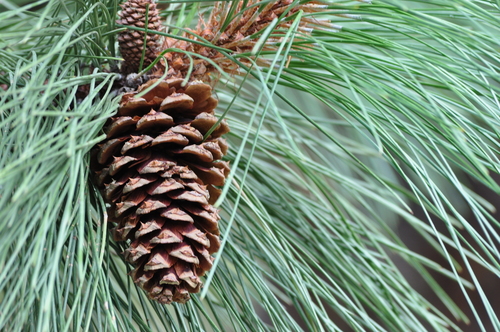
Western Ponderosa Pine
Pinus ponderosa
The Western Ponderosa Pine is the towering icon of the West, famous for its puzzle-piece bark and pleasant vanilla scent. This resilient conifer creates a massive vertical ecosystem that brings a diverse array of birds and mammals right to your camera's lens.
Quick Identification
Size
Height: 30-70 m (100-230 ft); Trunk Diameter: 0.8-2.5 m (2.5-8 ft)
Colors
Mature bark is bright orange-brown to cinnamon-red with deep black fissures; young bark is dark brown to black; needles are yellowish-green.
Key Features
- Needles in bundles of three, 5-10 inches long
- Bark plates shaped like jigsaw puzzle pieces
- Cones have outward-curving prickles ('Prickly Ponderosa')
- Bark smells like vanilla or butterscotch when warmed by the sun
When You’ll See Them
Behavior
The Western Ponderosa Pine is a long-lived sentinel of the American West, often living for 300 to 500 years. It is a fire-adapted species, developing thick, corky bark that protects the tree from the heat of low-intensity ground fires. As the tree matures, it naturally sheds its lower branches—a process called self-pruning—which prevents fire from climbing into the canopy and creates the open, park-like forests typical of its range.
These trees serve as the 'high-rise apartments' of the forest. They have a complex relationship with the wildlife around them; they provide nesting sites for raptors in their crowns and food for various rodents and birds via their large, winged seeds. In a backyard setting, a mature Ponderosa acts as a central hub for local biodiversity, influencing the microclimate and soil acidity beneath its wide canopy.
EverydayEarth exclusive
Camera Tips
When using an AI-powered camera with a Ponderosa Pine, you have two primary strategies: capturing the tree as the subject or using it as the ultimate camera mount. If the tree is your subject, position your camera 15-20 feet away to capture the unique 'jigsaw' texture of the bark. Early morning or late afternoon sun is best, as the low-angle light hits the deep fissures of the bark, creating high-contrast shadows that help AI models identify the species more accurately.
Because Ponderosa Pines are magnets for woodpeckers, nuthatches, and squirrels, mounting a camera directly onto the trunk can be highly rewarding. Place the camera about 5-6 feet high, facing a sturdy horizontal limb or a cluster of cones. If your camera has a 'time-lapse' mode, use it to document the tree’s phenology—from the release of yellow pollen clouds in the spring to the opening of cones in the autumn. For the best wildlife shots, look for 'sap wells' or holes created by sapsuckers; aiming your camera at these active spots will guarantee frequent visitors.
Be mindful of the tree's growth if you leave a strap-mounted camera out for long periods. Ponderosa bark can expand significantly, so check the tension every few months to ensure the strap isn't digging into the living tissue. If you are targeting the birds in the upper canopy, consider a high-angle tilt or a secondary camera positioned on a nearby structure to catch the activity in the 'crown' of the tree where hawks and owls often perch.
Similar Species
Species that look similar or are commonly confused with Western Ponderosa Pine.
Jeffrey Pine
Jeffrey Pines have cones with inward-turning prickles and bark that smells more intensely of pineapple or citrus compared to the Ponderosa.
Lodgepole Pine
Lodgepole needles are shorter (1-3 inches) and grow in bundles of two, whereas Ponderosa needles are much longer and usually in bundles of three.
Frequently Asked Questions
Record Western Ponderosa Pine at your habitat
Connect a camera to start building your own species record — AI identifies every visitor automatically.