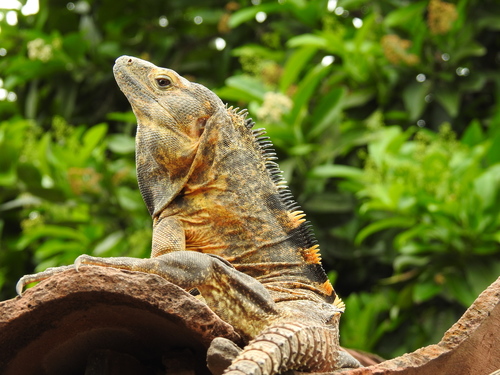
Western Spiny-tailed Iguana
Ctenosaura pectinata
A prehistoric master of the Mexican coast, the Western Spiny-tailed Iguana is a sun-loving sprinter with armor-like scales. Whether basking on a rocky cliff or patrolling a suburban garden, this agile lizard is a captivating sight for any backyard explorer.
Quick Identification
Size
Total length up to 1.3 metres (4.3 feet) for males; weight ranges from 1 to 2 kg (2.2 to 4.4 lbs).
Colors
Adults are typically charcoal gray or brownish-black with light cream or yellowish mottling; juveniles are a brilliant, camouflage-friendly bright green.
Key Features
- Distinctive whorls of sharp, spiny scales along the length of the tail
- A prominent crest of spines (dorsal crest) running down the center of the back
- Stocky, powerful build with a broad head and strong limbs
When You’ll See Them
Geographic range
Where Does the Western Spiny-tailed Iguana Live?
This resilient lizard is native to the Pacific slopes of North America, specifically western Mexico, stretching from the state of Sinaloa southward to Oaxaca. Beyond its ancestral home, the species has successfully established naturalized populations in the United States, most notably in southern Florida and parts of coastal Texas. In these regions, they are frequently found in warm, sunny corridors where human landscaping provides both abundant food and artificial rocky habitats.
Basemap © OpenStreetMap contributors
Behavior
The Western Spiny-tailed Iguana is a diurnal reptile that spends a vast majority of its morning basking on elevated surfaces like rocks, stone walls, or sturdy branches. As a cold-blooded species, it relies on the sun's heat to kickstart its metabolism, becoming remarkably active once warmed. These iguanas are known for their social structures, often living in loose colonies governed by a dominant male who aggressively defends his territory and harem from rivals.
Despite their somewhat sluggish appearance while basking, they are incredibly agile and hold the reputation of being among the world's fastest-running lizards. When threatened, they prefer to dash into rocky crevices or up trees, but if cornered, they will hiss and use their powerful, spiny tails as a defensive lash. They have adapted exceptionally well to human presence, often utilizing gardens and man-made structures as foraging grounds and shelter.
EverydayEarth exclusive
Camera Tips
To capture high-quality footage of a Western Spiny-tailed Iguana, position your camera near a 'sun trap'—a large flat rock, a south-facing stone wall, or a concrete ledge that absorbs heat. These lizards are creatures of habit and will return to the same basking spot daily once they feel safe. Set your camera at a low angle, roughly 12 inches off the ground, to capture their detailed scales and prehistoric profile. Aim for a spot that receives direct sunlight during the mid-morning hours when they are most likely to emerge from their burrows.
While they are naturally wary, you can encourage them to linger in front of the lens by placing a small amount of 'visual bait.' Brightly colored flowers like hibiscus or small pieces of ripe fruit such as papaya or mango are highly attractive to them. Place these items in an open, sunny area within the camera's trigger zone. Because they are quick and easily startled by sudden movements, use a camera with a fast trigger speed (0.5 seconds or less) and set the PIR sensitivity to high to ensure you catch them before they dash away.
In suburban environments, look for 'high-traffic' areas such as the base of large trees or the gaps in stone retaining walls. If you are using a camera with video capabilities, try to set the recording duration to at least 20 seconds; this allows you to capture interesting social behaviors, such as the rhythmic head-bobbing used to communicate dominance. During the spring breeding season, keep the camera active all day, as males become much more mobile and visible as they patrol their territories.
Similar Species
Species that look similar or are commonly confused with Western Spiny-tailed Iguana.
Frequently Asked Questions
Record Western Spiny-tailed Iguana at your habitat
Connect a camera to start building your own species record — AI identifies every visitor automatically.