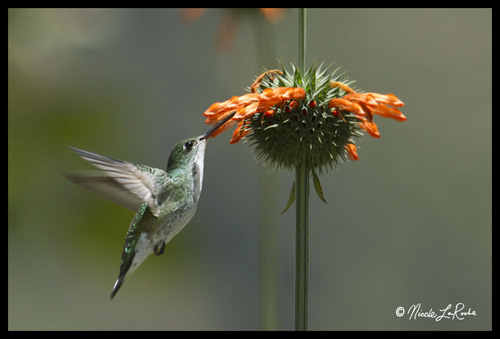
White-bellied Hummingbird
Elliotomyia chionogaster
With its snowy-white underside and shimmering golden-green coat, the White-bellied Hummingbird is a sparkling gem of the South American highlands. This bold, spirited visitor is a favorite for backyard observers, known for its energetic personality and frequent garden visits.
Quick Identification
Size
9-12 cm (3.5-4.7 in) in length; wingspan approx 13 cm (5.1 in); weight 4.5-6.5g (0.16-0.23 oz)
Colors
Metallic golden-green or bronze-green upperparts; brilliant, pure white underparts from chin to vent; tail is coppery-bronze with pale tips on outer feathers
Key Features
- Extensive pure white throat and belly
- Metallic golden-green upperparts
- Medium, straight black bill
- Coppery-bronze tail with pale greyish tips
When You’ll See Them
Geographic range
Where Does the White-bellied Hummingbird Live?
Native to the heart of South America, the White-bellied Hummingbird occupies a broad range stretching from the eastern slopes of the Andes to the interior highlands. Its core population resides in Bolivia and Peru, extending southward into northern Argentina and eastward into parts of western Brazil. This adaptable bird is a common sight in both wild montane valleys and bustling suburban neighborhoods across its tropical and subtropical range.
Basemap © OpenStreetMap contributors
Behavior
The White-bellied Hummingbird is an exceptionally bold and energetic presence in South American landscapes. Unlike many of its forest-dwelling relatives, this species has adapted remarkably well to human environments, frequently claiming dominance over garden flower patches. They are highly territorial and will aggressively chase away other hummingbirds—even those larger than themselves—to protect a preferred nectar source.
These hummingbirds exhibit a mix of 'traplining' (visiting flowers in a regular circuit) and territorial defense. When not feeding, they are often seen perched on high, exposed twigs or telephone wires, scanning their surroundings for intruders or passing insects. Their flight is characterized by precise, darting movements and an ability to hover with incredible stability while feeding on delicate blooms.
EverydayEarth exclusive
Camera Tips
To capture high-quality images of the White-bellied Hummingbird, place your camera near vibrant, nectar-rich flowers such as Salvia, Fuchsia, or native bromeliads. These birds are creatures of habit and often use the same 'sentinel perches' to guard their territory. Look for a bare, thin twig about 4 to 6 feet off the ground near a food source and aim your camera there. For the best lighting, position the camera so the sun is behind you; this illuminates the metallic green of their feathers and prevents the bird's white belly from appearing as a washed-out silhouette.
Because hummingbirds move with incredible speed, your camera settings are critical. Use a high shutter speed (1/1000s or faster) or a high-frame-rate video setting (60fps or 120fps) to freeze the wing motion. If you are using an AI-powered trail camera, set the trigger sensitivity to high, as these birds are small and move quickly through the frame. To ensure the camera focuses on the bird rather than the background foliage, try to have a clear, unobstructed 'alley' between the lens and the flower or perch.
Backyard feeders are the most effective way to bring this species within camera range. Use a 4:1 ratio of water to white sugar (never honey or dye). Position the camera about 18 to 24 inches from the feeder, ideally at the same height as the feeding ports. Since the White-bellied Hummingbird is active from the first light of dawn, ensure your camera is positioned to handle the high-contrast light of early morning. If you notice the white feathers 'blowing out' in the bright tropical sun, try to place the feeder in a spot that receives bright but dappled shade.
Similar Species
Species that look similar or are commonly confused with White-bellied Hummingbird.
Frequently Asked Questions
Record White-bellied Hummingbird at your habitat
Connect a camera to start building your own species record — AI identifies every visitor automatically.