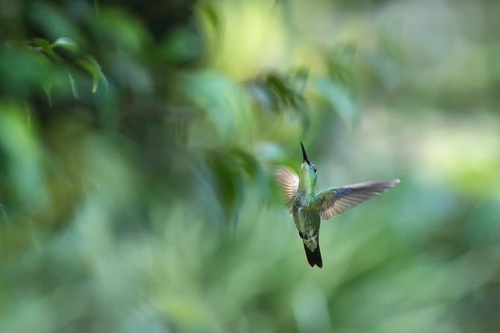
White-chested Emerald
Chrysuronia brevirostris
Meet the White-chested Emerald, a shimmering garden visitor that combines brilliant metallic greens with a snowy-white breast. This energetic South American hummingbird is a master of aerial acrobatics and a favorite for backyard birdwatchers.
Quick Identification
Size
8.5–9 cm (3.3–3.5 in) in length; weighs approximately 3.5–4.5 g (0.12–0.16 oz)
Colors
Metallic emerald green or bronze-green upperparts; brilliant white throat, chest, and belly; tail is dark with coppery-bronze highlights.
Key Features
- Bright white central underparts from throat to vent
- Shimmering emerald green head and back
- Short, straight black bill with a pinkish base on the lower mandible
- Coppery or dull brownish-green tail feathers
When You’ll See Them
Behavior
The White-chested Emerald is a spirited and highly active hummingbird known for its agility and territorial nature. It often dominates smaller hummingbird species around localized nectar sources, using quick, darting flights and sharp chirps to defend its favorite flowers. Despite its small size, it is a bold bird that adapts well to human-modified landscapes, frequently visiting urban gardens and parks.
This species typically engages in 'trap-lining,' a foraging strategy where the bird follows a consistent circuit of flowering plants throughout the day. They are generally solitary except during the breeding season, but several individuals may gather at a particularly large flowering tree, though they will maintain a respectful distance from one another. Their flight is characterized by rapid, rhythmic wingbeats that produce a low-frequency hum, often pausing in mid-air with incredible stability.
EverydayEarth exclusive
Camera Tips
To capture high-quality footage of the White-chested Emerald, focus your camera on high-energy nectar sources like hibiscus, shrimp plants, or porterweed. Position the camera between 3 and 4 feet from the blossoms, ensuring the lens is at the same horizontal level as the flowers. Because these birds are exceptionally fast, use a camera with a high frame rate (60fps or higher) and a fast trigger speed to ensure you don't just catch a 'green blur' as they exit the frame.
Lighting is the most critical factor for this species. To showcase the metallic iridescence of their emerald feathers, place your camera so the sun is behind it, illuminating the bird's back and head directly. Morning light is particularly effective as it brings out the contrast between the snowy white chest and the dark green wings. If you are using a feeder to attract them, choose one with a perch; while they are capable of hovering, they will stay in the frame much longer if they have a place to rest while drinking.
Set your camera to 'Burst Mode' if available to capture the perfect wing position. If you are using an AI-powered camera, ensure the detection zone is tightly focused on the feeder ports or the specific flower cluster to avoid false triggers from wind-blown leaves. In suburban environments, these birds are relatively fearless, so you can often place cameras closer to human dwellings than you would for more reclusive forest species. Keep the area around the camera clear of distracting clutter to help the AI better identify the bird's distinct white-and-green silhouette.
Similar Species
Species that look similar or are commonly confused with White-chested Emerald.
Plain-bellied Emerald
Lacks the brilliant, pure white chest and often has more green flecking on the throat.
Glittering-throated Emerald
Features a sparkling blue or teal patch on the throat which the White-chested Emerald lacks.
Versicolored Emerald
Has a more variable throat color, often showing blue or turquoise tones rather than pure white.
Frequently Asked Questions
Record White-chested Emerald at your habitat
Connect a camera to start building your own species record — AI identifies every visitor automatically.