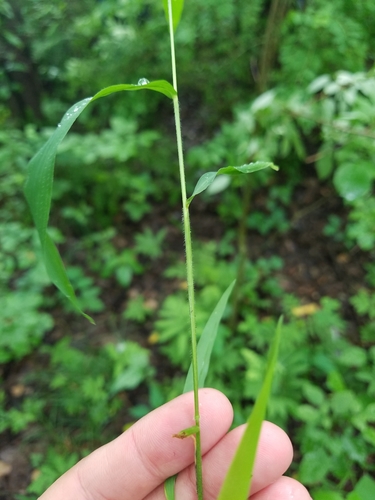
white grass
Leersia virginica
A shimmering native grass that brightens the dampest corners of the forest. White grass is a vital wetland plant known for its delicate seed heads and unique, rough texture.
Quick Identification
Size
Grows 1 to 3 feet (30 to 90 cm) tall with leaf blades 2 to 6 inches (5 to 15 cm) long
Colors
Light green to yellowish-green foliage; spikelets (seeds) are pale green to translucent white
Key Features
- Rough, sandpaper-like texture on leaf margins
- Airy, branched flowering panicles that droop slightly
- Flattened, awnless spikelets (seeds)
- Scaly underground rhizomes forming loose colonies
When You’ll See Them
Behavior
White grass is a sophisticated specialist of the forest understory. Unlike most grasses that crave the spotlight of open prairies, this species has adapted to thrive in the dappled light of floodplain forests and shaded wetlands. It grows in loose, elegant tufts, spreading gently via short, scaly rhizomes that help stabilize soil in areas prone to seasonal flooding.
One of its most fascinating characteristics is its tactile defense; the leaf margins are lined with microscopic silica teeth, giving it a rough texture that can discourage grazers and even cause small "paper cuts" on human skin. During the late summer, it produces delicate seed heads that seem to float in the shadows, providing a critical late-season food source for woodland birds and small mammals.
EverydayEarth exclusive
Camera Tips
To capture the ethereal beauty of white grass, position your camera at a low angle, approximately 12 to 24 inches from the ground. This perspective allows you to frame the delicate seed heads against the darker shadows of the forest floor, making the "white" in white grass truly pop. A side-on angle is best for showcasing the architectural curve of the stems and the airy structure of the panicles.
Lighting is your most important factor. Set up your camera in a spot where it can catch filtered sunlight through the tree canopy. The backlit "halo effect" on the translucent seeds is stunning, particularly during the late afternoon. Avoid using a direct flash, which can flatten the plant's delicate textures; instead, rely on the natural contrast between the pale seeds and a dark, shaded background like a rotting log or thick moss.
If you are using a trail camera with video capabilities, look for a day with a light breeze. The rhythmic swaying of white grass creates a soothing, high-quality video that highlights its flexible stems. For those hoping to catch wildlife, aim the camera at the base of the grass near a water source. Small birds like sparrows and juncos are frequently caught on camera foraging for seeds among the fallen stalks in late autumn.
Similar Species
Species that look similar or are commonly confused with white grass.
Frequently Asked Questions
Record white grass at your habitat
Connect a camera to start building your own species record — AI identifies every visitor automatically.