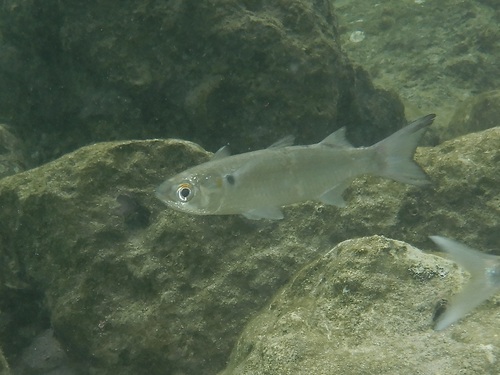
White Mullet
Mugil curema
A shimmering silver acrobat of the coast, the White Mullet is famous for its synchronized schooling and spectacular leaps above the waves.
Quick Identification
Size
Typically 20–38 cm (8–15 in) in length; weight ranges from 0.5–1.2 kg (1.1–2.6 lbs)
Colors
Bright silvery sides with an olive-green or bluish-grey back; distinct yellow spot on the gill cover near the pectoral fin base
Key Features
- Small mouth with a blunt snout
- Distinctive gold or yellow spot on the operculum
- Silvery-white scales without dark longitudinal stripes
- Deeply forked caudal fin
When You’ll See Them
Geographic range
Where Does the White Mullet Live?
Where Does the White Mullet Live? The White Mullet is a wide-ranging coastal traveler native to the tropical and subtropical waters of the Atlantic and Eastern Pacific Oceans. In the Western Atlantic, their territory stretches from the shores of Cape Cod down through the Gulf of Mexico and the Caribbean, reaching as far south as Brazil. They thrive in the dynamic environments where land meets sea, often congregating in shallow estuaries, salt marshes, and tidal creeks along the Eastern Seaboard of the United States and the coastlines of Central America.
Basemap © OpenStreetMap contributors
Behavior
White Mullets are highly gregarious schooling fish that are most famous for their aerial acrobatics. It is common to see them leaping out of the water in rapid succession—a behavior thought to help them oxygenate their gills in murky water or to escape predators. They are exceptionally fast swimmers that move in large, coordinated groups through shallow coastal waters, often creating visible ripples or 'nervous water' on the surface.
As peaceful foragers, they spend a significant portion of their day vacuuming the substrate or grazing on submerged surfaces. They have a specialized gizzard-like stomach that allows them to process organic matter from sand and mud. While they are generally wary of humans, they are a common sight for coastal residents living near canals, docks, and tidal creeks, where they navigate the pilings in search of food.
EverydayEarth exclusive
Camera Tips
Capturing the White Mullet on camera requires a specialized approach since they are primarily aquatic. If you live on a waterfront property with a dock or sea wall, the best setup is an underwater action camera or a specialized 'fish-cam' housing mounted to a dock piling approximately 12 to 24 inches below the low-tide line. Position the camera horizontally to catch schools as they pass by, rather than pointing it straight down, which often results in overexposed shots of the fish's silver backs.
Because Mullet are attracted to areas with high organic turnover, placing your camera near oyster bars or mangrove roots can increase your chances of sightings. They don't respond to traditional meat-based fish baits, but you can sometimes draw a school into the camera's field of view by tossing a small amount of oatmeal or breadcrumbs into the water, which mimics the floating organic matter they graze on.
Lighting is your biggest challenge underwater. Aim to record during mid-day when the sun is directly overhead to penetrate the water column. If the water is turbid (cloudy), keep the camera within 2 feet of your target area. For those using above-water AI cameras, set your device to a high-speed trigger mode and point it toward the surface of calm canals at dawn; you might catch their iconic jumping behavior as they breach the surface.
Similar Species
Species that look similar or are commonly confused with White Mullet.
Frequently Asked Questions
Record White Mullet at your habitat
Connect a camera to start building your own species record — AI identifies every visitor automatically.